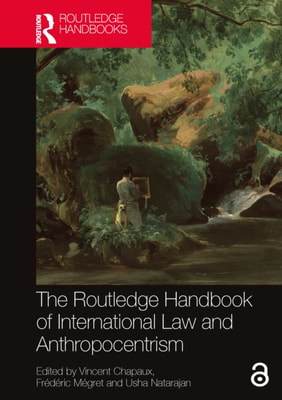
This handbook explores, contextualises and critiques the relationship between anthropocentrism - the idea that human beings are socially and politically at the centre of the cosmos - and international law.
This handbook explores, contextualises and critiques the relationship between anthropocentrism - the idea that human beings are socially and politically at the centre of the cosmos - and international law.
Addressing the relationship between law and the visual, this book examines the importance of photography in Central, East, and Southeast European show trials.
After some friendly pestering from six of his students curious about his thinking about immigration, a philosophy professor invites them to present their own ideas to him over a series of meetings throughout the term.
The academic disciplines of law and sociocultural anthropology have a long but at times contentious history of drawing on each other in order to study and understand law and human experience in its diverse manifestations.
Los diez ensayos jurídicos que se recogen en este libro tratan sobre temas muy variados: el futuro del Derecho y de la filosofía del Derecho, el razonamiento jurídico, los límites del Derecho, el activismo judicial, los derechos humanos, el Derecho y la literatura…Todos ellos obedecen, sin embargo, a un mismo propósito de fondo que se concreta en la idea de que, en contra de lo que suele pensarse (de lo que suelen pensar los no juristas apoyándose —hay que reconocerlo— en formas de actuar bastante frecuentes entre los propios juristas), el Derecho es una empresa esencialmente problemática, abierta, que exige dosis considerables de imaginación, notables recursos teóricos, formación y entereza moral, y que resulta esencial para comprender el mundo social y contribuir a su transformación.
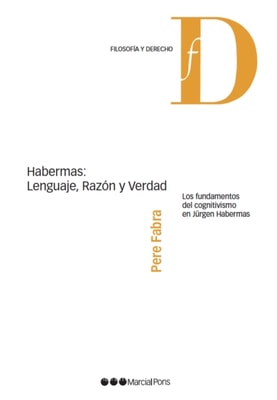
Este libro versa sobre los fundamentos filosofico-linguisticos que subyacen a la teoria de la racionalidad y, correlativamente, a la teoria de la verdad y la teoria moral desarrolladas por Jurgen Habermas.
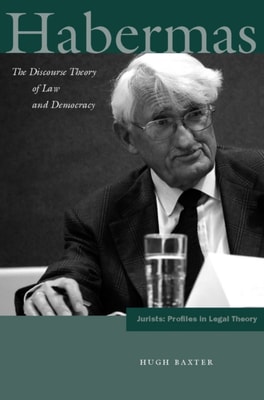
Though many legal theorists are familiar with Jurgen Habermas's work addressing core legal concerns, they are not necessarily familiar with his earlier writings in philosophy and social theory.
Imagining New Legalities reminds us that examining the right to privacy and the public/private distinction is an important way of mapping the forms and limits of power that can legitimately be exercised by collective bodies over individuals and by governments over their citizens.
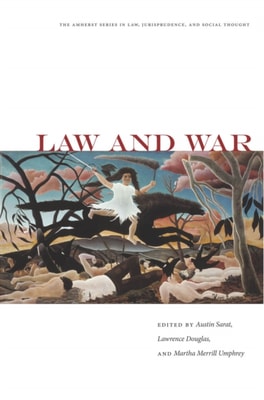
Law and War explores the cultural, historical, spatial, and theoretical dimensions of the relationship between law and war-a connection that has long vexed the jurisprudential imagination.
Assembling a series of voices from across the field, this book demonstrates how posthuman theory can be employed to better understand and tackle some of the challenges faced by contemporary international law.
La expresion intersticios del derecho, empleada en el titulo de este libro, hace referencia a la zona, de limites borrosos, situada entre aquellas pautas que son inequivocamente reconocidas como derecho y aquellas otras que claramente no lo son.
Erasmus’ Adages—a vast collection of the proverbial wisdom of Greek and Roman antiquity—was published in 1508 and became one of the most influential works of the Renaissance.
In this important work of legal, political, and moral theory, Joseph William Singer offers a controversial new view of property and the entitlements and obligations of its owners.
In this first book-length study of positive law, James Bernard Murphy rewrites central chapters in the history of jurisprudence by uncovering a fundamental continuity among four great legal philosophers: Plato, Thomas Aquinas, Thomas Hobbes, and John Austin.
Giorgio Agamben: Power, Law and the Uses of Criticism is a thorough engagement with the thought of the influential Italian philosopher Giorgio Agamben.
Law, Ethics and the Biopolitical explores the idea that legal authority is no longer related to national sovereignty, but to the 'moral' attempt to nurture life.
(B)ordering Britain argues that Britain is the spoils of empire, its immigration law is colonial violence and irregular immigration is anti-colonial resistance.
Kolliniati's groundbreaking book, Interpreting Human Rights: Narratives from Asylum Centers in Greece and Philosophical Values, challenges the notion that the interpretation and application of human rights primarily occur within the corridors of power in Strasbourg or official European institutions.
Este libro es una compilacion de los trabajos que se presentaron en el Congreso Homenaje a Michele Taruffo los dias 23 y 24 de enero de 2015 en Girona, organizado por la Catedra de Cultura Juridica de la Universidad de Girona.
On behalf of Professor Hugh Brady, Director and Senior Fellow, The Flag Research Center at the University of Texas School of Law, "e;Flags, Color, and the Legal Narrative: Public Memory, Identity, and Critique (Springer 2021) has been selected as the recipient of our Gherardi Davis Prize is presented for a significant contribution to vexillological research for the year 2021.
In this book the author argues that judicial activism in respect of the protection of human rights and dignity and the right to due process is an essential element of the democratic rule of law in a constitutional democracy as opposed to being 'judicial overreach'.
This book contends that, with regard to the likelihood of confusion standard, European trademark law applies the average consumer incoherently and inconsistently.
The book defines and critically discusses the following five principles: the harm principle, legal paternalism, the offense principle, legal moralism and the dignity principle of criminalization.