Benjamin Gregg believes human rights can be created by the ordinary people whom they address and are valid only if embraced by those to whom they apply.
Benjamin Gregg believes human rights can be created by the ordinary people whom they address and are valid only if embraced by those to whom they apply.
On the eight-hundredth anniversary of the Magna Carta, Women and the Magna Carta investigates what the charter meant for women's rights and freedoms from an historical and legal perspective.
Among the societies that experienced a political transition away from authoritarianism in the 1980s, South Korea is known as a paragon of 'successful democratization.
The Global Diamond Industry: Economics and Development brings together a collection of papers covering various aspects of the diamond industry including economics, law, history, sociology and development across two volumes.
This book describes the history, present status and possible future models of clinical legal education (CLE) in 12 Asian countries, with particular focus on the Asian character of CLE as it has evolved in different countries.
This groundbreaking book offers in-depth analysis of the modern Islamic state, applying a quantitative measurement of how Muslim majority nations meet the definition.
This book examines the experiences of gay and bisexual men who lived in Scotland during an era when all homosexual acts were illegal, tracing the historical relationship between Scottish society, the state and its male homosexual population using a combination of oral history and extensive archival research.
The book transcends conventional social scientific method, political theory and its understanding of global governance to make the study of the philosophical essence of the international legal system fully accessible.
Socio-legal studies have had an ambivalent relationship with the 'legal' - one of its defining aspects, but at the same time one that the discipline has sought to transcend or even leave behind.
In this insightful collection, a broad range of scholars analyzes a core issue for socio-legal studies, what is understood by the 'socio' of the 'socio-legal'.
This introductory book offers a coherent history of twentieth century crime and the law in Britain, with chapters on topics ranging from homicide to racial hate crime, from incest to anarchism, from gangs to the death penalty.
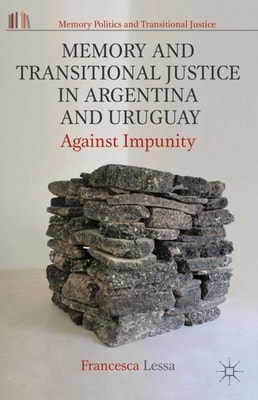
This interdisciplinary study explores the interaction between memory and transitional justice in post-dictatorship Argentina and Uruguay and develops a theoretical framework for bringing these two fields of study together through the concept of critical junctures.
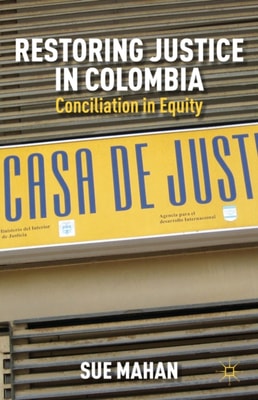
Examining the 'Conciliation in Equity' program in Colombia, this book provides a dramatic, cross-cultural example of community justice and a model for developing alternative methods of resolving crime and conflict.
This book, for the first time, brings Niklas Luhmann's work into dialogue with other theoretical positions, including Lacan, Derrida, Deleuze, gender studies, bioethics, translation, ANT, eco-theories and complexity theory.