The first textbook to address land law as it relates to the Commonwealth Caribbean, it encompasses all areas covered in an undergraduate course on the law of real property in the Caribbean.
Conflicts caused by competing concepts of property are the subject of this book that reshapes study of the relationship between law and society in Australasia and North America.
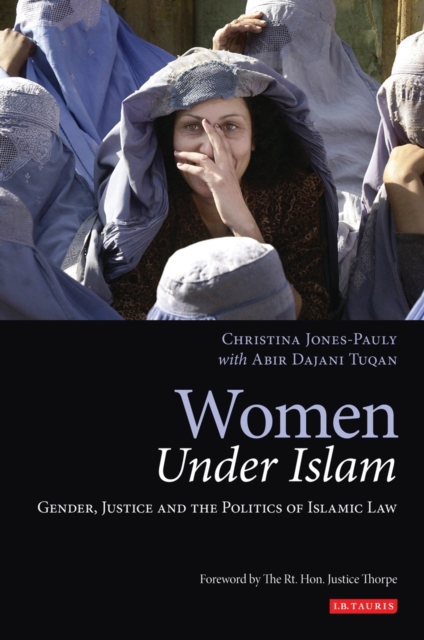
Investigating minority and indigenous women's rights in Muslim-majority states, this book critically examines the human rights regime within international law.
Investigating minority and indigenous women's rights in Muslim-majority states, this book critically examines the human rights regime within international law.
Reconciliation, Transitional and Indigenous Justice presents fifteen reflections upon justice twenty years after the Truth and Reconciliation Commission of South Africa introduced a new paradigm for political reconciliation in settler and post-colonial societies.
Reconciliation, Transitional and Indigenous Justice presents fifteen reflections upon justice twenty years after the Truth and Reconciliation Commission of South Africa introduced a new paradigm for political reconciliation in settler and post-colonial societies.
African legal realities reflect an intertwining of transnational, regional, and local normative frameworks, institutions, and practices that challenge the idea of the sovereign territorial state.
African legal realities reflect an intertwining of transnational, regional, and local normative frameworks, institutions, and practices that challenge the idea of the sovereign territorial state.
Psychoanalysis and Deconstruction: Freud's Psychic Apparatus demonstrates the relevance of deconstructive thinking for the clinical practice of psychoanalysis.
Psychoanalysis and Deconstruction: Freud's Psychic Apparatus demonstrates the relevance of deconstructive thinking for the clinical practice of psychoanalysis.
This book critically assesses categorical divisions between indigenous individual and collective rights regimes embedded in the foundations of international human rights law.
This book critically assesses categorical divisions between indigenous individual and collective rights regimes embedded in the foundations of international human rights law.
In the wake of the protests that spread throughout the Middle East and North Africa in late 2010 and early 2011, Islamist movements of varying political persuasions have risen to prominence.
Passed into law over a decade before the Revolution, the Family Protection Law quickly drew the ire of the conservative clergy and the Ayatollah Khomeini in 1979.
As a result of the uprisings that spread across the Middle East and North Africa in late 2010 and 2011, the issue of state public violence against both men and women dominated the headlines.
During the uprisings of late 2010 and 2011 which took place across the Middle East and North Africa, women made up an important part of the crowds protesting.
Islamic commercial and financial practice has not experienced the trial-and-error style of development that has characterised the development of the common law in the English-speaking world.
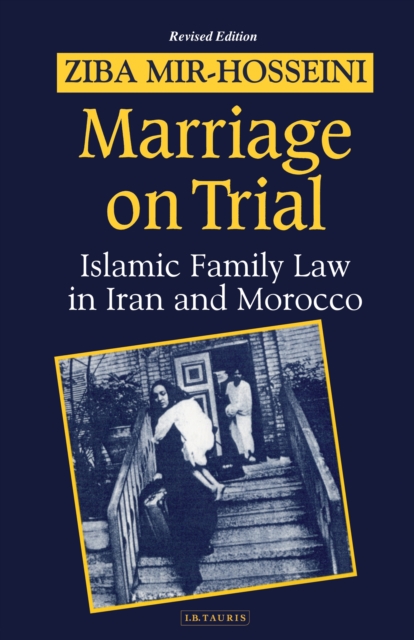
Taking an inter-disciplinary approach which straddles law, anthropology sociology and women's studies, Mir-Hosseini shows how women can turn even the most patriarchal elements of Islamic law to their advantage and achieve their personal marital aims.
This timely book, newly revised for this edition, addresses the question of human rights in the international context, focusing in particular on the interaction between human rights as a value and norm in international relations and Islam as a constituent of political culture in particular societies.
A Brookings Institution Press and American Enterprise Institute publicationAre liability "e;crises"e; an inevitable part of the modern industrial landscape?
How societies can preserve democracy with a human-directed social contractThe recent rise of populist movements, especially in Western democracies, has prompted considerable thoughtful analysis.
Toward an Islamic Reformation is an ambitious attempt to modernize Islamic law, calling for reform of the historical formulations of Islamic law, commonly known as Shari'a that is perceived by many Muslims to be part of the Islamic faith.