In the days of the Roman Empire, the emperor was considered not only the ruler of the state, but also its supreme legal authority, fulfilling the multiple roles of supreme court, legislator, and administrator.
This volume covers the years 1483-1558, a period of immense social, political, and intellectual changes, which profoundly affected the law and its workings.
This book provides an introduction to the laws of the Middle East, defining the contours of a field of study that deserves to be called 'Middle Eastern law'.
Foundations of Private Law is a treatise on the Western law of property, contract, tort and unjust enrichment in both common law systems and civil law systems.
How should constitutional design respond to the opportunities and challenges raised by ethnic, linguistic, religious, and cultural differences, and do so in ways that promote democracy, social justice, peace and stability?
This volume covers the years 1483-1558, a period of immense social, political, and intellectual changes, which profoundly affected the law and its workings.
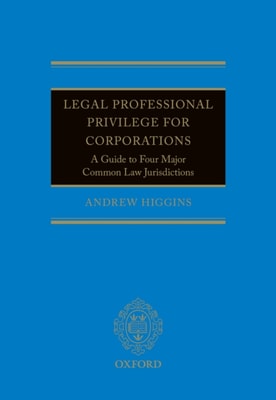
A comprehensive account of legal professional privilege as it applies to corporations covering four major common law jurisdictions: the UK, Australia, Canada and the United States.
A comprehensive account of legal professional privilege as it applies to corporations covering four major common law jurisdictions: the UK, Australia, Canada and the United States.
The Anthropology of Islamic Law shows how hermeneutic theory and practice theory can be brought together to analyze cultural, legal, and religious traditions.
The Anthropology of Islamic Law shows how hermeneutic theory and practice theory can be brought together to analyze cultural, legal, and religious traditions.
This book presents the first comprehensive survey of the multiple versions of Islam propagated across geographical, political, and cultural boundaries during the era of modern globalization.
This book presents the first comprehensive survey of the multiple versions of Islam propagated across geographical, political, and cultural boundaries during the era of modern globalization.
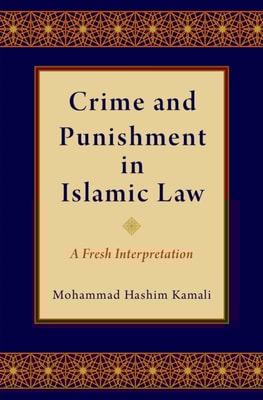
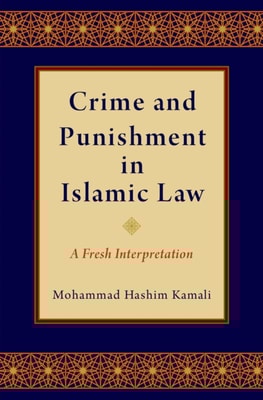
In Crime and Punishment in Islamic Law: A Fresh Interpretation, Mohammad Kamali considers problems associated with and proposals for reform of the hudud punishments prescribed by Islamic criminal law, and other topics related to crime and punishment in Shariah.
In Crime and Punishment in Islamic Law: A Fresh Interpretation, Mohammad Kamali considers problems associated with and proposals for reform of the hudud punishments prescribed by Islamic criminal law, and other topics related to crime and punishment in Shariah.
While scholars have long looked at the role of political Islam in the Middle East, it has been assumed that domestic politics in the wealthy monarchical states of the Arabian Gulf, so-called "e;rentier states"e; where taxes are very low and oil wealth subsidizes the needs of citizens, are largely unaffected by such movements.
While scholars have long looked at the role of political Islam in the Middle East, it has been assumed that domestic politics in the wealthy monarchical states of the Arabian Gulf, so-called "e;rentier states"e; where taxes are very low and oil wealth subsidizes the needs of citizens, are largely unaffected by such movements.
Given that persons typically have a right not to be subjected to the hard treatment of punishment, it would seem natural to conclude that the permissibility of punishment is centrally a question of rights.
Article 38 of the Statute of the International Court of Justice defines "e;international law"e; to include not only "e;custom"e; and "e;convention"e; between States but also "e;the general principles of law recognized by civilized nations"e; within their municipal legal systems.
Article 38 of the Statute of the International Court of Justice defines "e;international law"e; to include not only "e;custom"e; and "e;convention"e; between States but also "e;the general principles of law recognized by civilized nations"e; within their municipal legal systems.
The growth of international law in the post-World War II era stemmed partly from the belief that universal norms would make life for the entire world's population safer, more equitable, and more conducive to each person's acquisition of basic material needs.
In spite of America's identity as a liberal democracy, the vile act of lynching happened frequently in the Southern United States over the course of the nation's history.
The foundation for all study of biblical law is the assumption that the Covenant Code is the oldest legal code in the Hebrew Bible and that all other laws are revisions of that code.