This publication identifies and discusses important challenges affecting eHealth in the EU and North America in the three areas of law, ethics and governance.
Examining infanticide cases in the United States from the late eighteenth to the late nineteenth centuries, Proving Pregnancy documents how womenBlack and white, enslaved and freegradually lost control over reproduction to male medical and legal professionals.
Examining infanticide cases in the United States from the late eighteenth to the late nineteenth centuries, Proving Pregnancy documents how womenBlack and white, enslaved and freegradually lost control over reproduction to male medical and legal professionals.
Studienarbeit aus dem Jahr 2023 im Fachbereich Jura - Rechtsphilosophie, Rechtssoziologie, Rechtsgeschichte, Note: 1,0, Universität Salzburg (Rechtswissenschaften), Sprache: Deutsch, Abstract: Zum guten Verständnis der Werke von Rousseau und Machiavelli ist eine umfassende Kenntnis des Menschenbildes beider Autoren unerlässlich.
Bachelorarbeit aus dem Jahr 2021 im Fachbereich Jura - Sonstiges, Note: 1,3, Hochschule Ostwestfalen-Lippe, Sprache: Deutsch, Abstract: In dieser Bachelorarbeit werden die rechtlichen Bestimmungen zusammengefasst, welche die Verbreitung und den Verkauf von Insekten im Sinne eines Lebensmittels betreffen.
Essay aus dem Jahr 2020 im Fachbereich Jura - Rechtsphilosophie, Rechtssoziologie, Rechtsgeschichte, Note: 1,0, Zeppelin University Friedrichshafen, Sprache: Deutsch, Abstract: Der vorliegende Essay versucht die Frage "Welche Eingriffe in Rechte und Freiheiten darf der Staat im Kontext einer Pandemie wie Corona vornehmen und welche Grenzen sind diesen Eingriffen gesetzt?
Wissenschaftlicher Aufsatz aus dem Jahr 2022 im Fachbereich Jura - Rechtsphilosophie, Rechtssoziologie, Rechtsgeschichte, Note: 15 Punkte, FernUniversität Hagen (Lehrstuhl für Bürgerliches Recht, Privatrechtsgeschichte sowie Handels- und Gesellschaftsrecht), Veranstaltung: Deutsche Rechtsgeschichte, Sprache: Deutsch, Abstract: Zum Zeitpunkt der Gründung der Weimarer Republik im Jahr 1918 war das Recht der Aktiengesellschaft ausschließlich als Teilbereich des Handelsrechts verstanden worden und wurde demgemäß in den §§ 178 bis 334 des um die Jahrhundertwende neu geschaffenen Handelsgesetzbuches geregelt.
Studienarbeit aus dem Jahr 2021 im Fachbereich Jura - Sonstiges, Note: 17 Punkte, Ruprecht-Karls-Universität Heidelberg, Sprache: Deutsch, Abstract: Weshalb ist es dem Staat in einigen Fällen möglich, rechtsstaatlich einzugreifen und Grundgesetze auf Zeit einzuschränken?
Studienarbeit aus dem Jahr 2021 im Fachbereich Jura - Rechtsphilosophie, Rechtssoziologie, Rechtsgeschichte, Note: 15,00, Albert-Ludwigs-Universität Freiburg, Veranstaltung: Geschichte und Wirkung der Schuldrechtsreformen, Sprache: Deutsch, Abstract: Ein Paradigmenwechsel im deutschen Schuldrecht: Tauchen Sie ein in die spannungsgeladene Welt des Schadensersatzrechts und erleben Sie, wie die Schuldrechtsreform von 2002 das BGB revolutionierte!
Studienarbeit aus dem Jahr 2021 im Fachbereich Jura - Sonstiges, Note: 1,0, Universität Kassel, Sprache: Deutsch, Abstract: Vor dem Hintergrund der Gesetzesnovelle beschäftigt sich diese Arbeit mit der Frage, welche Chancen und Risiken für die Verwaltung durch die Reform des Kinder- und Jugendhilferechts hin zu einem „inklusiven SGB VIII“ entstehen.
Essay aus dem Jahr 2020 im Fachbereich Jura - Sonstiges, Note: 2,0, FOM Hochschule für Oekonomie & Management gemeinnützige GmbH, München früher Fachhochschule, Veranstaltung: Insolvenzrecht, Sprache: Deutsch, Abstract: Die folgende Arbeit beschäftigt sich mit dem COVID-19-Insolvenzaussetzungsgesetz (COVInsAG), welches zum 01.
Examensarbeit aus dem Jahr 2022 im Fachbereich Jura - Sonstiges, Note: 14, Gottfried Wilhelm Leibniz Universität Hannover, Sprache: Deutsch, Abstract: Die Arbeit thematisiert die stete Hinwendung zum Leben und eine sich verändernde Sichtweise auf die Aufgabe der Privatrechtswissenschaft.
Akademische Arbeit aus dem Jahr 2022 im Fachbereich Jura - Sonstiges, Martin-Luther-Universität Halle-Wittenberg, Veranstaltung: Kriminologie, Sprache: Deutsch, Abstract: Mit Geldwäsche assoziiert man Mafia, Bargeld, unübersichtliche Transaktionen und Luxusinvestments.
Essay aus dem Jahr 2021 im Fachbereich Jura - Rechtsphilosophie, Rechtssoziologie, Rechtsgeschichte, Note: 1, Johannes Kepler Universität Linz, Veranstaltung: Seminar Österreichische und Europäische Rechtsgeschichte, Sprache: Deutsch, Abstract: Als eine der bedeutendsten Bestimmungen nach den beiden Weltkriegen normierten die jeweiligen Staatsverträge das Anschlussverbot Österreichs an Deutschland.
Democracy in Tanzania examines one of Africa's most important contemporary governance challenges: the struggle between institutional power and democratic accountability.
Die Modernisierung des Verwaltungsverfahrensrechts ist eine Daueraufgabe für Gesetzgeber und Rechtswissenschaft, die sich in Deutschland wie in Taiwan gleichermaßen stellt.
Auch nach der im Jahre 2017 erfolgten Novellierung des Bundesarchivgesetzes gelten für Akten des Bundesverfassungsgerichts und anderer Oberster Bundesgerichte sowie höherer Justizbehörden immer noch besondere Zugangs- und Benutzungsbedingungen, die die Erforschung von zentralen Problemfeldern der Justizgeschichte der BRD erschweren.
Das 60-jährige Bestehen des Instituts für Osteuropäisches Recht der Christian-Albrechts-Universität zu Kiel gibt Anlass, auf die deutschsprachige Ostrechtsforschung zurückzublicken.
Gegenstand dieser Untersuchung sind 3340 rechtswissenschaftliche Rezensionen der "Kritischen Vierteljahresschrift für Gesetzgebung und Rechtswissenschaft" im Zweiten Deutschen Kaiserreich (1871–1918).
In dem Band dokumentiert sind weitere 34 Fundstücke aus der Bibliothek des Instituts für Rechtswissenschaften der Technischen Universität Braunschweig, "Werke" aus der Zeit zwischen 1933 und 1945, die dort unbeschadet, was wohl heißen dürfte: unbemerkt und ungelesen, die Jahrzehnte nach dem Ende des Zweiten Weltkrieges überdauert haben.
Öffentlich-rechtliche Verträge, Planfeststellung, Bürgerbeteiligung sowie der Umgang mit Verfahrensfehlern stellen Gesetzgebung und Rechtswissenschaft vor stetig neue Herausforderungen, bei deren Bewältigung die Rechtsvergleichung einen wichtigen Beitrag leisten kann.
Mit dem jeweils zum Jahresbeginn vorgelegten Jahrbuch wird das Ziel verfolgt:°°- zu aktuellen Fragen des Windenergierechts Stellung zu nehmen,°°- Beiträge zur Konturierung des Rechtsgebiets zu leisten,°°- die im Newsletter WER-aktuell dokumentierten Informationen gebündelt zu präsentieren.
Mit dem Inkrafttreten der Änderungen zur russischen Verfassung endete Anfang Juli 2020 der von Präsident Putin zu Beginn des Jahres initiierte Reformprozess in Rekordzeit.
Bei den offenen Vermögensfragen handelt es sich um rechtsstaatswidrige Eingriffe in Privatvermögen, zumeist die entschädigungslose Entziehung von Grundstücken.
Will eine Aktiengesellschaft frisches Bargeld beschaffen, ohne einen Kredit aufzunehmen, bietet die Kapitalerhöhung gegen Einlagen eine willkommene Alternative.
Zum zehnjährigen Bestehen gibt das Jahrbuch der Rechtsdidaktik 2020/21 der Perspektive der Studierenden breiteren Raum und adressiert zentrale aktuelle Fragen unserer Zeit: Online-/Präsenzlehre, Legal Tech in der Juristenausbildung sowie das disruptive Potenzial der Parallelanbieter juristischer Qualifikationen.
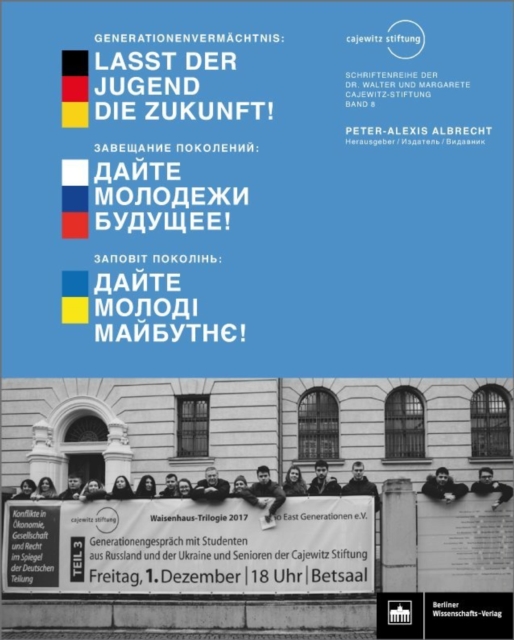
Die Berliner Cajewitz-Stiftung lud 2017 im Rahmen einer öffentlichen Trilogie "Unser Nachbar Russland" zur Begegnung von jungen Russen und Ukrainern mit Berliner Senioren ein – im Anspruch und der Hoffnung, zu friedlicher und wirtschaftlich ausgeglichener Nähe zu den osteuropäischen Gesellschaften beizutragen.
Georg-Christoph von Unruh wird zu Recht als der "Nestor der deutschen Staatsrechtslehre", insbesondere der Kommunal- und Verwaltungswissenschaften bezeichnet.
Innertheologisch ist das Kirchenrecht als Dialogpartner oft nicht gefragt, vielmehr wird es eher als Grund für den Reformstau in der römisch-katholischen Kirche angesehen.