In The End of Negotiable Instruments: Bringing Payment Systems Law Out of the Past, author James Rogers challenges the basic assumptions of the law of checks and notes and its history, and provides a well-reasoned account of how the law could be changed to better suit the evolution of new payment technologies.
Foundational Principles of Contract Law not only sets out the principles and rules of contract law, it places more emphasis on what the principles and rules of contract law should be, based on policy, morality, and experience.
International Transactions in Goods: Global Sales in Comparative Context explains the complex transactional structures common in international sales, from both an international and a domestic legal perspective.
Punishing Corporate Crime: Legal Penalties for Criminal and Regulatory Violations provides a practical discussion of criminal punishment trends directed at the corporate entity.
In this much anticipated sequel to the legal bestseller, The Future of Law, Susskind lays down a challenge to all lawyers to ask themselves, with their hands on their hearts, what elements of their current workload could be undertaken differently - more quickly, cheaply, efficiently, or to a higher quality - using alternative methods of working.
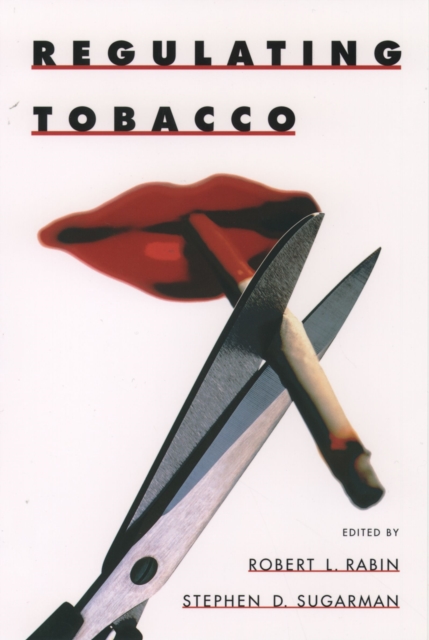
The proliferation of lawsuits against the tobacco industry has had profound implications for American health policy, tort law, civil law, and welfare and social policy.
Private International Law Online is a dedicated analysis of the private international law framework in the European Union as it applies to online activities such as content publishing, selling and advertising goods through internet marketplaces, or offering services that are performed online.
Trade Finance provides a much-needed re-examination of the relevant legal principles and a study of the challenges posed to current legal structures by technological changes, financial innovation, and international regulation.
Providing a comprehensive and detailed treatment of termination as a remedy for breach of contract, this book gives a current account of the law and explains this complex area in a practical context.
This timely new work provides the most comprehensive coverage of debt restructuring tools available in the UK including analysis of the new restructuring plan under Part 26A of the Companies Act 2006 and emerging themes from related precedent case law.

Less than a decade after the Financial Crisis, we are witnessing the fast emergence of a new financial order driven by three different, yet interconnected, dynamics: first, the rapid application of technology - such as big data, machine learning, and distributed computing - to banking, lending, and investing, in particular with the emergence of virtual currencies and digital finance; second, a disintermediation fuelled by the rise of peer-to-peer lending platforms and crowd investment which challenge the traditional banking model and may, over time, lead to a transformation of the way both retail and corporate customers bank; and, third, a tendency of de-bureaucratisation under which new platforms and technologies challenge established organisational patterns that regulate finance and manage the money supply.
This monograph is concerned with two foundational principles of English property law: the principle of relativity of title and the principle that possession is a source of title.
Capital Markets Union in Europe analyses the legal and economic implications of the European Commission's plans to form a Capital Markets Union (CMU) in Europe, which will have a major impact on financial markets and institutions both in the region and beyond.
This book contains the most detailed multi-jurisdictional analysis of directors' conflicts available drawing together relevant case law, codes and statutory regulation from the law applying to directors of companies incorporated under the UK Companies Acts, with extensive reference to the law in Australia, Canada, Hong Kong and New Zealand.
Capital Markets Union in Europe analyses the legal and economic implications of the European Commission's plans to form a Capital Markets Union (CMU) in Europe, which will have a major impact on financial markets and institutions both in the region and beyond.
The book provides a critical analysis of electronic alternatives to documents used in the international sale of goods carried by sea, including invoices, bills of lading, certificates of insurance, as well as other documentation required under documentary credits, and payment processing arrangements.
Carriage of Goods by Sea provides an extensive comparative analysis of the carriage of goods by sea, examining the principles, regulation, responsibilities, obligations, and immunities within this area of English law, and other common law jurisdictions, in a single volume.
A pressing problem often facing commercial practitioners is how to determine the principle which would dictate when a proprietary claim is available and when it is not.
Delay in the Performance of Contractual Obligations remains the leading practitioner work on the subject and includes consideration of variations in practice in different sectors.
European Contract Law unification projects have recently advanced from the Draft Common Frame of Reference (2009) to a European Commission proposal for an optional Common European Sales Law (2011) which is to facilitate cross-border marketing.