This book provides a comprehensive practitioner guide to the new competition law framework in the UK, following the widespread and significant reforms introduced in April 2014 and brought about by the Enterprise Regulatory and Reform Act 2013 (ERRA 2013); and reforms brought about by the Consumer Rights Act 2015.
The Consumer Rights Act is a vital and far-reaching piece of legislation containing provisions specific to contract and consumer law, criminal law, and competition law.
The Consumer Rights Act is a vital and far-reaching piece of legislation containing provisions specific to contract and consumer law, criminal law, and competition law.
Environmental Integration in Competition and Free-Movement Laws engages in a comprehensive analysis of the obligation of Article 11 TFEU (integration of environmental protection requirements) in the three core areas of EU internal market law: competition, state aid, and free movement.
Environmental Integration in Competition and Free-Movement Laws engages in a comprehensive analysis of the obligation of Article 11 TFEU (integration of environmental protection requirements) in the three core areas of EU internal market law: competition, state aid, and free movement.
EU competition law plays a central role in the process of European integration both as a multifaceted tool for creating and policing the internal market as well as in organising national markets.
Despite the growing importance of 'consumer welfare' in EU competition law debates, there remains a significant disconnect between rhetoric and reality, as consumers and their interests still play only an ancillary role in this area of law.
Despite the growing importance of 'consumer welfare' in EU competition law debates, there remains a significant disconnect between rhetoric and reality, as consumers and their interests still play only an ancillary role in this area of law.
Rules controlling State aid and subsidies on the EU and the WTO level can have a decisive influence on both regulatory and distributive decision-making.
Rules controlling State aid and subsidies on the EU and the WTO level can have a decisive influence on both regulatory and distributive decision-making.
To offer a core concept of intellectual property, to consider various justifications for the recognition of intellectual property rights and to expound their operation in particular areas of activity is the purpose of this book.
In recent times, commercial activities of companies exercising market power through their intellectual property rights have increasingly come under the scrutiny of the EU competition authorities.
The significant evolution of EU competition law in the last 15 years has been fundamentally influenced by economic theory, and economic aspects of cartel prosecution are increasingly relevant in modern competition practice.
The significant evolution of EU competition law in the last 15 years has been fundamentally influenced by economic theory, and economic aspects of cartel prosecution are increasingly relevant in modern competition practice.
This book focuses on market law and policy in sub-Saharan Africa, showing how markets can be harnessed by poorer and developing economies to help make the markets work for them: to help them integrate into the world economy and provide a better standard of living for their people while preserving their values of inclusive development.
This book focuses on market law and policy in sub-Saharan Africa, showing how markets can be harnessed by poorer and developing economies to help make the markets work for them: to help them integrate into the world economy and provide a better standard of living for their people while preserving their values of inclusive development.
Conventional wisdom holds that robust enforcement of intellectual property (IP) right suppress competition and innovation by shielding incumbents against the entry threats posed by smaller innovators.
Conventional wisdom holds that robust enforcement of intellectual property (IP) right suppress competition and innovation by shielding incumbents against the entry threats posed by smaller innovators.
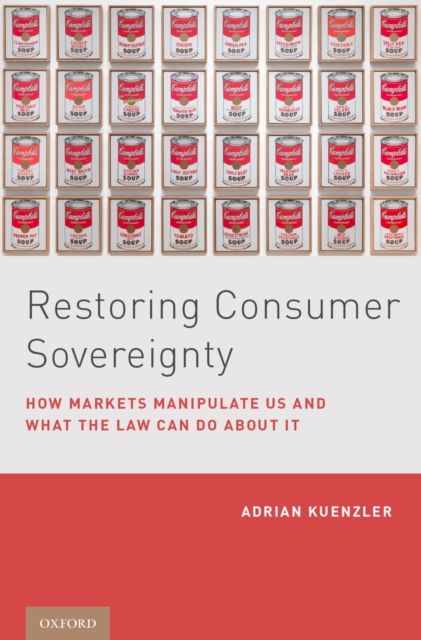
In today's highly concentrated marketplaces, social and cultural values--such as the lifestyle connotations that manufacturers and sellers confer upon their goods--often shape consumers' prior beliefs and attitudes and affect the weight given to new information by consumers who make purchasing decisions in the marketplace.
In today's highly concentrated marketplaces, social and cultural values--such as the lifestyle connotations that manufacturers and sellers confer upon their goods--often shape consumers' prior beliefs and attitudes and affect the weight given to new information by consumers who make purchasing decisions in the marketplace.
The controversial 1922 Federal Baseball Supreme Court ruling held that the "e;business of base ball"e; was not subject to the Sherman Antitrust Act because it did not constitute interstate commerce.
The Abolition of Antitrust asserts that antitrust laws--on economic, legal, and moral grounds--are bad, and provides convincing evidence supporting arguments for their total abolition.
Two of the objectives of the Chinese Copyright Law are to protect the copyright of authors to their literary and artistic works and encourage the creation and dissemination of works.
This book explores the relationship between intellectual property law and competition law, proposing a harmonious equilibrium in the dynamic landscape of evolving technology.
This book is the first comprehensive study of the interplay between the cutting-edge regulation of financial infrastructure and international economic integration.