Prior to the progressive development of the law of armed conflict heralded by the 1949 Geneva Conventions - most particularly in relation to the concepts of international and non-international armed conflict-the customary doctrine on recognition of belligerency functioned for almost 200 years as the definitive legal scheme for differentiating internal conflict from "e;civil wars"e;, in which the law of war as applicable between states applied de jure.
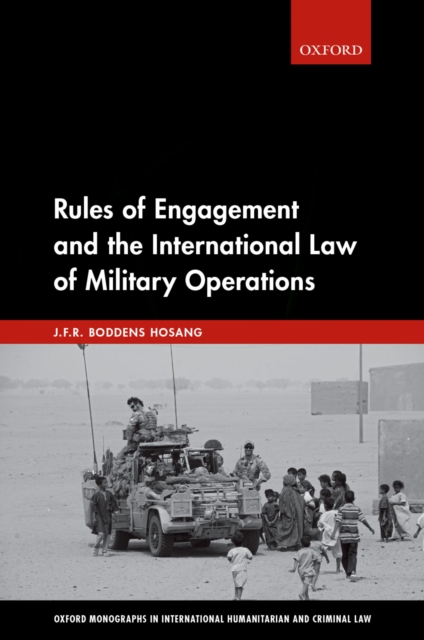
The book systematically analyses the relationship and interaction between rules of engagement (ROE) and the legal framework regulating armed conflicts, both at the international and national levels.
The book systematically analyses the relationship and interaction between rules of engagement (ROE) and the legal framework regulating armed conflicts, both at the international and national levels.
The 'Legal Pluriverse' Surrounding Multinational Military Operations conceptualizes and examines the "e;Pluriverse"e;: the multiplicity of rules that apply to and regulate contemporary multinational missions, and the array of actors involved.
The 'Legal Pluriverse' Surrounding Multinational Military Operations conceptualizes and examines the "e;Pluriverse"e;: the multiplicity of rules that apply to and regulate contemporary multinational missions, and the array of actors involved.
Over the last 20 years the world's most advanced militaries have invited a small number of military legal professionals into the heart of their targeting operations, spaces which had previously been exclusively for generals and commanders.
Over the last 20 years the world's most advanced militaries have invited a small number of military legal professionals into the heart of their targeting operations, spaces which had previously been exclusively for generals and commanders.
This book provides the first comprehensive analysis of factors that transform a prima facie non-international armed conflict (NIAC) into an international armed conflict (IAC) and the consequences that follow from this process of internationalization.
This book provides the first comprehensive analysis of factors that transform a prima facie non-international armed conflict (NIAC) into an international armed conflict (IAC) and the consequences that follow from this process of internationalization.
The Law of Armed Conflict is usually understood to be a regime of exception that applies only during armed conflict and regulates hostilities among enemies.
The Law of Armed Conflict is usually understood to be a regime of exception that applies only during armed conflict and regulates hostilities among enemies.
Presenting the first analytical overview of the legal foundations of the EU's Common Security and Defence Policy (CSDP), this book provides a detailed examination of the law and practice of the EU's security policy.
Presenting the first analytical overview of the legal foundations of the EU's Common Security and Defence Policy (CSDP), this book provides a detailed examination of the law and practice of the EU's security policy.
In countries such as Syria, Iraq, South Sudan, and Yemen, internationally recognized governments embroiled in protracted armed conflicts, and with very little control over their territory, have requested direct military assistance from other states.
In countries such as Syria, Iraq, South Sudan, and Yemen, internationally recognized governments embroiled in protracted armed conflicts, and with very little control over their territory, have requested direct military assistance from other states.
Rule of Law in War places international law at the centre of the transformation of United States counterinsurgency (COIN) that occurred during the Iraq and Afghanistan wars.
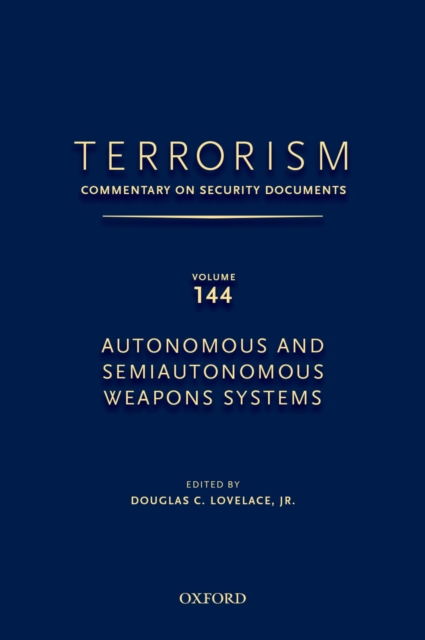
Terrorism: Commentary on Security Documents is a series that provides primary source documents and expert commentary on various topics relating to the worldwide effort to combat terrorism, as well as efforts by the United States and other nations to protect their national security interests.
Challenging the conventional narrative that the European Union suffers from a "e;democratic deficit,"e; Athanasios Psygkas argues that EU mandates have enhanced the democratic accountability of national regulatory agencies.
Challenging the conventional narrative that the European Union suffers from a "e;democratic deficit,"e; Athanasios Psygkas argues that EU mandates have enhanced the democratic accountability of national regulatory agencies.