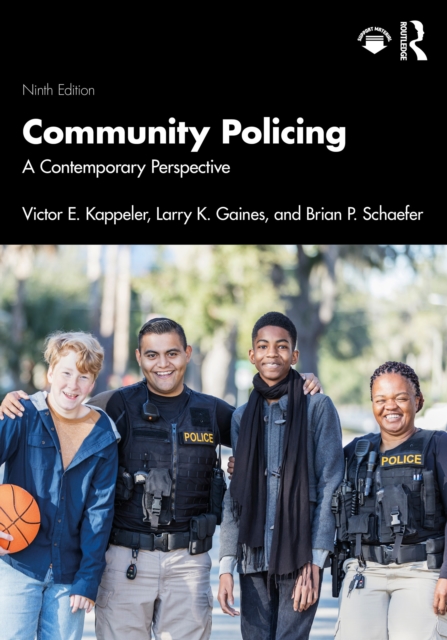
This book provides comprehensive coverage of community policing, the philosophy and organizational strategy that expands the traditional police mandate of fighting crime to include forming partnerships with citizenry that endorse mutual support and participation.
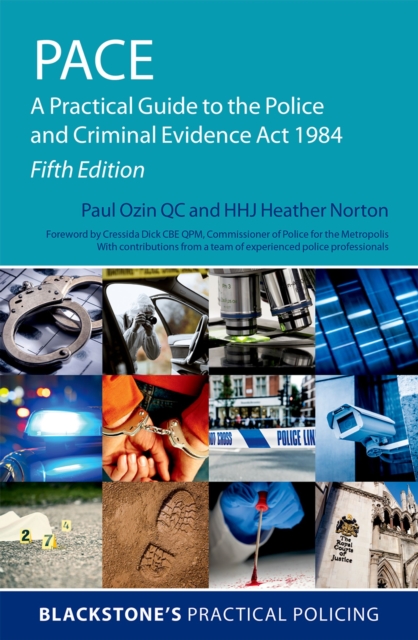
Providing practical guidance on what remains the single most important statutory basis for police duties and powers in England and Wales - the Police and Criminal Evidence Act (PACE) 1984 and its Codes of Practice - this is an essential reference source which the busy police officer or legal practitioner cannot afford to be without.
Providing practical guidance on what remains the single most important statutory basis for police duties and powers in England and Wales - the Police and Criminal Evidence Act (PACE) 1984 and its Codes of Practice - this is an essential reference source which the busy police officer or legal practitioner cannot afford to be without.
Led by Professor David Ormerod and David Perry QC, our team of authors has been hand-picked to ensure that you can trust our unique combination of authority and practicality.
Arising from Soviet prison camps in the 1930s, career criminals known as 'thieves-in-law' exist in one form or another throughout post-Soviet countries and have evolved into major transnational organized criminal networks since the dissolution of the USSR.
Arising from Soviet prison camps in the 1930s, career criminals known as 'thieves-in-law' exist in one form or another throughout post-Soviet countries and have evolved into major transnational organized criminal networks since the dissolution of the USSR.
Foundational Texts in Modern Criminal Law presents essays in which scholars from various countries and legal systems engage critically with formative texts in criminal legal thought since Hobbes.
Foundational Texts in Modern Criminal Law presents essays in which scholars from various countries and legal systems engage critically with formative texts in criminal legal thought since Hobbes.
The Multicultural Prison: Ethnicity, Masculinity, and Social Relations among Prisoners presents a unique sociological analysis of the daily negotiation of ethnic difference within the closed world of the male prison.
The Multicultural Prison: Ethnicity, Masculinity, and Social Relations among Prisoners presents a unique sociological analysis of the daily negotiation of ethnic difference within the closed world of the male prison.
An ideal first source of reference for practitioners, judges, and legal representatives working on any case affecting prisoners, Blackstone's Prison Law Handbook is a complete practical guide to the main areas that give rise to prisoner complaints which include sentence calculation, Independent Adjudications, licence recall, and Parole Board hearings.
An ideal first source of reference for practitioners, judges, and legal representatives working on any case affecting prisoners, Blackstone's Prison Law Handbook is a complete practical guide to the main areas that give rise to prisoner complaints which include sentence calculation, Independent Adjudications, licence recall, and Parole Board hearings.
Even as restorative justice has captured the attention of justice practitioners, academics and communities worldwide and most research suggests that it has the potential to repair the harm of a criminal offense and reduce offending, there is also evidence that it can have no effect or even make things worse.
Even as restorative justice has captured the attention of justice practitioners, academics and communities worldwide and most research suggests that it has the potential to repair the harm of a criminal offense and reduce offending, there is also evidence that it can have no effect or even make things worse.
Conferencing and Restorative Justice: International Practices and Perspectives offers an analysis of conferencing practices around the world, examining the range of approaches to different types of crimes and offender age groups, and assessing their outcomes.
Conferencing and Restorative Justice: International Practices and Perspectives offers an analysis of conferencing practices around the world, examining the range of approaches to different types of crimes and offender age groups, and assessing their outcomes.
The product of an 18 month empirical study which examined the use of restorative justice for hate crime in the United Kingdom, this book draws together theory and practice in order to examine the causes and consequences of hate crime victimisation.
The product of an 18 month empirical study which examined the use of restorative justice for hate crime in the United Kingdom, this book draws together theory and practice in order to examine the causes and consequences of hate crime victimisation.
Celebrating the 50th Anniversary of the Oxford Centre for Criminology, this edited collection of essays seeks to explore the changing contours of criminal justice over the past half century and to consider possible shifts over the next few decades.
Celebrating the 50th Anniversary of the Oxford Centre for Criminology, this edited collection of essays seeks to explore the changing contours of criminal justice over the past half century and to consider possible shifts over the next few decades.
From being a minority interest of NGOs and niche law firms, corruption has grown into a subject which is rarely out of the media and which corporate lawyers and specialist consultants worldwide have seen as a new business opportunity.
From being a minority interest of NGOs and niche law firms, corruption has grown into a subject which is rarely out of the media and which corporate lawyers and specialist consultants worldwide have seen as a new business opportunity.
With expert evidence used more and more often in criminal jury cases, evaluation of its admissibility and presentation is being increasingly thrust into the spotlight.
With expert evidence used more and more often in criminal jury cases, evaluation of its admissibility and presentation is being increasingly thrust into the spotlight.
If a defendant is on trial for a crime such as burglary, to what extent should the fact that he has a previous conviction for burglary feature in his trial?
If a defendant is on trial for a crime such as burglary, to what extent should the fact that he has a previous conviction for burglary feature in his trial?