The governments of several countries are in the process of reforming their regulatory regimes for the railways, and there is much debate about the appropriate regulation of transport in general and railways in particular-especially in light of environmental concerns about traffic congestion and air pollution and economic concerns about the financing of infrastructure and services.
Case studies for each major topic are supplemented by discussion and questions for classroom reviewInstructor's CD-ROM contains PowerPoint presentations and chapter outlines
Transportation Planning and Public Participation: Theory, Process, and Practice explains why, and then how, transportation professionals can treat public participation as an opportunity to improve their projects and identify problems before they do real damage.
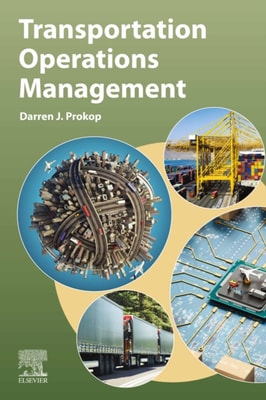
Transportation Operations Management provides the analytical tools and industry-wide context necessary to understand and address the critical real-world problems in transportation operations and planning that shippers, carriers, and third-party logistics providers face every day.
The aviation industry is being transformed by the use of unmanned aerial vehicles, or drones - commercially, militarily, scientifically and recreationally.
Dynamics and Stochasticity in Transportation Systems: Solutions for Transportation Network Modeling breaks new ground on the topics, providing consistent and comprehensive coverage of steady state equilibrium and dynamic assignment within a common strategy.
Empowering the New Mobility Workforce: Educating, Training, and Inspiring Future Transportation Professionals enlists a multidisciplinary roster of subject matter specialists who identify the priorities and strategies for cultivating a skilled workforce for the rapidly changing transportation landscape.
Social Issues in Transport Planning, Volume 8 in the Advances in Transport Policy and Planning series, highlights new advances in the field, with this new volume presenting interesting chapters.
Policy Implications of Autonomous Vehicles, Volume Five in the Advances in Transport Policy and Planning series systematically reviews policy relevant implications of AVs and the associated possible policy responses, and discusses future avenues for policy making and research.
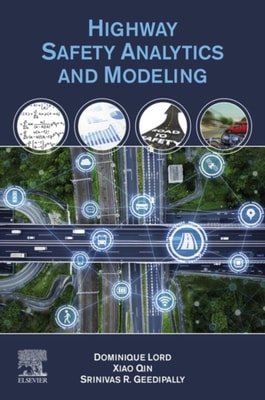
Highway Safety Analytics and Modeling comprehensively covers the key elements needed to make effective transportation engineering and policy decisions based on highway safety data analysis in a single.
Climate Change Adaptation for Transportation Systems examines the international state of knowledge on climate change and weather and their potential impacts on the planning, design and serviceability of transportation networks.
Big Data Analytics in Cyber-Physical Systems: Machine Learning for the Internet of Things examines sensor signal processing, IoT gateways, optimization and decision-making, intelligent mobility, and implementation of machine learning algorithms in embedded systems.
While many transportation and city planners, researchers, students, practitioners, and political leaders are familiar with the technical nature and promise of vehicle automation, consensus is not yet often seen on the impact that will result, or the policies and actions that those responsible for transportation systems should take.
Urban Mobility and the Smartphone: Transportation, Travel Behavior and Public Policy provides a global synthesis of the transformation of urban mobility by the smartphone, clarifying the definitions of new concepts and objects in mobility studies, accounting for the changes in transportation and travel behavior triggered by the spread of the smartphone, and discussing the implications of these changes for policy-making and research.
Empowering the New Mobility Workforce: Educating, Training, and Inspiring Future Transportation Professionals enlists a multidisciplinary roster of subject matter specialists who identify the priorities and strategies for cultivating a skilled workforce for the rapidly changing transportation landscape.
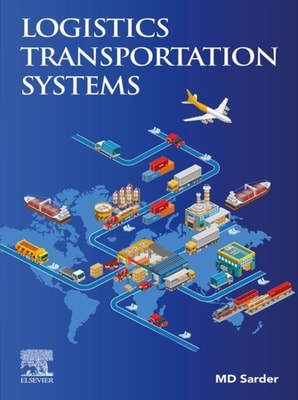
Logistics Transportation Systems compiles multiple topics on transportation logistics systems from both qualitative and quantitative perspectives, providing detailed examples of real-world logistics workflows.
Technology in Supply Chain Management and Logistics: Current Practice and Future Applications analyzes the implications of these technologies in a variety of supply chain settings, including block chain, Internet of Things (IoT), inventory optimization, and medical supply chain.
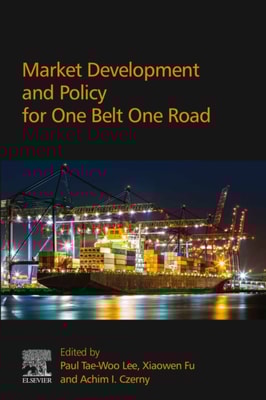
The Belt and Road initiative is marketed by the Chinese government as the "e;twenty-first century maritime Silk Road and the "e;Silk Road economic belt.
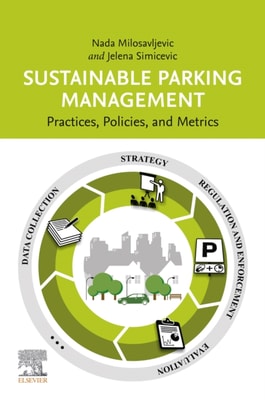
Sustainable Parking Management provides the latest research findings in the field, encouraging transport planners and policymakers to use parking policy as a tool for managing parking and transport systems.
The Evolving Impacts of ICT on Activities and Travel Behavior, Volume Three in the Advances in Transport Policy and Planning series, assesses both successful and unsuccessful practices and policies from around the world on the topic.
The Sharing Economy and the Relevance for Transport, Volume Four in the Advances in Transport Policy and Planning series, assesses both successful and unsuccessful practices and policies from around the world.
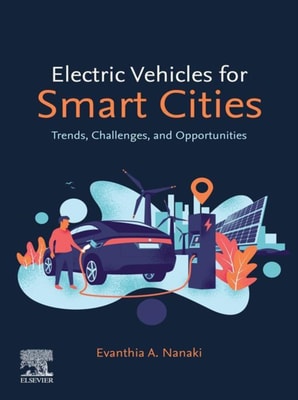
Electric Vehicles for Smart Cities: Trends, Challenges, and Opportunities uniquely examines different approaches to electric vehicle deployment in the context of smart cities.
Smart Delivery Systems: Solving Complex Vehicle Routing Problems examines both exact and approximate methods for delivering optimal solutions to rich vehicle routing problems, showing both the advantages and disadvantages of each approach.
Transportation Operations Management provides the analytical tools and industry-wide context necessary to understand and address the critical real-world problems in transportation operations and planning that shippers, carriers, and third-party logistics providers face every day.
At heart, transportation policy and research are about people: connecting individuals and the places they live, ensuring sufficient and equitable access, and facilitating movement.
Global Practices on Road Traffic Signal Control is a valuable reference on the current state-of-the-art of road traffic signal control around the world.
Transportation, Land Use, and Environmental Planning examines the practices and policies linking transportation, land use and environmental planning needed to achieve a healthy environment, thriving economy, and more equitable and inclusive society.
Sustainable Urban Mobility Pathways examines how sustainable urban mobility solutions contribute to achieving worldwide sustainable development and global climate change targets, while also identifying barriers to implementation and strategies to overcome them.
Dynamics and Stochasticity in Transportation Systems: Solutions for Transportation Network Modeling breaks new ground on the topics, providing consistent and comprehensive coverage of steady state equilibrium and dynamic assignment within a common strategy.
Transportation Planning and Public Participation: Theory, Process, and Practice explains why, and then how, transportation professionals can treat public participation as an opportunity to improve their projects and identify problems before they do real damage.
Urban Mobility and the Smartphone: Transportation, Travel Behavior and Public Policy provides a global synthesis of the transformation of urban mobility by the smartphone, clarifying the definitions of new concepts and objects in mobility studies, accounting for the changes in transportation and travel behavior triggered by the spread of the smartphone, and discussing the implications of these changes for policy-making and research.
Estimating the Human Cost of Transportation Accidents: Methodologies and Policy Implications discusses the estimation methods needed to determine the monetary value of loss of life and quality of life when evaluating transportation safety programs, policies and projects.
In an increasingly globalised world, despite reductions in costs and time, transportation has become even more important as a facilitator of economic and human interaction; this is reflected in technical advances in transportation systems, increasing interest in how transportation interacts with society and the need to provide novel approaches to understanding its impacts.
This book introduces legal aspects of business networks in logistics with the example of shippers' co-operation in cargo bundling, which is the practice of manufacturing and distributing companies (shippers) consolidating cargo before the engagement of a carrier.
Maritime Accident and Incident Investigation covers a wide range of topics relating to maritime-orientated organisational hazards and risks, as well as root cause analyses and techniques for analysing evidence.
Transportation, Land Use, and Environmental Planning examines the practices and policies linking transportation, land use and environmental planning needed to achieve a healthy environment, thriving economy, and more equitable and inclusive society.
Ideal for students taking law modules on construction, surveying, real estate, planning and civil engineering courses, Galbraith's Construction and Land Management Law for Students is an excellent overview of the key legal issues in the built environment.
Ideal for students taking law modules on construction, surveying, real estate, planning and civil engineering courses, Galbraith's Construction and Land Management Law for Students is an excellent overview of the key legal issues in the built environment.
As technology continues to reshape global industries, the maritime sector faces profound changes with the emergence of Maritime Autonomous Surface Ships (MASS).
As technology continues to reshape global industries, the maritime sector faces profound changes with the emergence of Maritime Autonomous Surface Ships (MASS).