This book gives a special emphasis to state-of-the-art descriptions of approaches, methods, initiatives, and projects from universities, stakeholders, organizations, and civil society across the world, regarding cross-cutting issues in sustainable development.
Empowering the New Mobility Workforce: Educating, Training, and Inspiring Future Transportation Professionals enlists a multidisciplinary roster of subject matter specialists who identify the priorities and strategies for cultivating a skilled workforce for the rapidly changing transportation landscape.
Social Issues in Transport Planning, Volume 8 in the Advances in Transport Policy and Planning series, highlights new advances in the field, with this new volume presenting interesting chapters.
Data, Statistics, and Useful Numbers for Environmental Sustainability: Bringing the Numbers to Life is an accessible reference for researchers working in environmental and sustainability fields who need to communicate the latest data and statistics to reinforce their own research or message.
Solving the global climate crisis through local partnerships and experimentationGlobal climate diplomacy-from the Kyoto Protocol to the Paris Agreement-is not working.
This edited collection is grounded in a green criminological approach to understand whether the law, both in effect and implications, reflects, refracts, or sublimates the social, political and ecological conditions of our times.
Food and nutrition security - identified via availability, access, utilization, and stability - and transitions to sustainable food systems are major discourses in the agro-food arena, as many countries today experience different forms of malnutrition simultaneously, such as child undernutrition, anemia among women, and adult obesity.
Policy Implications of Autonomous Vehicles, Volume Five in the Advances in Transport Policy and Planning series systematically reviews policy relevant implications of AVs and the associated possible policy responses, and discusses future avenues for policy making and research.
Standard Transport Appraisal Methods, Volume 6 in the Advances in Transport Policy and Planning series, assesses both successful and unsuccessful practices and policies from around the world.
Governing Arctic Seas introduces the concept of ecopolitical regions, using in-depth analyses of the Bering Strait and Barents Sea Regions to demonstrate how integrating the natural sciences, social sciences and Indigenous knowledge can reveal patterns, trends and processes as the basis for informed decisionmaking.
The term "e;total petroleum hydrocarbons"e; (TPHs) is used for any mixture of several hundred hydrocarbons found in crude oil, and they represent the sum of volatile petroleum hydrocarbons and extractable petroleum hydrocarbons.
In light of the novel corona virus outbreak in December 2019 and its subsequent impact on entire world as a global pandemic, the book attempts to provide integrated risk assessment on Covid -19 like pandemics, as well as to understand the societal, environment and economic impact of the outbreak in various sectors of development.
Highway Safety Analytics and Modeling comprehensively covers the key elements needed to make effective transportation engineering and policy decisions based on highway safety data analysis in a single.
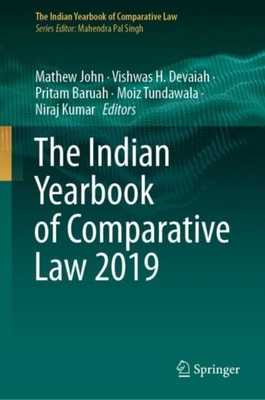
This book is a compilation of thematically arranged essays that critically analyze emerging developments, issues, and perspectives in the field of comparative law, especially in the field of comparative constitutional law.
This book addresses the need for deeper understanding of regulatory and policy regimes around the world in relation to the use of water for the production of 'unconventional' hydrocarbons, including shale gas, coal bed methane and tight oil, through hydraulic fracturing.
This book aims to identify the challenges presented by current urban environmental governance practices in fast growing Indian cities, to propose changes to the current governance implementation strategies, and to explore the best practices to achieve sustainable urban models through Indian and global perspectives.
Climate Change Adaptation for Transportation Systems examines the international state of knowledge on climate change and weather and their potential impacts on the planning, design and serviceability of transportation networks.
Big Data Analytics in Cyber-Physical Systems: Machine Learning for the Internet of Things examines sensor signal processing, IoT gateways, optimization and decision-making, intelligent mobility, and implementation of machine learning algorithms in embedded systems.
While many transportation and city planners, researchers, students, practitioners, and political leaders are familiar with the technical nature and promise of vehicle automation, consensus is not yet often seen on the impact that will result, or the policies and actions that those responsible for transportation systems should take.
Urban Mobility and the Smartphone: Transportation, Travel Behavior and Public Policy provides a global synthesis of the transformation of urban mobility by the smartphone, clarifying the definitions of new concepts and objects in mobility studies, accounting for the changes in transportation and travel behavior triggered by the spread of the smartphone, and discussing the implications of these changes for policy-making and research.
Empowering the New Mobility Workforce: Educating, Training, and Inspiring Future Transportation Professionals enlists a multidisciplinary roster of subject matter specialists who identify the priorities and strategies for cultivating a skilled workforce for the rapidly changing transportation landscape.
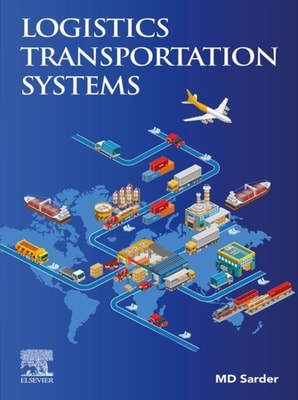
Logistics Transportation Systems compiles multiple topics on transportation logistics systems from both qualitative and quantitative perspectives, providing detailed examples of real-world logistics workflows.
Technology in Supply Chain Management and Logistics: Current Practice and Future Applications analyzes the implications of these technologies in a variety of supply chain settings, including block chain, Internet of Things (IoT), inventory optimization, and medical supply chain.
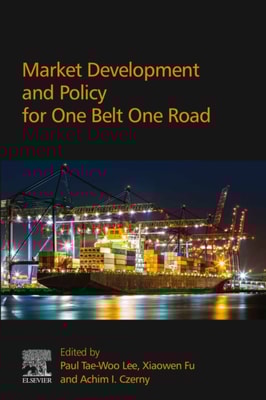
The Belt and Road initiative is marketed by the Chinese government as the "e;twenty-first century maritime Silk Road and the "e;Silk Road economic belt.
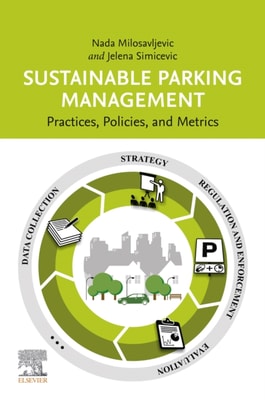
Sustainable Parking Management provides the latest research findings in the field, encouraging transport planners and policymakers to use parking policy as a tool for managing parking and transport systems.
The Evolving Impacts of ICT on Activities and Travel Behavior, Volume Three in the Advances in Transport Policy and Planning series, assesses both successful and unsuccessful practices and policies from around the world on the topic.
The Sharing Economy and the Relevance for Transport, Volume Four in the Advances in Transport Policy and Planning series, assesses both successful and unsuccessful practices and policies from around the world.
Electric Vehicles for Smart Cities: Trends, Challenges, and Opportunities uniquely examines different approaches to electric vehicle deployment in the context of smart cities.
Smart Delivery Systems: Solving Complex Vehicle Routing Problems examines both exact and approximate methods for delivering optimal solutions to rich vehicle routing problems, showing both the advantages and disadvantages of each approach.
In terms of China's current situation, the prevention and control of land degradation and the development of innovative sustainable land management activities lie within the purview of public works.
Transportation Operations Management provides the analytical tools and industry-wide context necessary to understand and address the critical real-world problems in transportation operations and planning that shippers, carriers, and third-party logistics providers face every day.
At heart, transportation policy and research are about people: connecting individuals and the places they live, ensuring sufficient and equitable access, and facilitating movement.
Global Practices on Road Traffic Signal Control is a valuable reference on the current state-of-the-art of road traffic signal control around the world.
Transportation, Land Use, and Environmental Planning examines the practices and policies linking transportation, land use and environmental planning needed to achieve a healthy environment, thriving economy, and more equitable and inclusive society.
Sustainable Urban Mobility Pathways examines how sustainable urban mobility solutions contribute to achieving worldwide sustainable development and global climate change targets, while also identifying barriers to implementation and strategies to overcome them.
This book investigates the potential trade opportunity of climate friendly goods and technology (CFGT) in Asia and South Asia region, and uses a case study of India to clarify India's position on global warming and efforts to mitigate climate change impacts regionally and globally.
This authored brief discusses how to conceptualize the socio-material complexity of contested energy spaces in the Canadian North, specifically in the context of indigenous communities that have allowed industrial developments to occur on their lands despite the environmental and lifestyle consequences.
Dynamics and Stochasticity in Transportation Systems: Solutions for Transportation Network Modeling breaks new ground on the topics, providing consistent and comprehensive coverage of steady state equilibrium and dynamic assignment within a common strategy.
Transportation Planning and Public Participation: Theory, Process, and Practice explains why, and then how, transportation professionals can treat public participation as an opportunity to improve their projects and identify problems before they do real damage.