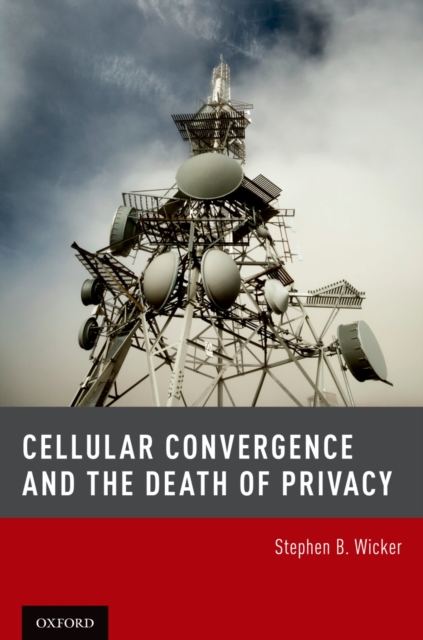
Cellular technology has always been a surveillance technology, but "e;cellular convergence"e; - the growing trend for all forms of communication to consolidate onto the cellular handset - has dramatically increased the impact of that surveillance.
Cellular technology has always been a surveillance technology, but "e;cellular convergence"e; - the growing trend for all forms of communication to consolidate onto the cellular handset - has dramatically increased the impact of that surveillance.
In 1787, Thomas Jefferson, then the American Minister to France, had the "e;complete skeleton, skin & horns"e; of an American moose shipped to him in Paris and mounted in the lobby of his residence as a symbol of the vast possibilities contained in the strange and largely unexplored New World.
In this much anticipated sequel to the legal bestseller, The Future of Law, Susskind lays down a challenge to all lawyers to ask themselves, with their hands on their hearts, what elements of their current workload could be undertaken differently - more quickly, cheaply, efficiently, or to a higher quality - using alternative methods of working.
In 1787, Thomas Jefferson, then the American Minister to France, had the "e;complete skeleton, skin & horns"e; of an American moose shipped to him in Paris and mounted in the lobby of his residence as a symbol of the vast possibilities contained in the strange and largely unexplored New World.
An adaptive cyber risk management guide from MIT scientist and Johns Hopkins professor Gregory Falco and "e;Cyber Czar"e; Eric RosenbachCyberattacks continue to grow in number, intensity, and sophistication.
An adaptive cyber risk management guide from MIT scientist and Johns Hopkins professor Gregory Falco and "e;Cyber Czar"e; Eric RosenbachCyberattacks continue to grow in number, intensity, and sophistication.
Highly publicized legal cases, such as those involving libel verdicts, obscenity prosecutions, the First Amendment, and other areas of media law have focused attention on only one part of the media's impact on law.
War and Press Freedom: The Problem of Prerogative Power is a groundbreaking and provocative study of one of the most perplexing civil liberties issues in American history: What authority does or should the government have to control press coverage and commentary in wartime?
Artificial Intelligence (AI) has become omnipresent in today's business environment: from chatbots to healthcare services to various ways of creating useful information.
Artificial Intelligence (AI) has become omnipresent in today's business environment: from chatbots to healthcare services to various ways of creating useful information.
Private International Law Online is a dedicated analysis of the private international law framework in the European Union as it applies to online activities such as content publishing, selling and advertising goods through internet marketplaces, or offering services that are performed online.
Private International Law Online is a dedicated analysis of the private international law framework in the European Union as it applies to online activities such as content publishing, selling and advertising goods through internet marketplaces, or offering services that are performed online.
Less than a decade after the Financial Crisis, we are witnessing the fast emergence of a new financial order driven by three different, yet interconnected, dynamics: first, the rapid application of technology - such as big data, machine learning, and distributed computing - to banking, lending, and investing, in particular with the emergence of virtual currencies and digital finance; second, a disintermediation fuelled by the rise of peer-to-peer lending platforms and crowd investment which challenge the traditional banking model and may, over time, lead to a transformation of the way both retail and corporate customers bank; and, third, a tendency of de-bureaucratisation under which new platforms and technologies challenge established organisational patterns that regulate finance and manage the money supply.
Less than a decade after the Financial Crisis, we are witnessing the fast emergence of a new financial order driven by three different, yet interconnected, dynamics: first, the rapid application of technology - such as big data, machine learning, and distributed computing - to banking, lending, and investing, in particular with the emergence of virtual currencies and digital finance; second, a disintermediation fuelled by the rise of peer-to-peer lending platforms and crowd investment which challenge the traditional banking model and may, over time, lead to a transformation of the way both retail and corporate customers bank; and, third, a tendency of de-bureaucratisation under which new platforms and technologies challenge established organisational patterns that regulate finance and manage the money supply.
As the power and sophistication of of 'big data' and predictive analytics has continued to expand, so too has policy and public concern about the use of algorithms in contemporary life.
As the power and sophistication of of 'big data' and predictive analytics has continued to expand, so too has policy and public concern about the use of algorithms in contemporary life.
The concept of a risk-based approach to data protection came to the fore during the overhaul process of the EU's General Data Protection Regulation (GDPR).
To better understand the heterogeneity of the international online intermediary liability regime, The Oxford Handbook of Intermediary Liability Online is designed to provide a comprehensive, authoritative and 'state-of-the-art' discussion of by highlighting emerging trends.
To better understand the heterogeneity of the international online intermediary liability regime, The Oxford Handbook of Intermediary Liability Online is designed to provide a comprehensive, authoritative and 'state-of-the-art' discussion of by highlighting emerging trends.
This book provides an incisive analysis of the emergence and evolution of global Internet governance, revealing its mechanisms, key actors and dominant community practices.
The book provides a critical analysis of electronic alternatives to documents used in the international sale of goods carried by sea, including invoices, bills of lading, certificates of insurance, as well as other documentation required under documentary credits, and payment processing arrangements.
The book provides a critical analysis of electronic alternatives to documents used in the international sale of goods carried by sea, including invoices, bills of lading, certificates of insurance, as well as other documentation required under documentary credits, and payment processing arrangements.