The same kind of physics is frequently common to very different fields of Astrophysics, so experts in each of these fields have often much to learn from each others.
This volume contains all but one of the lectures and seminars presented at the NATO Advanced Study Institute on HOI Thin Plasmas in Astrophysics held in Cargese, Corsica, from September 8 to 18, 1987.
This book represents the Proceedings of the NATO Advanced Study Insti- tute on Formation and Evolution of Low Mass Stars held from 21 September to 2 October 1987 at Viana do Castelo, Portugal.
This volume consists of invited talks and contributed papers presented at the NATO Advanced Study Institute "e;The Post Recombination Universe"e; which was held in Cambridge in the summer of 1987.
Stellar mass loss is an essential part of the cycling of material from the interstellar medium into stars and back, and must be understood if we are to model processes on galactic to cosmological scales.
The millimetre and submillimetre spectral region (300 to 3000 Ilm or 1000 to 100 GHz) was until recently one of the few spectral regimes not fully opened up for astronomical studies.
Recent advances in the instrumentation used to observe star forming regions in both our own Milky Way and in external galaxies have transformed the subject from a phenomenological pursuit into an increasingly unified, physical science.
My interest in the history of the Struve family is long-standing but lay dormant until 1972, when I found myself organizing a symposium of the International Astronomical Union in memory of the second Otto Struve.
When leaving the Victoria airport the day before our Colloquium, I saw a van of the Dunsmuir Lodge marked with big letters which I read as "e;Alcohol Colloquium"e;.
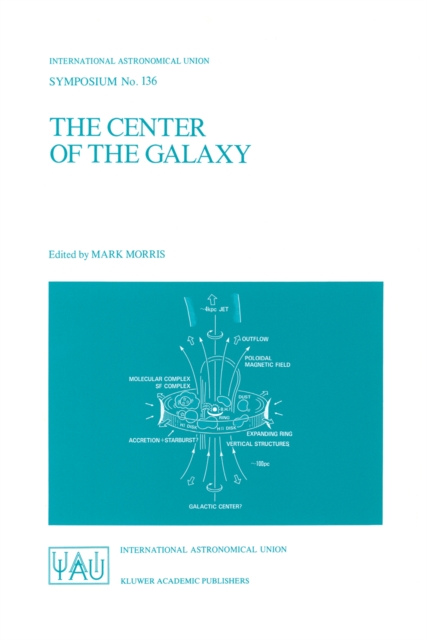
The investigation of the Galactic nucleus and its surroundings is necessarily a modem endeavor, for traditional observations made at visual wavelengths have not even begun to penetrate the veil of -30 magnitudes of visual extinction that intercedes.
A few years ago, a real break-through happened in observational astronomy: the un- derstanding of the effect of atmospheric turbulence on the structure of stellar images, and of ways to overcome this dramatic degradation.
The words of this preface were written when the book was ready to go to the press; and are limited to only a few points which are best made in this place.
Fundamental unsolved problems of stellar astrophysics include the effects of angular momentum on stellar structure and evolution, the nature and efficiency of the processes by which angular momentum is redistributed within and lost from stars, and the role that stellar rotation plays in enhancing or driving stellar mass loss.
In summary, we can conclude that the contributions of the different ionization processes to the total ionization rate for the most abundant interstellar species are basically known.
Although the Milky Way is the most studied and best understood galactic system, there are many fundamental questions about our Galaxy that remain unanswered.
This volume contains the proceedings of an international conference on Shocks in Astrophysics held at UMIST, Manchester, England from January 9-12, 1995.
The articles in this book represent the major contributions at the NATO Advanced Research Workshop that was held from 6 to 9 July 1987 in the magnificent setting of Dyffryn House and Gardens, in St.
With the advent of space observatories and modern developments in ground- based astronomy and concurrent progress in the theoretical understanding of these observations it has become clear that accretion of material on to compact objects is an ubiquitous mechanism powering very diverse astrophysical sources ranging in size and luminosity by many orders of magnitude.
It is the customary practice to report the major events of a General Assembly -the Invited Discourses, Joint Discussions and Joint Commission Meetings in Highlights of Astronomy.
Scientists in the late twentieth century are not the first to view galaxy formation as a phenomenon worthy of explanation in terms of the known laws of physics.
This volume contains the lectures presented at the first course of the Inter- national School of Space Chemistry held in Erice (Sicily) from May 10 to May 20 at the 'E.
Recent years have witnessed the expansion and multiplication of the observations of star formation and fragmentation accompanied by a consequent growth in the study of the underlying physical processes, the chemistry, the sites, the times, etc.