The thesis presents the design of an Artificial Intelligence Assisted Inversion (AIAI) method to estimate type Ia supernova (SN Ia) ejecta structure based on the observed optical spectral time sequence.
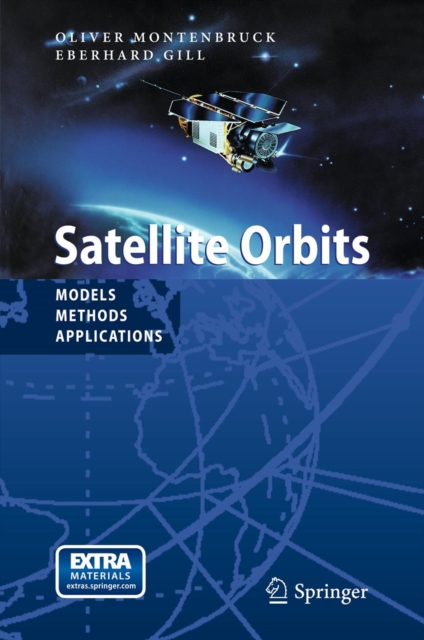
Satellite Orbits -Models, Methods, and Applications has been written as a compre- hensive textbook that guides the reader through the theory and practice of satellite orbit prediction and determination.
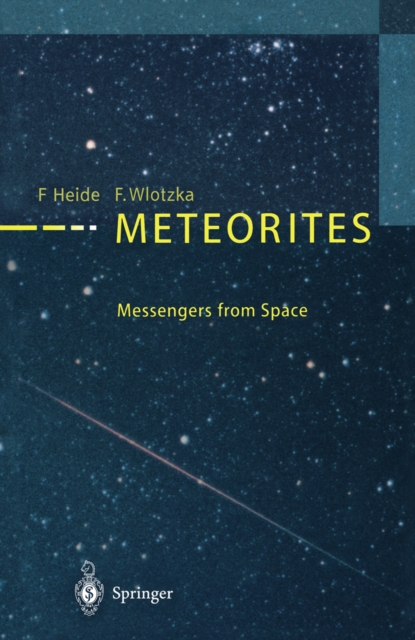
Meteorites - as well as shooting stars and meteors - result from a collision of a solid body from space with our Earth, but only meteorites are able to penetrate the Earth's protective shield, the atmosphere, and fall to the Earth's surface.
New observations of the period between the cosmic recombination and the end of reionization are posing intriguing questions about where the first generations of stars were formed, how the first galaxies were assembled, whether these galaxies have low redshift counterparts, and what role the early galaxies played in the reionization process.
The millimeter and sub-millimeter wavebands are unique in astronomy in containing several thousands of spectral lines of molecules as well as the thermal continuum spectrum of cold dust.
The millimeter and sub-millimeter wavebands are unique in astronomy in containing several thousands of spectral lines of molecules as well as the thermal continuum spectrum of cold dust.
This thesis presents an in-depth, high-resolution observational study on the very beginning of the formation process: the fragmentation of dense molecular clouds known as infrared dark clouds (IRDCs).
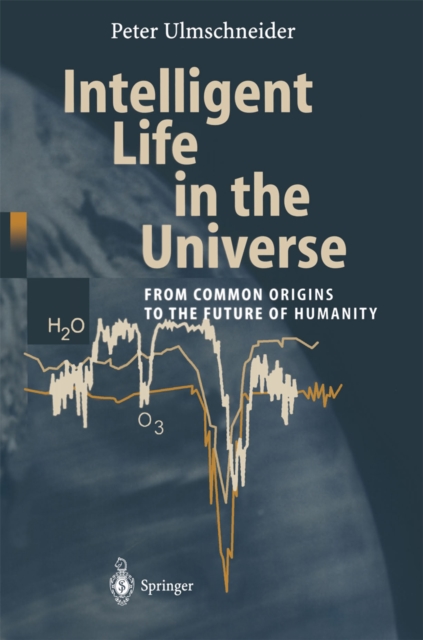
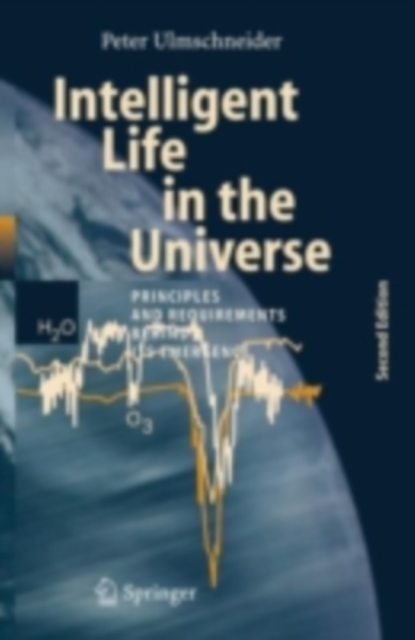
This book addresses all scientists and others interested in the origins, development and fate of intelligent species in the observable part of our universe.
This volume of lecture notes brings together the knowledge on pulsations of the Sun and the stars, with a particular emphasis on recent observations and modelling, and on the influence of pulsations of other physical processes.
It would seem that any specialist in plasma physics studying a medium in which the interaction between particles is as distance-dependent as the inter- action between stars and other gravitating masses would assert that the role of collective effects in the dynamics of gravitating systems must be decisive.
The study of the magnetic fields of the Earth and Sun, as well as those of other planets, stars, and galaxies, has a long history and a rich and varied literature, including in recent years a number of review articles and books dedicated to the dynamo theories of these fields.
This book addresses all scientists and others interested in the origins, development and fate of intelligent species in the observable part of our universe.
Dictionary of Minor Planet Names, fifth edition, is the official reference for the field of the IAU, which serves as the internationally recognised authority for assigning designations to celestial bodies and any surface features on them.
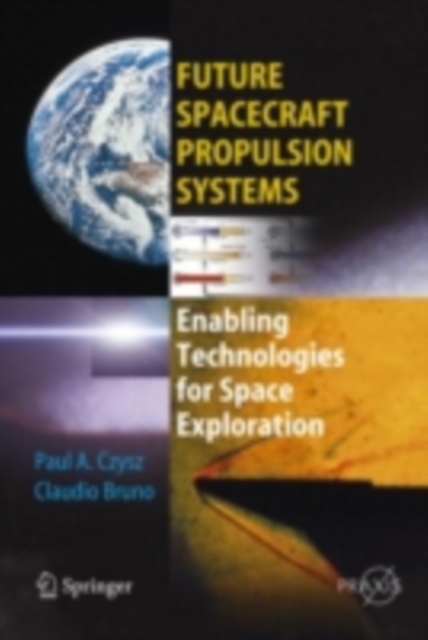
In Future Spacecraft Propulsion Systems the authors demonstrate the need to break free from the old established concepts of expendable rockets, using chemical propulsion, and to develop new breeds of launch vehicle capable of both launching payloads into orbit at dramatically reduced cost, and for sustained operations in low-Earth orbit.
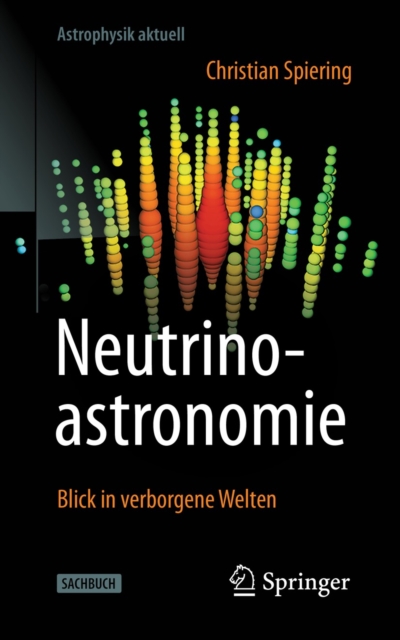
This accessible introduction describes the branch of astronomy in which processes in the universe are investigated with experimental methods employed in particle-physics experiments.
The astonishingly rapid development of the Large-Eddy Simulation technique during the last two or three years, both from the theoretical and applied points of view, have rendered the first edition of this book lacunary in some ways.
For this set of lectures we assumed that the reader has a reasonable back- ground in physics and some knowledge of general relativity, the modern theory of gravity in macrophysics, and cosmology.
The determination of stellar ages is crucial for the development of our understanding of the universe and for constraining theoretical models of galaxy formation and planetary system evolution.
The determination of stellar ages is crucial for the development of our understanding of the universe and for constraining theoretical models of galaxy formation and planetary system evolution.
Astronomy on the Personal Computer provides the reader with a thorough introduction to the computation of celestial mechanics, which is of particular significance to astronomical observation.
This book contains the key themes and insights from the presentations and posters presented at the Seventh International Workshop on the TianQin Science Mission (TQ7).
This book contains the key themes and insights from the presentations and posters presented at the Seventh International Workshop on the TianQin Science Mission (TQ7).
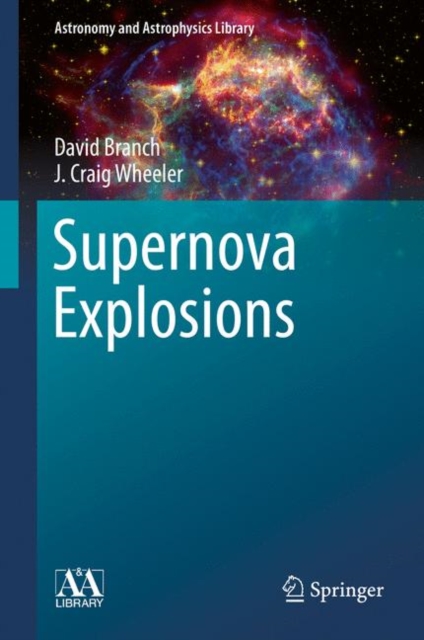
Targeting advanced students of astronomy and physics, as well as astronomers and physicists contemplating research on supernovae or related fields, David Branch and J.
Targeting advanced students of astronomy and physics, as well as astronomers and physicists contemplating research on supernovae or related fields, David Branch and J.
Many mysteries in art, history, and literature can be solved using "e;celestial sleuthing,"e; including calculating phases of the Moon, determining the positions of the planets and stars, and identifying celestial objects in paintings.
The atlas of the near side of the Moon provides a wealth of named lunar formations that goes far beyond the named features currently identified by the IAU.