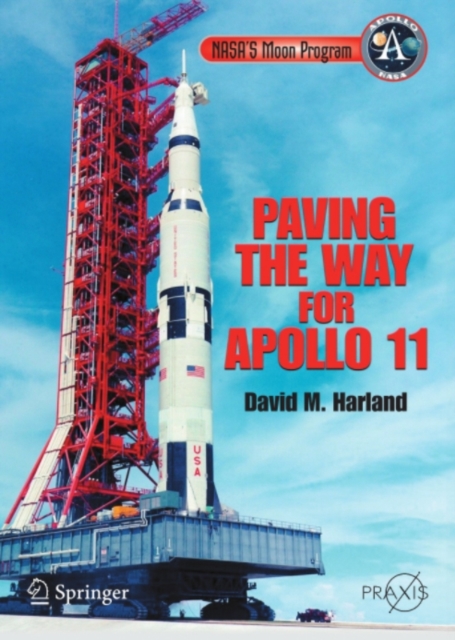
In 'Paving the Way for Apollo 11' David Harland explains the lure of the Moon to classical philosophers, astronomers, and geologists, and how NASA set out to investigate the Moon in preparation for a manned lunar landing mission.
Many people know something about communication - it is after all an innate human ability - but a full comprehension of how to do science communication effectively is not acquired easily.
Mounting pressure in the early 1960s from the National Academy of Sciences (NAS) to study ways of expanding the role of astronauts to conduct science on future space missions led to NASA's conclusion that flying scientifically trained crewmembers would generate greater returns from each mission.
Public interest in the first lunar landing transcended political, economic and social borders - the world was briefly united by the courage of the crew, and the wonder of the accomplishment.
The aim of the Space Exploration - 2007 is to provide an annual update on recent space launches, missions and results, to be published every year in September.
This review emerged from several interdisciplinary meetings and schools gathering a group of astronomers, geologists, biologists, and chemists, attempting to share their specialized knowledge around a common question: how did life emerge on Earth?
The impact of Einstein's relativity is perhaps most dramatic in astronomy, radically altering our interpretation of the observations of the stars and galaxies.
Hubble: 15 Years of Discovery forms a key element of the European Space Agency's 15th anniversary celebration activities for the 1990 launch of the NASA/ESA Hubble Space Telescope.
Mars has long been believed to have been cold, dead and dry for aeons, but there is now striking new proof that not only was Mars a relatively warm and wet place in geologically recent times, but that even today there are vast reserves of water frozen beneath the planet's surface.
Not all amateur astronomers who live in a suburban location realize just how very effective a 'chilled-chip' astronomical CCD-camera and software can be at cutting through seemingly impenetrable light-pollution.
Beginning on the 18th of March, 1905,at approximately eight week intervals, the noted German physics journal Annalen der Physik received three hand-written manuscripts from a relatively unknown patent examiner in Bern.
Exploring Ancient Skies brings together the methods of archaeology and the insights of modern astronomy to explore the science of astronomy as it was practiced in various cultures prior to the invention of the telescope.
Nuclear physics began one century ago during the "e;miraculous decade"e; - tween 1895 and 1905 when the foundations of practically all modern physics were established.
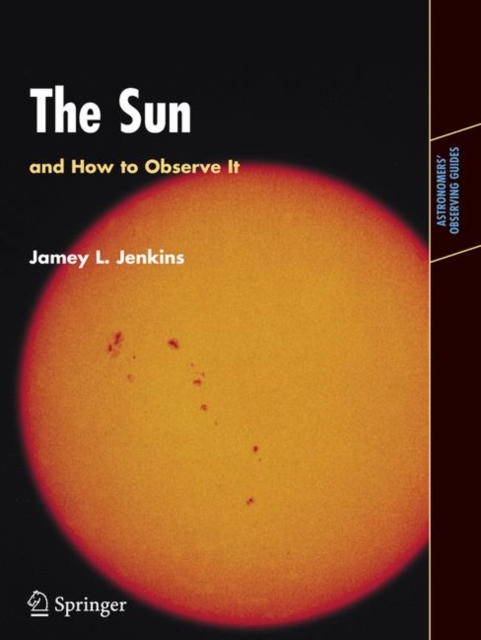
In Part 1, the book describes the very latest thinking on solar physics in (mostly non-mathematical) detail, incorporating the latest results from research concerning the structure and behaviour of the Sun.
Choosing and Using the New CAT will supersede the author's successful Choosing and Using a Schmidt-Cassegrain Telescope, which has enjoyed enthusiastic support from the amateur astronomy community for the past seven years.
The word 'terraforming' conjures up many exotic images and p- hapsevenwildemotions,butatitscoreitencapsulatestheideathat worldscanbechangedbydirecthumanaction.
Digital sky surveys, high-precision astrometry from satellite data, deep-space data from orbiting telescopes, and the like have all increased the quantity and quality of astronomical data by orders of magnitude per year for several years.
There is deep mystery and profound satisfaction in finding your position on earth by reference to the sun, moon, and stars--not to mention profound relief when the GPS receiver stops working in mid-passage.
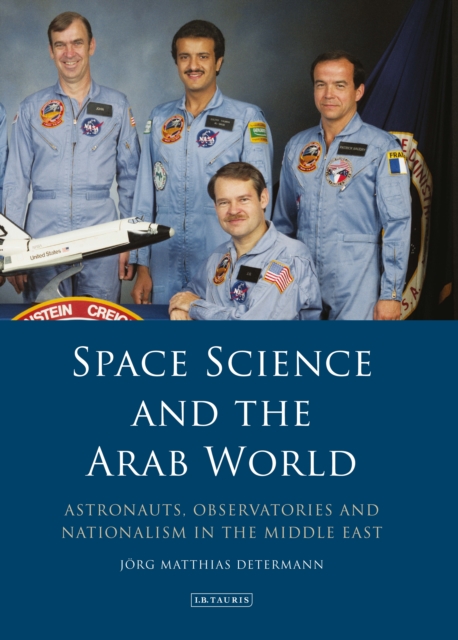
When Sultan bin Salman left Earth on the shuttle Discovery in 1985, he became the first Arab, first Muslim and first member of a royal family in space.
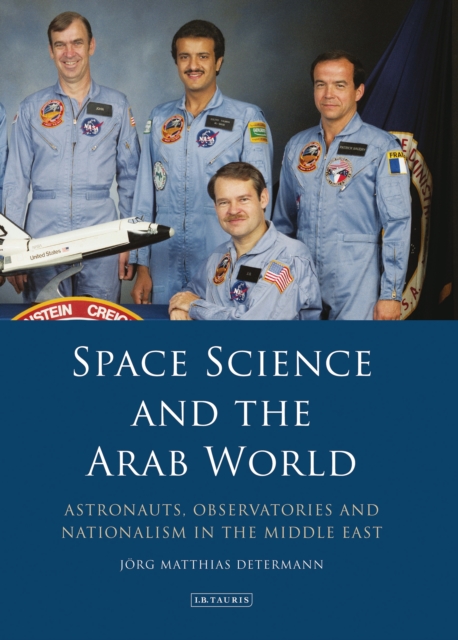
When Sultan bin Salman left Earth on the shuttle Discovery in 1985, he became the first Arab, first Muslim and first member of a royal family in space.