From the Nobel Prizewinning physicist, a personal meditation on the quest for objective reality in natural scienceA century ago, thoughtful people questioned how reality could agree with physical theories that kept changing, from a mechanical model of the ether to electric and magnetic fields, and from homogeneous matter to electrons and atoms.
Stephen Hawking described it as 'the discovery of the century, if not of all time', yet the scientists who first detected the cosmic radiation that was identified as the afterglow of the big bang had to admit that it was more by accident than intention.
How all philosophical explanations of human consciousness and the fundamental structure of the cosmos are bizarreand why that's a good thingDo we live inside a simulated reality or a pocket universe embedded in a larger structure about which we know virtually nothing?
How all philosophical explanations of human consciousness and the fundamental structure of the cosmos are bizarreand why that's a good thingDo we live inside a simulated reality or a pocket universe embedded in a larger structure about which we know virtually nothing?
Big History is a new field on a grand scale: it tells the story of the universe over time through a diverse range of disciplines that spans cosmology, physics, chemistry, astronomy, geology, evolutionary biology, anthropology, and archaeology, thereby reconciling traditional human history with environmental geography and natural history.
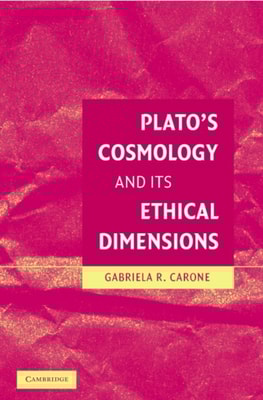
Offers a systematic presentation of Plato''s late cosmology, showing connections to his ethics and arguments about the organic structure of the universe.
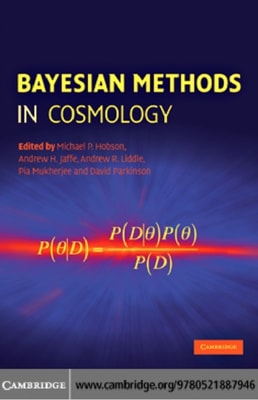
Comprehensive introduction to Bayesian methods in cosmological studies, for graduate students and researchers in cosmology, astrophysics and applied statistics.
Introducing the theoretical ideas, observational methods and results in dark energy, this textbook is a thorough introduction to dark energy for graduate courses.
Introducing gravitational-wave data analysis, this is an ideal starting point for researchers entering the field, and researchers currently analyzing data.
This book examines gravitational collapse for graduate students and researchers in gravitation physics, fundamental physics, astrophysics, and cosmology.