This book covers the possible manned mission to Mars first discussed in the 1950s and still a topic of much debate, addressing historic and future plans to visit the Red Planet.
This monograph traces the development of our understanding of how and where energetic particles are accelerated in the heliosphere and how they may reach the Earth.
This book aims to contribute significantly to the understanding of issues of value (including the ultimate value of space-related activities) which repeatedly emerge in interdisciplinary discussions on space and society.
This book brings together and integrates contributions on water quality modeling, monitoring and assessment techniques; wastewater treatment technologies; and sociological approaches in a single text.
This book addresses the complex technical challenges presented by remote space mining in terms of robotics, remote power systems, space transport, IT and communications systems, and more.
The proceedings of the 2014 Reinventing Space conference present a number of questions in the context of a constantly innovating space industry, from addressing the future of global cooperation, investigating the impact of cuts in US government spending on the private space sector, and probing the overall future of the commercial launch sector.
Based on extensive primary sources, many never previously translated into English, this is the definitive account of the discovery of Pallas as it went from being classified as a new planet to reclassification as the second of a previously unknown group of celestial objects.
This book focuses on all of the major problems associated with the absence of body weight in space, by analyzing effects, adaption, and re-adaptation upon returning to Earth, using sound scientific principles embedded in a historical context.
This book presents an in-depth continuum mechanics analysis of the deformation due to self-gravitation in terrestrial objects, such as the inner planets, rocky moons and asteroids.
This work discusses the problem of physical meaning of the three main dynamical properties of matter motion, namely gravitation, inertia and weightlessness.
This book relates the history of asteroid discoveries and christenings, from those of the early pioneering giants of Hersehel and Piazzi to modern-day amateurs.
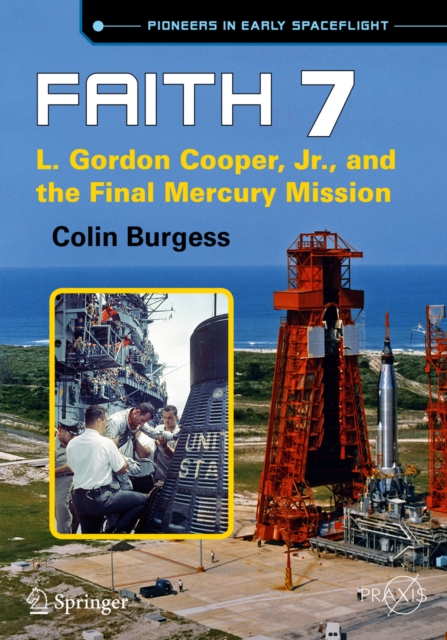
This book celebrates the final spaceflight in the Mercury series, flown by NASA astronaut Gordon Cooper, who led an adventurous life in the cockpit of airplanes and spacecraft alike, and on his Mercury mission he became the last American ever to rocket into space alone.
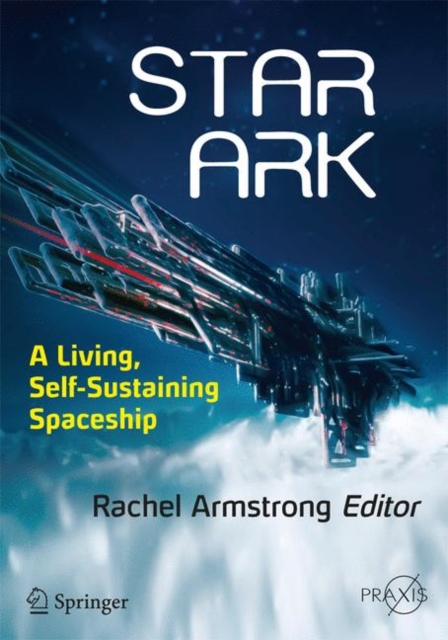
As space ventures have become more numerous, leading scientists and theorists have offered ways of building a living habitat in a hostile environment, taking an 'ecosystems' view of space colonization.
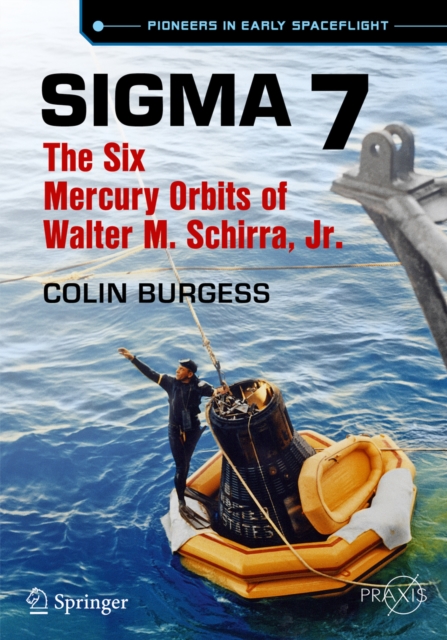
Colin Burgess offers a comprehensive yet personal look at the 1962 orbital mission of Wally Schirra aboard the spacecraft Sigma 7, the first book about this popular pioneering astronaut which explores his entire life and accomplishments.
The European Space Agency has a long history of human spaceflight, flying in space with both NASA and the Soviet/Russian space agencies over the years.
This book presents recent advances in space andcelestial mechanics, with a focus on the N-bodyproblem and astrodynamics, and explores the development and application of computational techniques in bothareas.
In this book, renowned scientists describe the various techniques used to detect and characterize extrasolar planets, or exoplanets, with a view to unveiling the "e;tricks of the trade"e; of planet detection to a wider community.
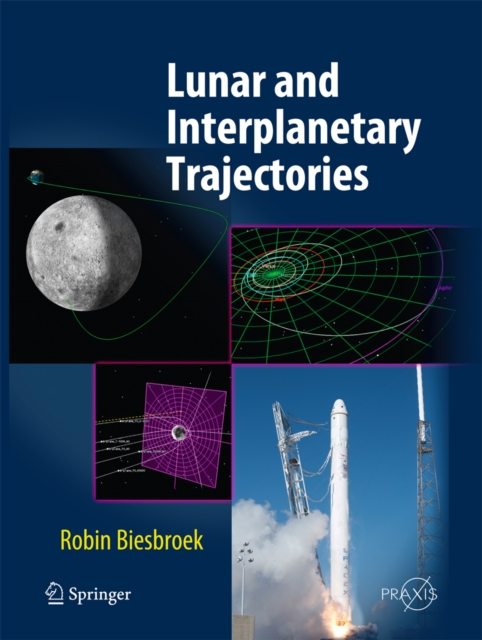
Thisbook provides readers with a clear description of the types of lunar andinterplanetary trajectories, and how they influence satellite-system design.
This book provides an overview of recent research highlights in the main areas of application of magnetic reconnection (MR), including planetary, solar and magnetospheric physics and astrophysics.
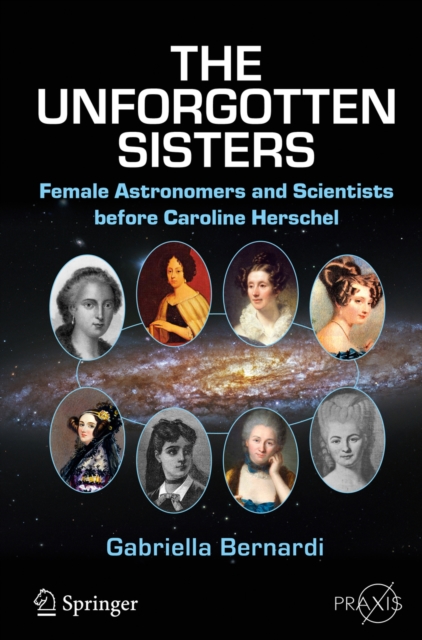
Taking inspiration from Siv Cedering's poem in the form of a fictional letter from Caroline Herschel that refers to "e;my long, lost sisters, forgotten in the books that record our science"e;, this book tells the lives of twenty-five female scientists, with specific attention to astronomers and mathematicians.
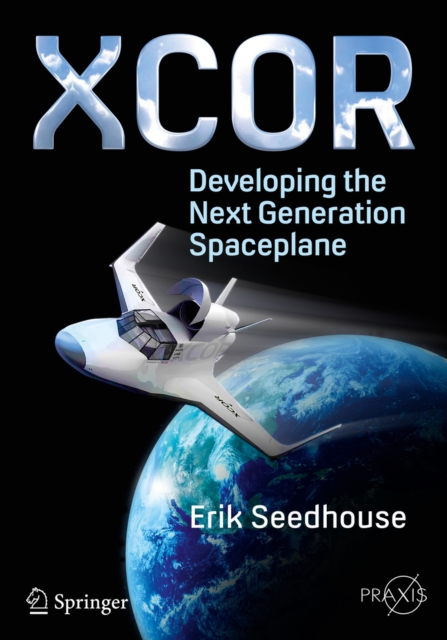
Employing the same informational approach Erik Seedhouse used in "e;SpaceX"e; and "e;Bigelow Aerospace"e;, this new book familiarizes space enthusiasts with the company XCOR Aerospace and examines the design of the two-seater Lynx.
David Stevenson's new book links the meteorology of the Earth to that of other planets, stars, and clusters of galaxies, showing the similarities and differences between terrestrial weather and that of weather on other worlds.
This book is an up-to-date compendium on spacecraft attitude and orbit control (AOC) that offers a systematic and complete treatment of the subject with the aim of imparting the theoretical and practical knowledge that is required by designers, engineers, and researchers.
This book focuses on the Interkosmos program, which was formed in 1967, marking a fundamentally new era of cooperation by socialist countries, led by the Soviet Union, in the study and exploration of space.
Astronomer Peter Linde takes the reader through the story of the search for extraterrestrial life in a captivating and thought-provoking way, specifically addressing the new research that is currently devoted towards discovering other planets with life.
In the first chapters the author describes how our knowledge of the position of Earth in space and time has developed, thanks to the work of many generations of astronomers and physicists.
This book presents lecture materials from the Third LOFAR Data School, transformed into a coherent and complete reference book describing the LOFAR design, along with descriptions of primary science cases, data processing techniques, and recipes for data handling.
As advanced in-space propulsion moves from science fiction to reality, the Variable Specific Impulse Magnetoplasma Rocket, or VASIMR(R) engine, is a leading contender for making 'Mars in a month' a possibility.
Based on components already in existence, this manual details a reference design for an interplanetary spacecraft that is simple, durable, fully reusable and comprised mostly of water.
This complete introduction to plasma physics and controlled fusion by one of the pioneering scientists in this expanding field offers both a simple and intuitive discussion of the basic concepts of this subject and an insight into the challenging problems of current research.
A mission to send humans to explore the surface of Mars has been the ultimate goal of planetary exploration since the 1950s, when von Braun conjectured a flotilla of 10 interplanetary vessels carrying a crew of at least 70 humans.