Illustrated with breathtaking images of the Solar System and of the Universe around it, this book explores how the discoveries within the Solar System and of exoplanets far beyond it come together to help us understand the habitability of Earth, and how these findings guide the search for exoplanets that could support life.
The planets fascinate us, and naturally we care about our own Earth, and things like how well we can forecast the weather and whether climate is really changing.
The planets fascinate us, and naturally we care about our own Earth, and things like how well we can forecast the weather and whether climate is really changing.
Spectroscopy and radiative transfer are rapidly growing fields within atmospheric and planetary science with implications for weather, climate, biogeochemical cycles, air quality on Earth, as well as the physics and evolution of planetary atmospheres in our solar system and beyond.
Ongoing studies in mathematical depth, and inferences from `helioseismological' observations of the internal solar rotation have shown up the limitations in our knowledge of the solar interior and of our understanding of the solar dynamo, manifested in particular by the sunspot cycle, the Maunder minimum, and solar flares.
Ongoing studies in mathematical depth, and inferences from `helioseismological' observations of the internal solar rotation have shown up the limitations in our knowledge of the solar interior and of our understanding of the solar dynamo, manifested in particular by the sunspot cycle, the Maunder minimum, and solar flares.
This Very Short Introduction looks deep into space and describes the worlds that make up our Solar System: terrestrial planets, giant planets, dwarf planets and various other objects such as satellites (moons), asteroids and Trans-Neptunian objects.
This Very Short Introduction looks deep into space and describes the worlds that make up our Solar System: terrestrial planets, giant planets, dwarf planets and various other objects such as satellites (moons), asteroids and Trans-Neptunian objects.
On March 13, 1989, the entire Quebec power grid collapsed, automatic garage doors in California suburbs began to open and close without apparent reason, and microchip production came to a halt in the Northeast; in space, communications satellites had to be manually repointed after flipping upside down, and pressure readings on hydrogen tank supplies on board the Space Shuttle Discovery peaked, causing NASA to consider aborting the mission.
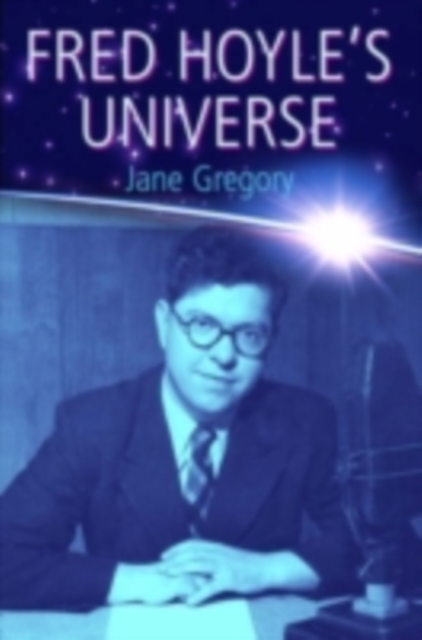
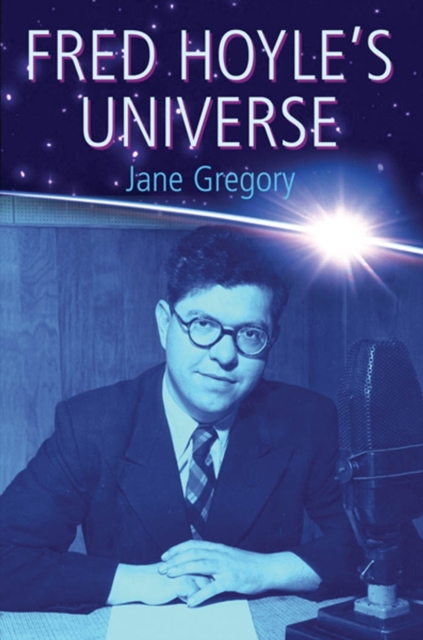
Fred Hoyle was one of the most widely acclaimed and colourful scientists of the twentieth century, a down-to-earth Yorkshireman who combined a brilliant scientific mind with a relish for communication and controversy.
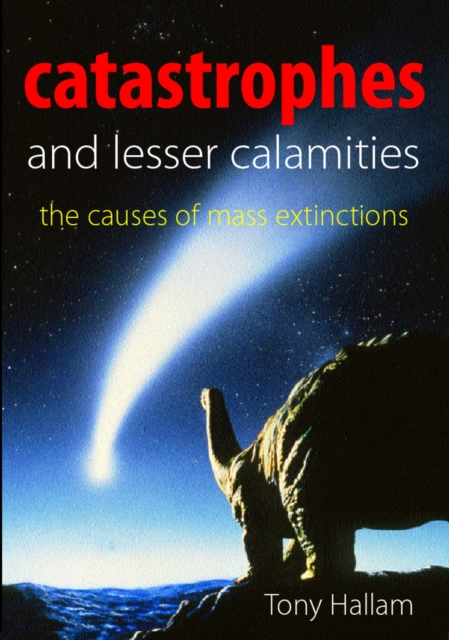
This is a book about the dramatic periods in the Earth's history called mass extinctions - short periods (by geological standards) when life nearly died out on Earth.
This book stems from the worrying scale and intensity of conflicts, humanitarian crises, and human rights violations around the world, which can be seen in a wide range of global hotspots including Venezuela, Yemen, Syria, Myanmar, Sudan, Eritrea, and numerous others.
This textbook offers a readily comprehensible introduction to classical Newtonian gravitation, which is fundamental for an understanding of classical mechanics and is particularly relevant to Astrophysics.
Most scientists now agree that some sixty-five million years ago, an immense comet slammed into the Yucatan, detonating a blast twenty million times more powerful than the largest hydrogen bomb, punching a hole ten miles deep in the earth.
This book, edited by the European Space Policy Institute, is the first international publication, following UNISPACE+50, to analyze how space capacity building can empower the international community towards fully accessing all the economic and societal benefits that space assets and data can offer.
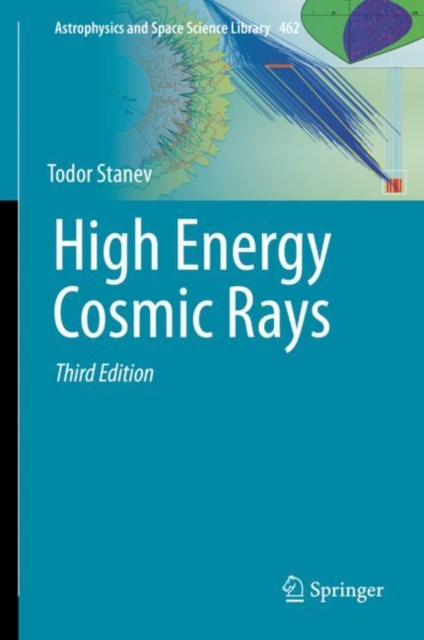
This book on high-energy cosmic rays deals in its first part with the standard model of cosmic rays, describing how they are born in a wide range of cosmic processes, how they are accelerated and how they interact with matter, magnetic fields and radiation during their journey across the Galaxy.
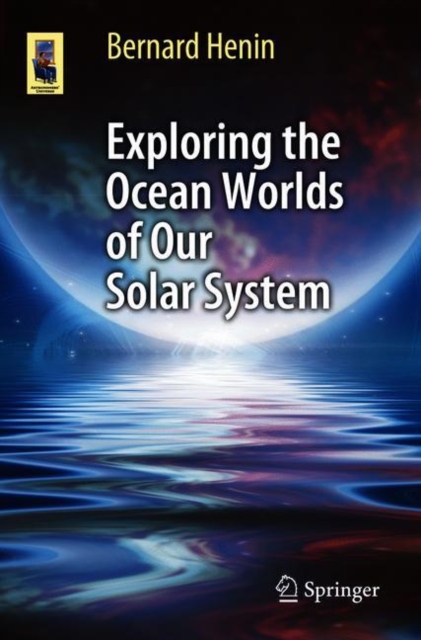
In the last 25 years, planetary science experienced a revolution, as vast oceans of liquid water have been discovered within the heart of the icy moons of our Solar System.
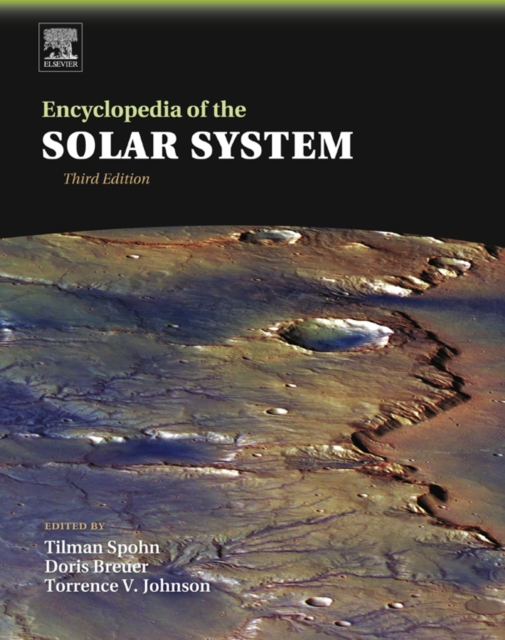
The Encyclopedia of the Solar System, Third Edition-winner of the 2015 PROSE Award in Cosmology & Astronomy from the Association of American Publishers-provides a framework for understanding the origin and evolution of the solar system, historical discoveries, and details about planetary bodies and how they interact-with an astounding breadth of content and breathtaking visual impact.
This book is based on the findings, conclusions and recommendations of the Global Space Governance study commissioned by the 2014 Montreal Declaration that called upon civil society, academics, governments, the private sector, and other stakeholders to undertake an international interdisciplinary study.
This book presents the Green's function formalism in a basic way and demonstrates its usefulness for applications to several well-known problems in classical physics which are usually solved not by this formalism but other approaches.
This book addresses the complex technical challenges presented by remote space mining in terms of robotics, remote power systems, space transport, IT and communications systems, and more.
The Encyclopedia of the Solar System, Third Edition-winner of the 2015 PROSE Award in Cosmology & Astronomy from the Association of American Publishers-provides a framework for understanding the origin and evolution of the solar system, historical discoveries, and details about planetary bodies and how they interact-with an astounding breadth of content and breathtaking visual impact.
This book provides a unique insight into the research and recent developments undertaken among the African Remote Sensing community in regard to the environment.