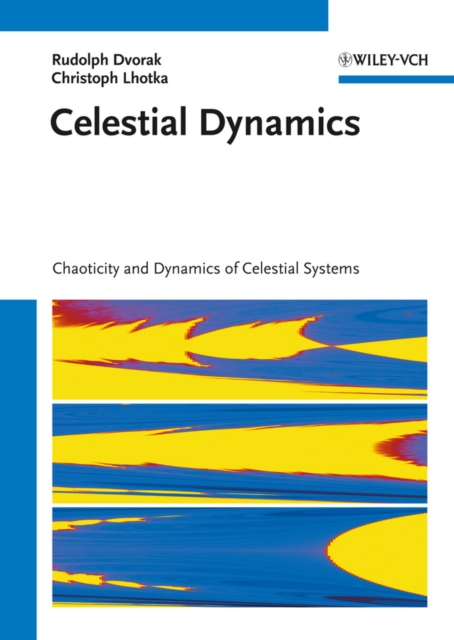
Written by an internationally renowned expert author and researcher, this monograph fills the need for a book conveying the sophisticated tools needed to calculate exo-planet motion and interplanetary space flight.
Written by an internationally renowned expert author and researcher, this monograph fills the need for a book conveying the sophisticated tools needed to calculate exo-planet motion and interplanetary space flight.
Based on a wide variety of previously unstudied sources, these articles explain how science was applied to three aspects of Islamic ritual in the Middle Ages: the regulation of the lunar calendar; the organisation of the times of the five daily prayers; and the determination of the sacred direction (qibla) towards the Kaaba in Mecca.
Drawing on a wealth of new evidence, pioneering research psychologist David DeSteno shows why religious practices and rituals are so beneficial to those who follow themand to anyone, regardless of their faith (or lack thereof).
This book builds on the fluid and kinetic theory of equilibria and waves presented in a companion textbook, Basic Space Plasma Physics (by the same authors), but can also serve as a stand-alone text.
Whether searching for extra-terrestrial life, managing the effects of space weather or learning about dark matter, the study astrophysics has profound implications for us all.
Physicist Frank Close takes the reader to the frontiers of science in a vividly told investigation of revolutionary science and enterprise from the seventeenth century to the present.
Im Oktober 2024 hat die Europäische Weltraumagentur ESA ein Video auf Youtube veröffentlicht, das die ersten Aufnahmen der Euclid-Mission zusammenfügt.
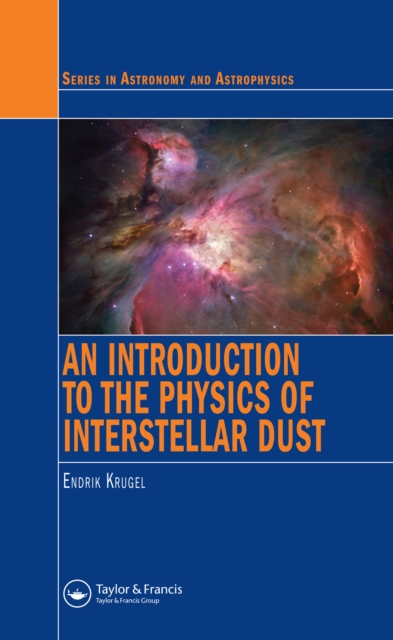
Streamlining the extensive information from the original, highly acclaimed monograph, this new An Introduction to the Physics of Interstellar Dust provides a concise reference and overview of interstellar dust and the interstellar medium.
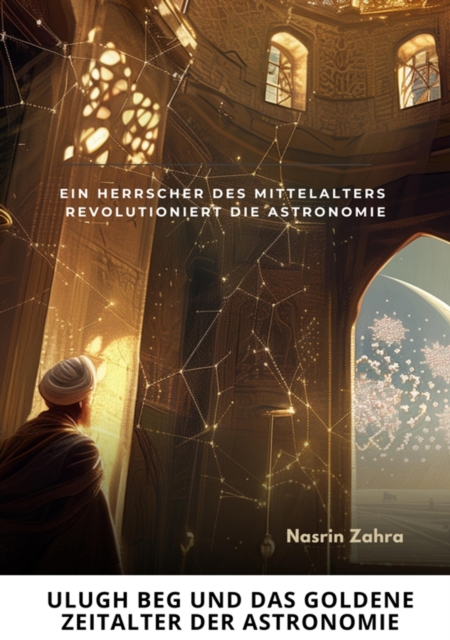
In einer Zeit, in der das Abendland noch in den Schatten des Mittelalters gehüllt war, erstrahlte im Osten ein Licht der Erkenntnis, das die Nacht des Unwissens durchbrach.
Anyone who had read "e;The Greatest Thing in the World"e; could not help but desire to see and hear its author; and, when Professor Drummond visited Boston in the spring of 1893, the capacity of lecture halls was taxed to the utmost.
THE science which has to do with nature clearly concerns itself for the most part with bodies and magnitudes and their properties and movements, but also with the principles of this sort of substance, as many as they may be.
From one of America's best-known biologists, a revolutionary new way of thinking about evolution that shows ';why, in light of our origins, humans are still special' (Edward J.
Now thoroughly updated to reflect the latest debates, this popular textbook introduces readers to the central questions in the field of science and religion.
From the heliocentric controversy and evolution, to debates on biotechnology and the environment, this book offers a balanced introduction to the key issues in science and religion.
Long established as one of the premier references in the fields of astronomy, planetary science, and physics, the fourth edition of Orbital Motion continues to offer comprehensive coverage of the analytical methods of classical celestial mechanics while introducing the recent numerical experiments on the orbital evolution of gravitating masses and the astrodynamics of artificial satellites and interplanetary probes.
Interstellar dust grains catalyse chemical reactions, absorb, scatter, polarise and re-radiate starlight and constitute the building blocks for the formation of planets.
Numerical Methods in Astrophysics: An Introduction outlines various fundamental numerical methods that can solve gravitational dynamics, hydrodynamics, and radiation transport equations.
The opposition of science and religion is a recent phenomenon; in the middle ages, and indeed until the middle of the nineteenth century, there was almost no conflict.
The opposition of science and religion is a recent phenomenon; in the middle ages, and indeed until the middle of the nineteenth century, there was almost no conflict.
Many people are now interested in the relationship between religion and science, but links between Christian belief and psychology have been relatively neglected.
Many people are now interested in the relationship between religion and science, but links between Christian belief and psychology have been relatively neglected.
Foundations of science are specific conditions of the cosmos, of human intelligence, of cultural beliefs, and of technological structures that make the pursuit of modern science possible.
Foundations of science are specific conditions of the cosmos, of human intelligence, of cultural beliefs, and of technological structures that make the pursuit of modern science possible.