In this fascinating journey to the edge of science, Vidal takes on big philosophical questions: Does our universe have a beginning and an end or is it cyclic?
This book presents a collection of reviews prepared for the conference "e;Atmosphere, Ionosphere, Safety,"e; held in Kaliningrad, Russia, in July 2012.
In 1931, the cluster of craters at Henbury Cattle Station south of Alice Springs in Central Australia was one of the first places on Earth where a group of impact structures could definitely be linked to the fall of iron meteorites.
This book presents a collection of texts by the German physicist and philosopher Carl Friedrich von Weizsacker (1912-2007), for use in seminars on the history, epistemology and structure of physics.
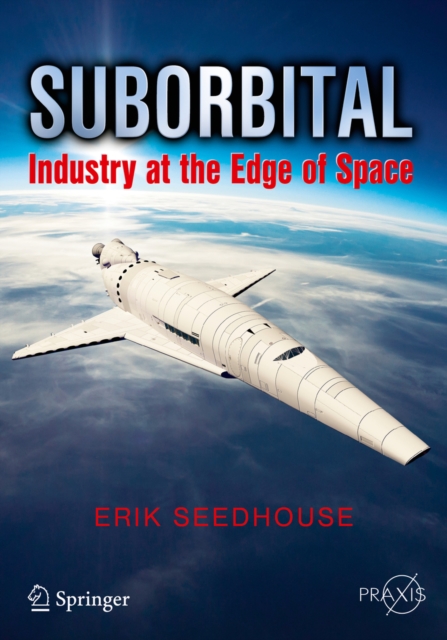
The nascent commercial suborbital spaceflight industry will soon open the space frontier to commercial astronauts, payload specialists, scientists and of course, tourists.
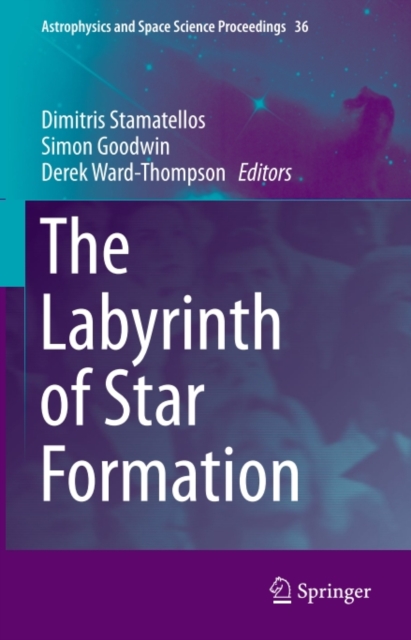
This volume contains the proceedings from the conference "e;The Labyrinth of Star Formation"e; that was held in Crete, Greece, in June 2012, to honour the contributions to the study of star formation made by Professor Anthony Whitworth of Cardiff University.
The presentations at this NASA-hosted Symposium in honor of Mino Freund will touch upon the fields, to which his prolific mind has made significant contributions.
Proceedings from the 2012 Fourth International Meeting on Gravitation and Cosmology, focusing on accelerated cosmic expansionThis volume provides both an update and a review of the state of alternative theories of gravity in connection with the accelerated expansion of the universe issue.
This work celebrates the investigative power of phenomenology to explore the phenomenological sense of space and time in conjunction with the phenomenology of intentionality, the invisible, the sacred, and the mystical.
This book celebrates the investigative power of phenomenology to explore the phenomenological sense of space and time in conjunction with the phenomenology of intentionality, the invisible, the sacred, and the mystical.
It has been nearly 100 years since the Apollo moon landings, when Jack and Vladimir, two astronauts on a mission to Venus, discover a mysterious void related to indigenous life on the planet.
This thesis addresses two of the central processes which underpin the formation of galaxies: the formation of stars and the injection of energy into the interstellar medium from supernovae, called feedback.
Several of the very foundations of the cosmological standard model - the baryon asymmetry of the universe, dark matter, and the origin of the hot big bang itself - still call for an explanation from the perspective of fundamental physics.
The first Catalogue of Meteorites from South America includes new specimens never previously reported, while doubtful cases and pseudometeorites have been deliberately omitted.
This book is a collection of fourteen essays that describe an inspiring journey through the universe and discusses popular science topics that modern physics and cosmology are struggling to deal with.
This thesis explores the idea that the Higgs boson of the Standard Model and the cosmological inflation are just two manifestations of one and the same scalar field - the Higgs-inflation.
Ice and Fire: Great Comets to Come was written because a special celestial event climaxes towards the end of 2013 - the arrival, fresh from the Oort Cloud, of Comet C/2012 S1 (ISON).
Inevitably, there are times in a nation's history when its hopes, fears and confidence in its own destiny appear to hinge on the fate of a single person.
This thesis provides an introduction to the physics of the Standard Model and beyond, and to the methods used to analyse Large Hadron Collider (LHC) data.
The Finnish mathematician and astronomer Anders Johan Lexell (1740-1784) was a long-time close collaborator as well as the academic successor of Leonhard Euler at the Imperial Academy of Sciences in Saint Petersburg.
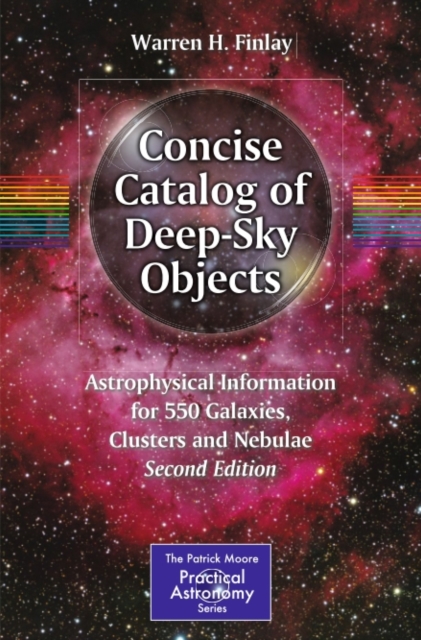
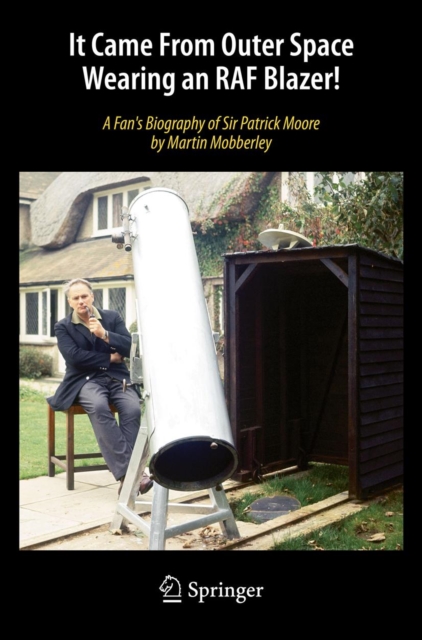
To British television viewers, the name 'Patrick Moore' has been synonymous with Astronomy and Space Travel since he first appeared on The Sky at Night in 1957.
This book explains the theory of special and general relativity in detail, without digressions such as information on Einstein's life or the historical background.
In this fascinating book, the author traces the careers, ideas, discoveries, and inventions of two renowned scientists, Athanasius Kircher and Galileo Galilei, one a Jesuit, the other a sincere man of faith whose relations with the Jesuits deteriorated badly.
In a knowledge-based society, research into fundamental physics plays a vital role not only in the enhancement of human knowledge but also in the development of new technology that affects everyday life.
Analogue Gravity Phenomenology is a collection of contributions that cover a vast range of areas in physics, ranging from surface wave propagation in fluids to nonlinear optics.
This outstanding thesis by Dominic Bowman provides a thorough investigation of long-standing questions as to whether amplitude modulation is astrophysical, whether it offers insights into pulsating stars, and whether simple beating of modes with stable amplitudes is unrecognised because of a lack of frequency resolution.
With a focus on modified gravity this book presents a review of the recent developments in the fields of gravity and cosmology, presenting the state of the art, high-lighting the open problems, and outlining the directions of future research.
Written by a professional astronomer who has worked on a wide spectrum of topics throughout his career, this book gives a popular science level description of what has become known as multimessenger astronomy.
Covering both homemade and commercial products, this book provides the reader with simple and straightforward information about the modeling, building, and use of binoscopes.