This book explores the dynamics of planetary and stellar fluid layers, including atmospheres, oceans, iron cores, and convective and radiative zones in stars, describing the different theoretical, computational and experimental methods used to study these problems in fluid mechanics, including the advantages and limitations of each method for different problems.
This book, edited by the European Space Policy Institute, is the first international publication, following UNISPACE+50, to analyze how space capacity building can empower the international community towards fully accessing all the economic and societal benefits that space assets and data can offer.
Despite the success of general relativity in explaining classical gravitational phenomena, several problems at the interface between gravitation and high energy physics still remain open.
This book presents the fundamental principles of Classical thermodynamics, supplemented by an overview of Statistical Thermodynamics, and explores their applications to a wide variety of problems in the Earth and Planetary sciences, spanning the range from the Earth's core, mantle and crust, aqueous solutions and fluid-rock interactions to solar nebula, terrestrial planets and asteroids.
Colloidal plasmas - a still emerging field of plasma physics - enable the study of basic plasma properties on a microscopic kinetic level and allow the visualization of collective plasma phenomena, like oscillations and waves.
This book serves as both a primer to astronomical polarimetry and an authoritative overview of its application to various types of astronomical objects from AGN, compact stars, binary systems, stars across the HR diagram, transients, the interstellar medium and solar system bodies.
After an extensive introduction to the asymptotic safety approach to quantum gravity, this thesis explains recent key advances reported in four influential papers.
This volume aims to make Stephen of Pisa and Antioch's work on the celestial sciences accessible to a wider readership, providing not just the text but a translation and introduction as well.
This comprehensive atlas explains the genesis and evolution of impact known craters on Earth, presenting a wealth of radar images from the Italian COSMO-SkyMed satellites that were acquired at the same frequency, spatial resolution, operating mode, and illumination, allowing excellent comparison of different impact structures.
Due to steadily improving experimental accuracy, relativistic concepts - based on Einstein's theory of Special and General Relativity - are playing an increasingly important role in modern geodesy.
It is commonly held that there is no place for the 'now' in physics, and also that the passing of time is something subjective, having to do with the way reality is experienced but not with the way reality is.
This book provides a unique insight into the research and recent developments undertaken among the African Remote Sensing community in regard to the environment.
This is a follow-on book to the introductory textbook "e;Physics of the Solar Corona"e; previously published in 2004 by the same author, which provided a systematic introduction and covered mostly scientific results from the pre-2000 era.
These peer-reviewed NIC XV conference proceedings present the latest major advances in nuclear physics, astrophysics, astronomy, cosmochemistry and neutrino physics, which provide the necessary framework for a microscopic understanding of astrophysical processes.
This book introduces readers to the topical area of CSI: critical space infrastructure, which is defined as an emerging domain of systems-of-systems encompassing hardware, workforce, environment, facilities, business and organizational entities.
In this book the background and context of Africa's political and socio-economic landscape is presented and unpacked through a primary needs approach which focuses on climate, biodiversity, health, water, education, and space-related capacity building.
Due to steadily improving experimental accuracy, relativistic concepts - based on Einstein's theory of Special and General Relativity - are playing an increasingly important role in modern geodesy.
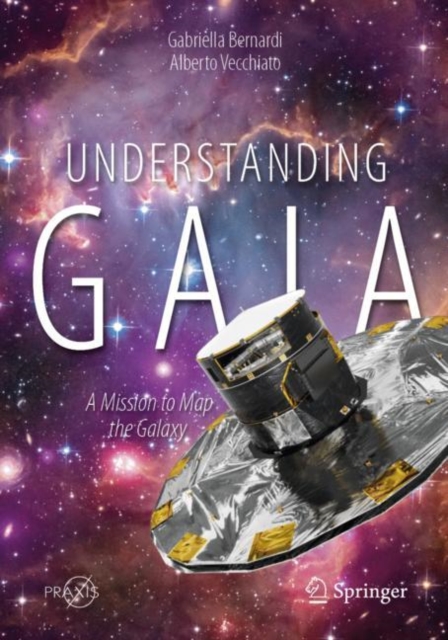
This book is the first to provide a comprehensive, readily understandable report on the European Space Agency's Gaia mission that will meet the needs of a general audience.
The permutation of basic atoms-nitrogen, hydrogen, oxygen, carbon and phosphorus-into the biomolecules DNA and RNA, subsequently evolved in cells and brains, defining the origin of life and intelligence, remains unexplained.
This book provides a detailed insight into how space and its applications are embedded, and can be further embedded, into African society in support of the SDGs, while taking into account the specific features, needs, and diversity of that society.
This book provides a detailed analysis on the history and development of the Committee on the Peaceful Uses of Outer Space (UNCOPUOS) and the Conference on Disarmament (CD) and the coordination and cooperation between these two fora.
This comprehensive atlas explains the genesis and evolution of impact known craters on Earth, presenting a wealth of radar images from the Italian COSMO-SkyMed satellites that were acquired at the same frequency, spatial resolution, operating mode, and illumination, allowing excellent comparison of different impact structures.
This book explores the practicality of using the existing subsurface geology on the Moon and Mars for protection against radiation, thermal extremes, micrometeorites and dust storms rather than building surface habitats at great expense at least for those first few missions.
This textbook presents an introduction to the use of probability in physics, treating introductory ideas of both statistical physics and of statistical inference, as well the importance of probability in information theory, quantum mechanics, and stochastic processes, in a unified manner.
This second edition includes updated chapters from the first edition as well as five additional new chapters (Light detection and ranging (LiDAR), CORONA historical de-classified products, Unmanned Aircraft Vehicles (UAVs), GNSS-reflectometry and GNSS applications to climate variability), shifting the main focus from monitoring and management to extreme hydro-climatic and food security challenges and exploiting big data.
This book discusses the physics of conductive channel development in space, air and vacuums and summarizes the attempts to create super-long conductive channels to study the upper atmosphere and to complete specific tasks related to energy transmission from the space to earth with high-voltage high repetition rate electrical sources.