'Bite-sized, cutting edge science delivered with enormous enthusiasm - all you need to travel the cosmos' CHRIS LINTOTT 'A lot of astrophysics is packed into this neat little book .
Whether searching for extra-terrestrial life, managing the effects of space weather or learning about dark matter, the study astrophysics has profound implications for us all.
Now revised and updated--John Lennox's acclaimed method of reading and interpreting the first chapters of Genesis without discounting either science or Scripture.
Don Handelman s groundbreaking work in anthropology is showcased in this collection of his most powerful essays, edited by Matan Shapiro and Jackie Feldman.
First published in 1960, Energy and Man is a book that comprises five speeches, together with follow-up questions, that were given by business school graduates at a symposium held at Columbia University on November 4, 1959.
From the award-winning, bestselling German science author Stefan Klein An original way into the most thought-provoking scientific theories and ideas, On The Edge of Infinity is the perfect read for those curious about the workings of the universe.
Astrochemistry is a well-established interdisciplinary subject and the methods for describing time-dependent chemistry in static or slowly-changing regions of interstellar space have been well-developed over many years.
This collection of articles, which were first published in 1958 and written on various occasions between 1932 and 1957, forms a sequel to Danish physician Niels Bohr's earlier essays in Atomic Theory and the Description of Nature (1934).
Greatly influenced by Charles Darwin, the famed German zoologist and philosopher Ernst Haeckel (1834-1919) boldly defended the fact of organic evolution and seriously considered its far-reaching ramifications for science, philosophy, and theology.
First published in 1932, this book by Nobel Prize-winning German physicist Max Planck, a profound humanist as well as a theoretical scientist and professor in Germany between the two World Wars, provides the reader with a great insider's look at how scientific revolutions unfold from the first sparks of ingenuity to their establishment as accepted paradigms of their current times.
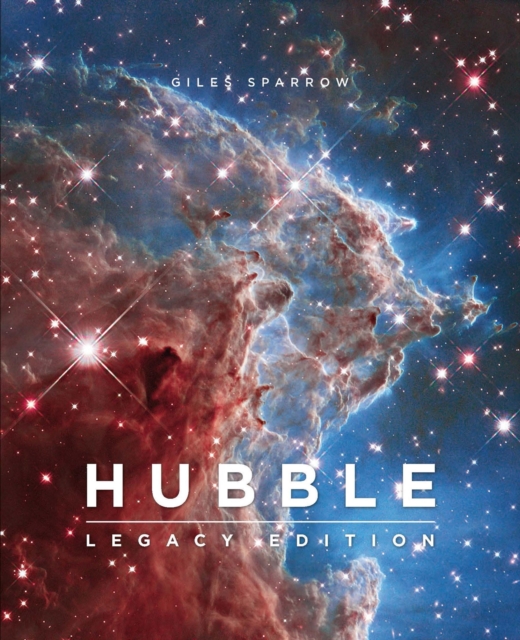
For 20 years the Hubble Space Telescope has been hurtling around our planet at 17,500 mph sending spectacularly sharp images of the universe back to Earth.
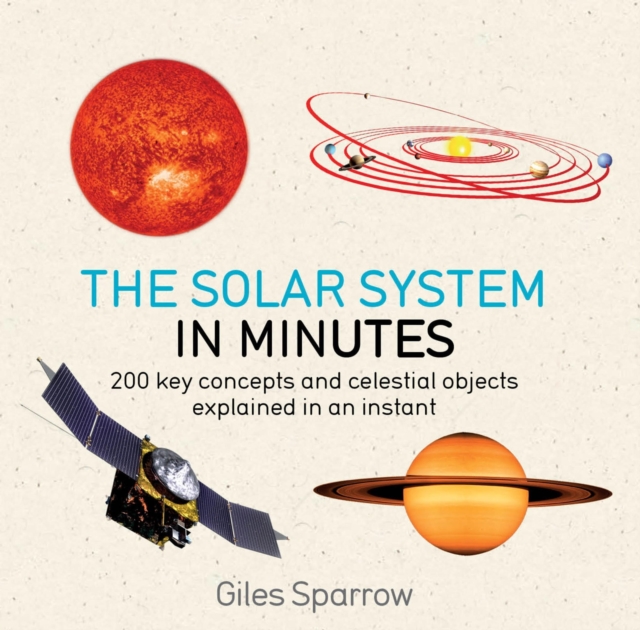
This concise, illuminating guide takes us on a comprehensive tour of the solar system, from the Sun at its very heart - via the planets and their moons - to the icy objects at its periphery, some 150 billion kilometres away.
Two models for the origin of the Solar System, the Nebula Theory and the Capture Theory, are discussed by protagonists, Simon and Steven respectively, in the presence of Solomon, who oversees the discussions.
The social anthropology of sickness and health has always been concerned with religious cosmologies: how societies make sense of such issues as prediction and control of misfortune and fate; the malevolence of others; the benevolence (or otherwise) of the mystical world; local understanding and explanations of the natural and ultra-human worlds.
This fully-updated second edition remains the only truly detailed exploration of the origins of our Solar System, written by an authority in the field.
This invaluable book presents selected papers of S Chandrasekhar, co-winner of the Nobel Prize for Physics in 1983 and a scientific giant well known for his prolific and monumental contributions to astrophysics, physics and applied mathematics.
The space vehicle spectaculars of recent years have been revealing the full scope and beauty of our own solar system but have also shown that a growing number of other stars too have planetary bodies orbiting around them.
The scope of this book is two-fold: the first part gives a fully detailed and pedagogical presentation of the Hawking effect and its physical implications, and the second discusses the backreaction problem, especially in connection with exactly solvable semiclassical models that describe analytically the black hole evaporation process.
Reviewing the fundamental instrumental techniques and current observational results, this book unveils the mysteries of the physical processes in the central parsec of our Milky Way: the super-massive black hole embedded in a central stellar cluster as well as the gas and dust in the circumnuclear region.
In this highly accessible book, leading scientists from around the world give a general overview of research advances in their subject areas within the field of Astronomy.
Sacred Geometry exists all around us in the natural world, from the unfurling of a rose bud to the pattern of a tortoise shell, the sub-atomic to the galactic.