The historic detection of gravitational waves on September 14, 2015, prompted by the highly energetic fusion of two black holes, has made events in the universe "e;audible"e; for the first time.
Originally published in 1708, this volume is an exact facsimile reproduction the 1802 edition of The Mathematical and Philosophical Works of the Right Rev.
The historic detection of gravitational waves on September 14, 2015, prompted by the highly energetic fusion of two black holes, has made events in the universe "e;audible"e; for the first time.
Originally published in 1708, this volume is an exact facsimile reproduction the 1802 edition of The Mathematical and Philosophical Works of the Right Rev.
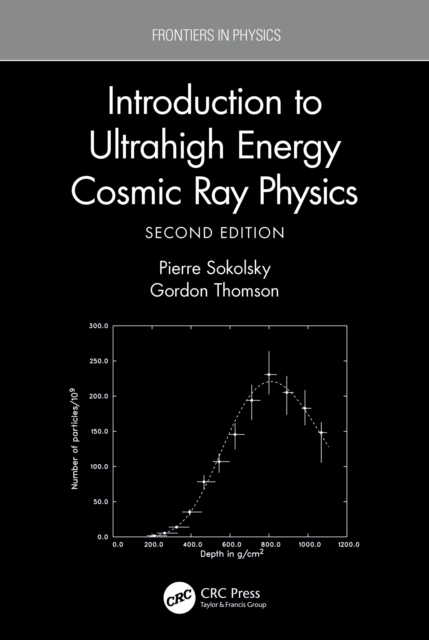
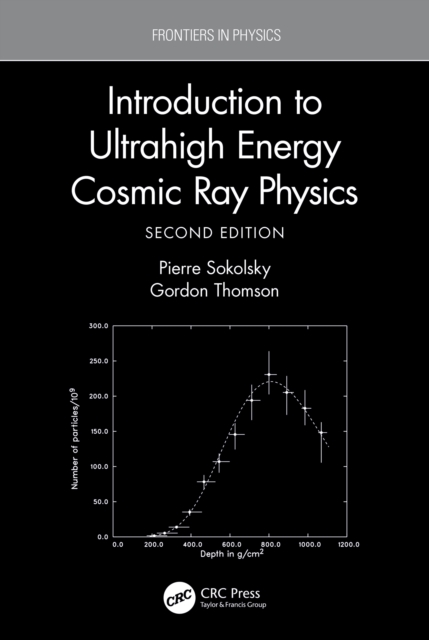
This revised edition provides an up-to-date summary of the field of ultra-high energy cosmic rays, dealing with their origin, propagation, and composition,.
This revised edition provides an up-to-date summary of the field of ultra-high energy cosmic rays, dealing with their origin, propagation, and composition,.
This book provides an introduction, from the astronomical point of view of the author, to the exciting search for extra-terrestrial life, and an overview of the current status of research into 'alien' life in the Solar System and beyond.
This book provides an introduction, from the astronomical point of view of the author, to the exciting search for extra-terrestrial life, and an overview of the current status of research into 'alien' life in the Solar System and beyond.
Predicting Motion presents the core ideas of Newtonian mechanics, starting from Newton's laws and the idea that changes in motion are predictable given the forces that cause them.
Seeking Ultimates: An Intuitive Guide to Physics, Second Edition takes us on a journey that explores the limits of our scientific knowledge, emphasizing the gaps that are left.
Solar-terrestrial physics deals with phenomena in the region of space between the surface of the Sun and the upper atmosphere of the Earth, a region dominated by matter in a plasma state.
This book provides, for the very first time, a critical edition and an English translation (accompanied by critical notes and technical analyses) of the chapter on spheres (goladhyaya) from Nityananda's Sarvasiddhantaraja, a Sanskrit astronomical text written in seventeenth-century Mughal India.
Mars Outpost provides a detailed insight into the various technologies, mission architectures, medical requirements, and training needed to send humans to Mars.
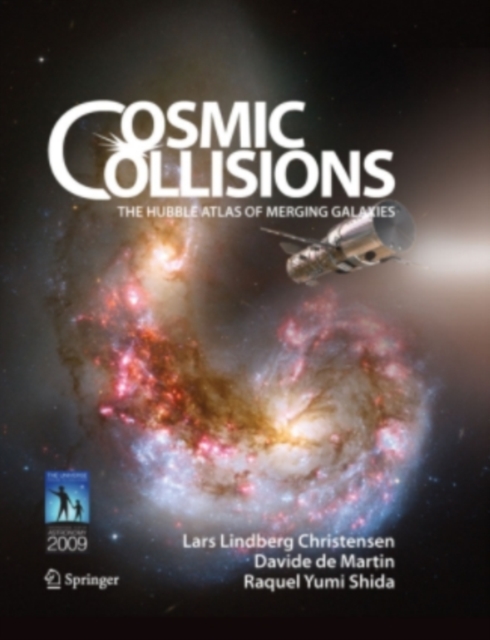
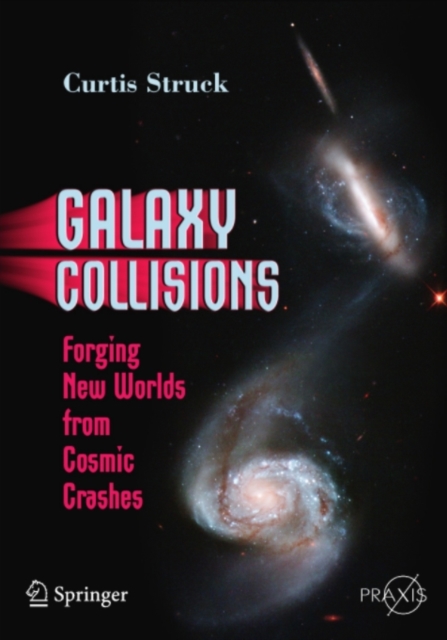
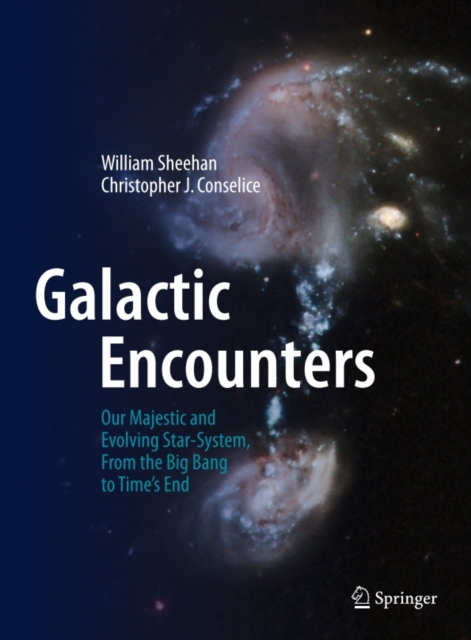
Like no other telescope ever invented, the NASA/ESA Hubble Space Telescope has given us magnificent high resolution views of the gigantic cosmic collisions between galaxies.
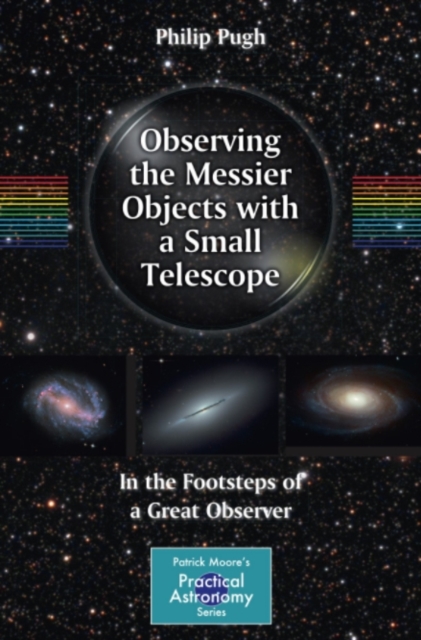
Observing the Messier Objects with a Small Telescope contains descriptions and photographs of the 103 Messier objects, with instructions on how to find them without a computerized telescope or even setting circles.
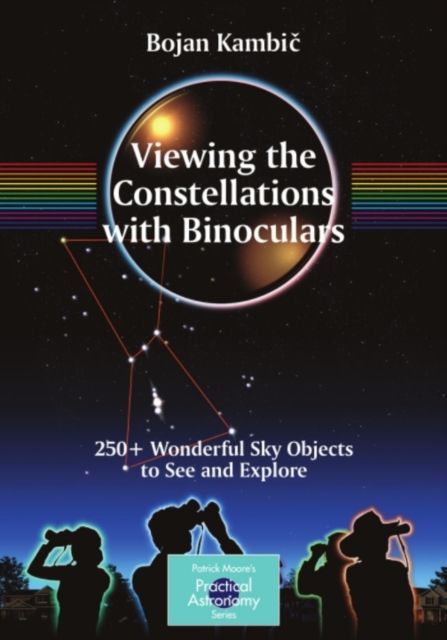
Viewing the Constellations with Binoculars is a complete guide to practical astronomy, written for beginners, intermediate-level astronomers, and even people who have not yet turned their gaze to the night sky.
Instead of taking somebody's word for it about the basic size and distance statistics for the solar system, this book shows amateur astronomers how to measure these things for themselves.
The Solar-B satellite was launched in the morning of 23 September 2006 (06:36 Japan time) by the Institute of Space and Astronautical Science, Japan Aerospace Exploration Agency (ISAS/JAXA), and was renamed to Hinode (‘sunrise’ in Japanese).
Deep-Sky Video Astronomy is a concise guide to using modern integrating video cameras for deep-sky viewing and imaging with the kinds of modest telescopes available commercially to amateur astronomers.
The Almagest, by the Greek astronomer and mathematician Ptolemy, is the most important surviving treatise on early mathematical astronomy, offering historians valuable insight into the astronomy and mathematics of the ancient world.
The First Soviet Cosmonaut Team will relate who these men were and offer far more extensive background stories, in addition to those of the more familiar names of early Soviet space explorers from that group.