The increasing power of computer resources along with great improvements in observational data in recent years have led to some remarkable and rapid advances in astrophysical fluid dynamics.
When Isaac Newton died in 1727 without a will, he left behind a wealth of papers that, when examined, gave his followers and his family a deep sense of unease.
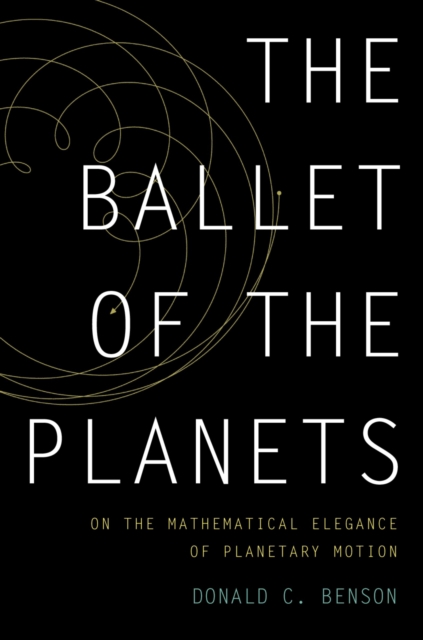
The Ballet of the Planets unravels the beautiful mystery of planetary motion, revealing how our understanding of astronomy evolved from Archimedes and Ptolemy to Copernicus, Kepler, and Newton.
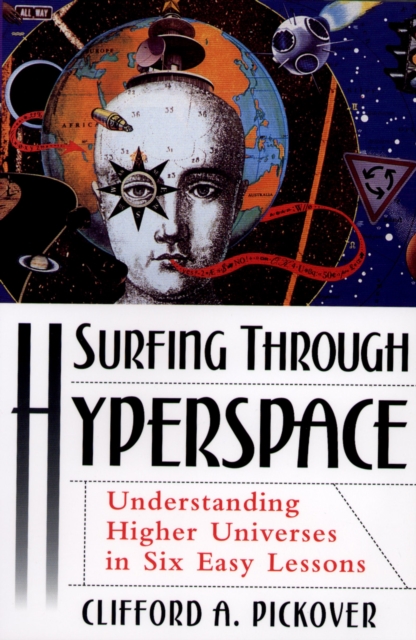
Do a little armchair time-travel, rub elbows with a four-dimensional intelligent life form, or stretch your mind to the furthest corner of an uncharted universe.
The Ballet of the Planets unravels the beautiful mystery of planetary motion, revealing how our understanding of astronomy evolved from Archimedes and Ptolemy to Copernicus, Kepler, and Newton.
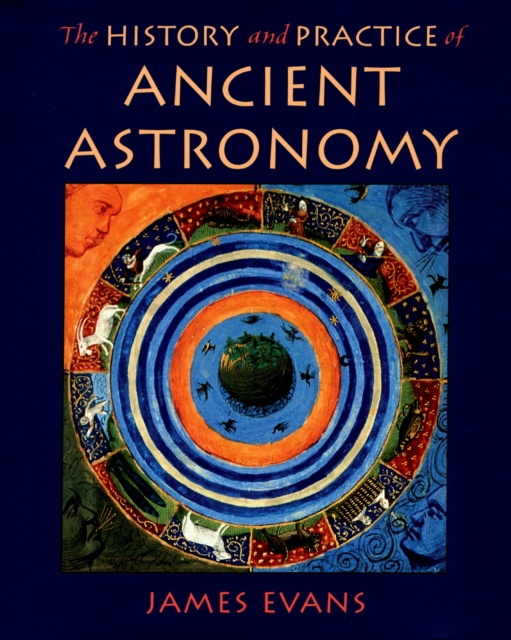
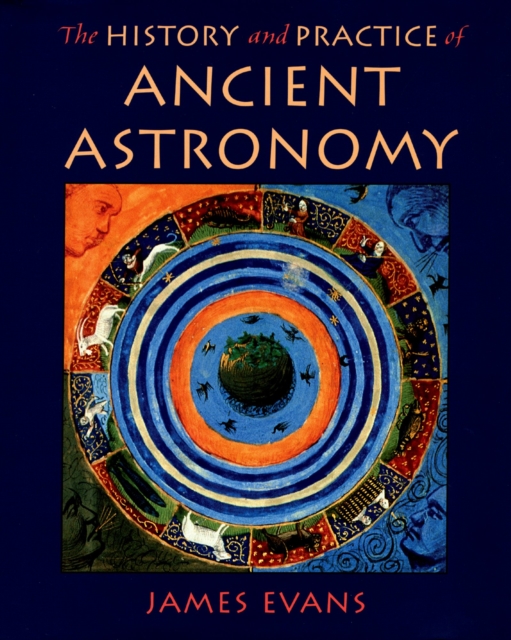
The History and Practice of Ancient Astronomy combines new scholarship with hands-on science to bring readers into direct contact with the work of ancient astronomers.
The History and Practice of Ancient Astronomy combines new scholarship with hands-on science to bring readers into direct contact with the work of ancient astronomers.
When Isaac Newton died in 1727 without a will, he left behind a wealth of papers that, when examined, gave his followers and his family a deep sense of unease.
The discovery of life on other planets would be perhaps the most momentous revelation in human history, more disorienting and more profound than either the Copernican or Darwinian revolutions, which knocked the earth from the center of the universe and humankind from its position of lofty self-regard.
Eminent Harvard astrophysicist David Layzer offers readers a unified theory of natural order and its origins, from the permanence, stability, and orderliness of sub-atomic particles to the evolution of the human mind.
The magnetosphere is the region where cosmic rays and the solar wind interact with the Earth's magnetic field, creating such phenomena as the northern lights and other aurorae.
A complete revision of Goody's classic 1964 work, this volume offers a systematic discussion of atmospheric radiation processes that today are at the center of worldwide study and concern.
Scientists have collected a wealth of physical and chemical data for the Sun, planets, and small bodies in our solar system, but until now this information has been scattered throughout the technical literature.
Most scientists now agree that some sixty-five million years ago, an immense comet slammed into the Yucatan, detonating a blast twenty million times more powerful than the largest hydrogen bomb, punching a hole ten miles deep in the earth.
Do a little armchair time-travel, rub elbows with a four-dimensional intelligent life form, or stretch your mind to the furthest corner of an uncharted universe.
Eleven planetary atmospheres are included for detailed study in this reference/text, four for the giant planets (Jupiter, Saturn, Uranus, and Neptune), four for the small bodies (Io, Titan, Triton, and Pluto), and three for the terrestrial planets (Mars, Venus, and Earth).
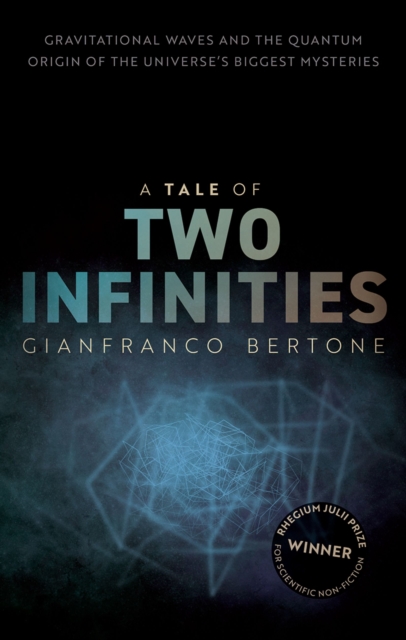
'An incredible tour of our universe's greatest mysteries' Professor Dan Hooper This cutting-edge book investigates the extraordinary potential of multimessenger astronomy to revolutionise our understanding of the universe The spectacular advances of modern astronomy have opened our horizon on an unexpected cosmos: a dark, mysterious universe, populated by enigmatic entities we know very little about, like black holes, or nothing at all, like dark matter and dark energy.
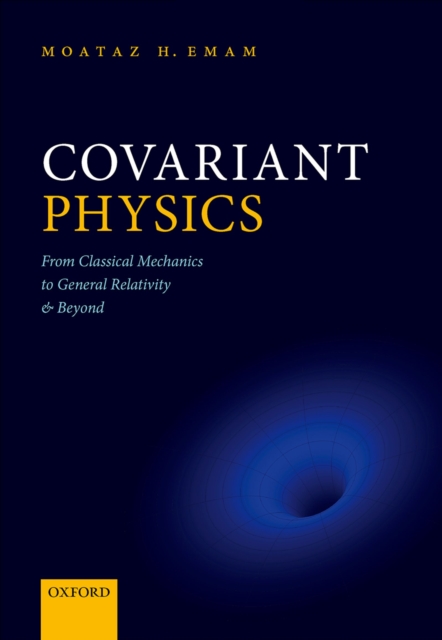
Covariant Physics: From Classical Mechanics to General Relativity and Beyond endeavours to provide undergraduate students as well as self-learners with training in the fundamentals of the modern theories of spacetime, most notably the general theory of relativity as well as physics in curved spacetime backgrounds in general.
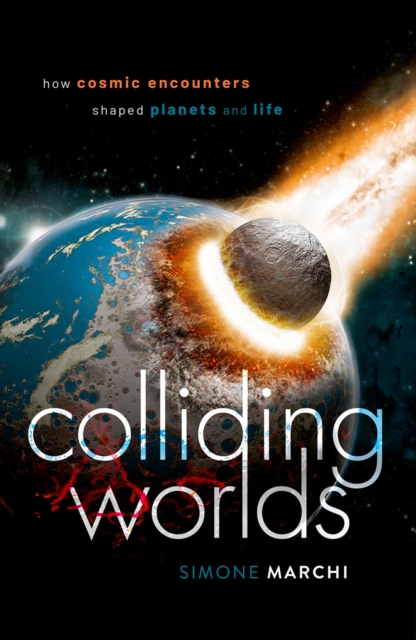
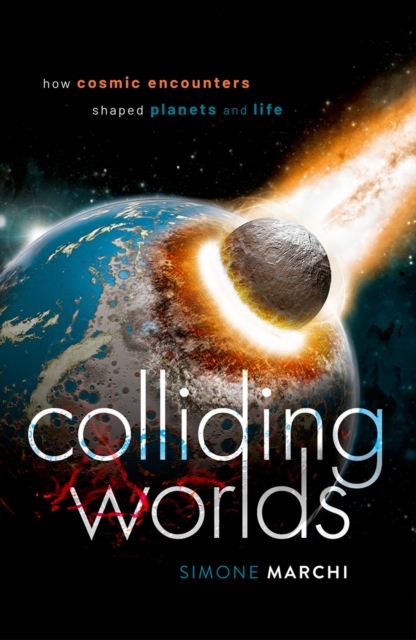
Simone Marchi presents the emerging story of how cosmic collisions shaped both the solar system and our own planet, from the creation of the Moon to influencing the evolution of life on Earth.
Simone Marchi presents the emerging story of how cosmic collisions shaped both the solar system and our own planet, from the creation of the Moon to influencing the evolution of life on Earth.
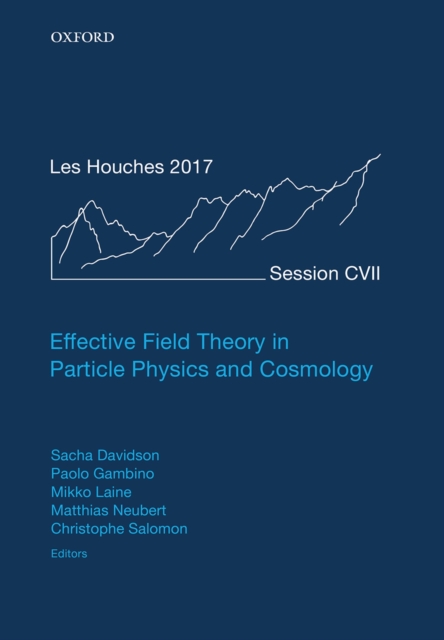
Applications of quantum field theoretical methods to gravitational physics, both in the semiclassical and the full quantum frameworks, require a careful formulation of the fundamental basis of quantum theory, with special attention to such important issues as renormalization, quantum theory of gauge theories, and especially effective action formalism.
The Sun, as our nearest star, is of enormous importance for life on Earth - providing the warm radiation and light which allowed complex life to evolve.
The Sun, as our nearest star, is of enormous importance for life on Earth - providing the warm radiation and light which allowed complex life to evolve.