The work of conservation biology has grown from local studies of single species into a discipline concerned with mapping and managing biodiversity on a global scale.
This book provides an extensive survey of all the physics necessary to understand the current developments in the field of fundamental cosmology, as well as an overview of the observational data and methods.
In a startling reinterpretation of the evidence, Stillman Drake advances the hypothesis that Galileo's trial and condemnation by the Inquisition was caused not by his defiance of the Church, but by the hostility of contemporary philosophers.
This Very Short Introduction uses Newton's own unpublished writings to provide fascinating insight into the man who kept the Royal Society under his thumb, was Head of the Mint, and whose contributions to our understanding of the heavens and the earth are considered by many to be unparalleled.
This book is a historical account of how natural philosophers and scientists have endeavoured to understand the universe at large, first in a mythical and later in a scientific context.
Relativistic cosmology has in recent years become one of the most active and exciting branches of research, often considered to be today where particle physics was forty years ago, with major discoveries just waiting to happen.
Recent discoveries in astronomy, especially those made with data collected by satellites such as the Hubble Space Telescope and the Wilkinson Microwave Anisotropy Probe, have revolutionized the science of cosmology.
"e;Kinetic Theory of Granular Gases"e; provides an introduction to the rapidly developing theory of dissipative gas dynamics - a theory which has mainly evolved over the last decade.
Semiconductor sensors patterned at the micron scale combined with custom-designed integrated circuits have revolutionized semiconductor radiation detector systems.
The importance and the beauty of modern quantum field theory resides in the power and variety of its methods and ideas, which find application in domains as different as particle physics, cosmology, condensed matter, statistical mechanics and critical phenomena.
This book deals with neutrino physics and astrophysics - a field in which some of the most exciting recent developments in particle physics, astrophysics and cosmology took place.
Will we ever discover a single scientific theory that tells us everything that has happened, and everything that will happen, on every level in the Universe?
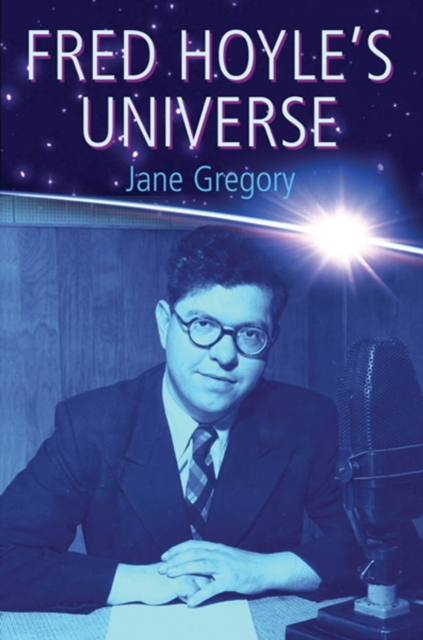
Fred Hoyle was one of the most widely acclaimed and colourful scientists of the twentieth century, a down-to-earth Yorkshireman who combined a brilliant scientific mind with a relish for communication and controversy.
This is a book about the dramatic periods in the Earth's history called mass extinctions - short periods (by geological standards) when life nearly died out on Earth.
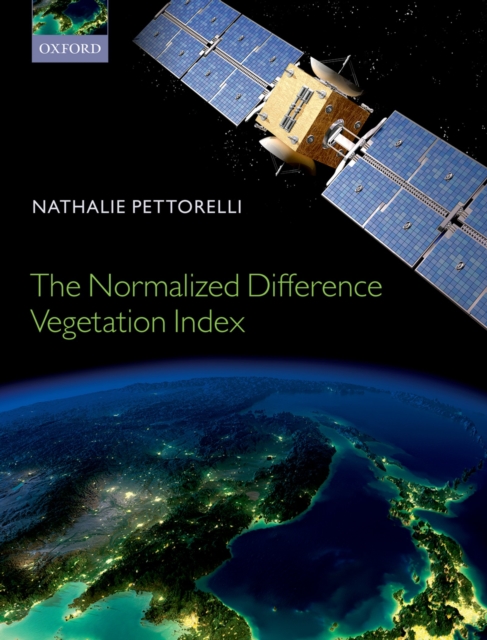
There has been a recent surge of interest in remote sensing and its use in ecology and conservation but this is the first book to focus explicitly on the NDVI (Normalised Difference Vegetation Index), a simple numerical indicator and powerful tool that can be used to assess spatio-temporal changes in green vegetation.
There has been a recent surge of interest in remote sensing and its use in ecology and conservation but this is the first book to focus explicitly on the NDVI (Normalised Difference Vegetation Index), a simple numerical indicator and powerful tool that can be used to assess spatio-temporal changes in green vegetation.
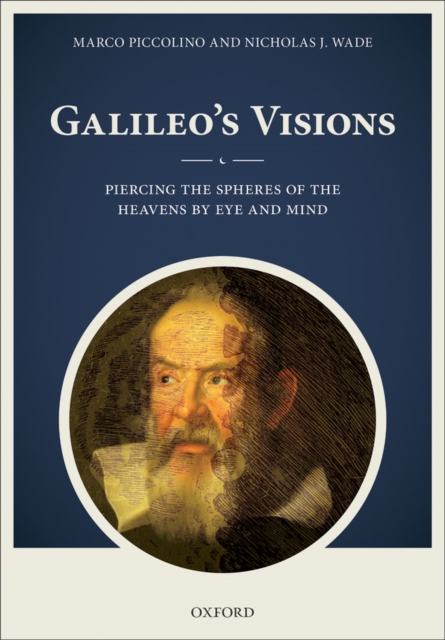
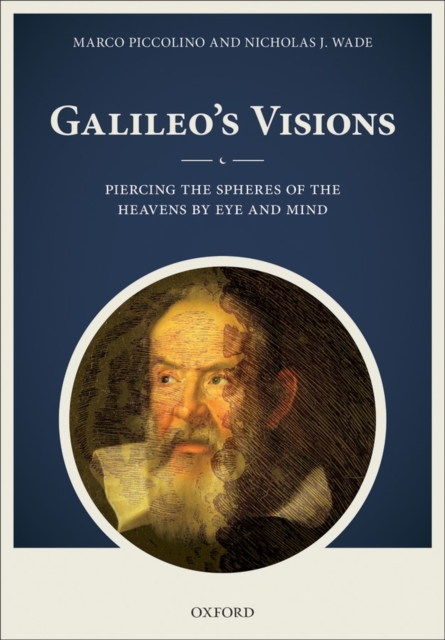
Galileo is known as a pioneer of science - especially of mechanics and astronomy - but far less attention has been paid to his work on the senses generally, and more specifically on vision.
Galileo is known as a pioneer of science - especially of mechanics and astronomy - but far less attention has been paid to his work on the senses generally, and more specifically on vision.
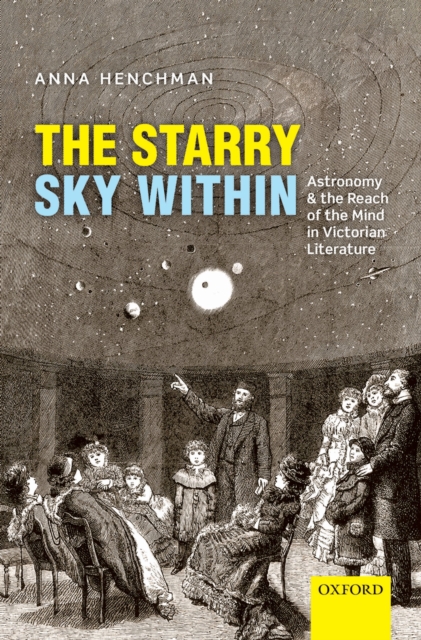
Tracing unexplored connections between nineteenth-century astronomy and literature, The Starry Sky Within offers a new understanding of literary point of view as essentially multiple, mobile, and comparative.
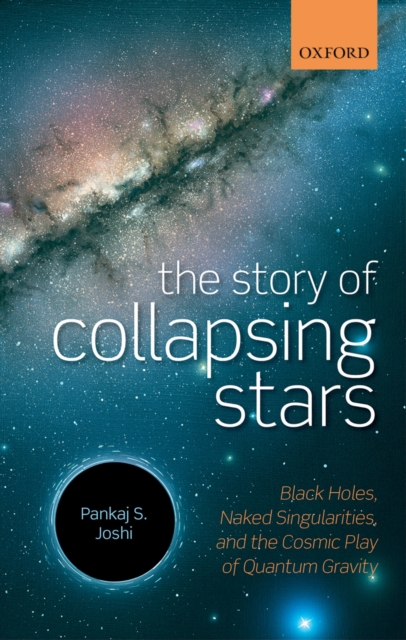
This book journeys into one of the most fascinating intellectual adventures of recent decades - understanding and exploring the final fate of massive collapsing stars in the universe.
This book stems from the worrying scale and intensity of conflicts, humanitarian crises, and human rights violations around the world, which can be seen in a wide range of global hotspots including Venezuela, Yemen, Syria, Myanmar, Sudan, Eritrea, and numerous others.
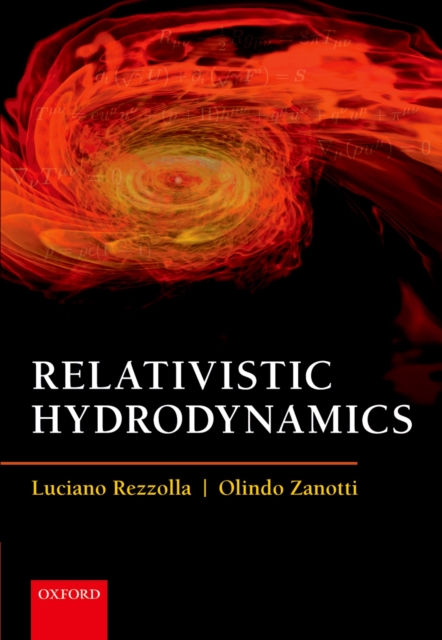
Relativistic hydrodynamics is a very successful theoretical framework to describe the dynamics of matter from scales as small as those of colliding elementary particles, up to the largest scales in the universe.
This textbook offers a readily comprehensible introduction to classical Newtonian gravitation, which is fundamental for an understanding of classical mechanics and is particularly relevant to Astrophysics.
An extraordinary discovery has recently shaken the foundations of Cosmology and Particle Physics, sparking a scientific revolution that has profoundly modified our understanding of our Universe and that is still far from over.
An extraordinary discovery has recently shaken the foundations of Cosmology and Particle Physics, sparking a scientific revolution that has profoundly modified our understanding of our Universe and that is still far from over.
This comprehensive textbook on relativity integrates Newtonian physics, special relativity and general relativity into a single book that emphasizes the deep underlying principles common to them all, yet explains how they are applied in different ways in these three contexts.
This bestselling dictionary contains more than 9,500 entries on all aspects of chemistry, physics, biology (including human biology), earth sciences, computer science, and astronomy.