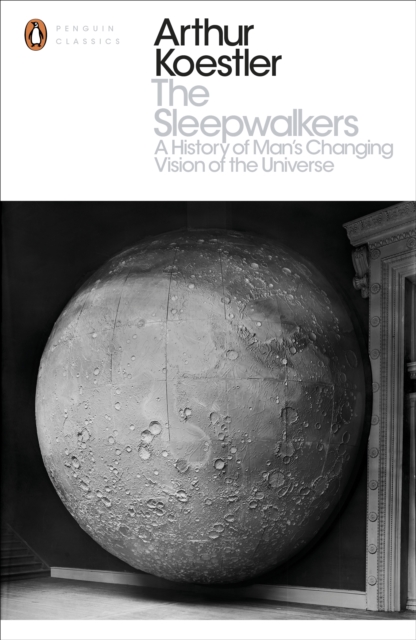
Arthur Koestler's extraordinary history of humanity's changing vision of the universeIn this masterly synthesis, Arthur Koestler cuts through the sterile distinction between 'sciences' and 'humanities' to bring to life the whole history of cosmology from the Babylonians to Newton.
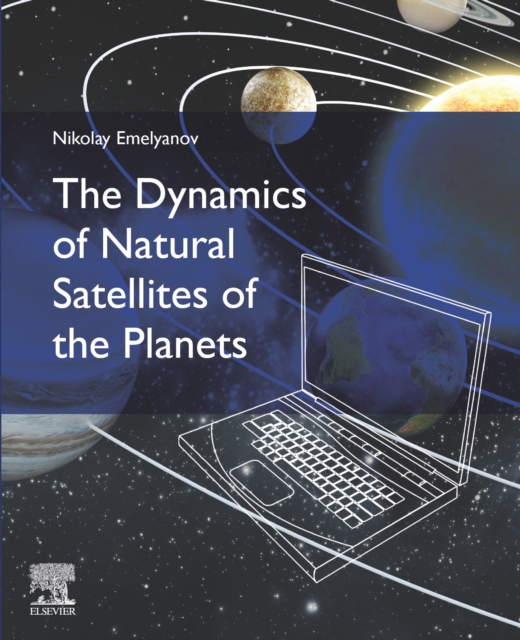
The Dynamics of Natural Satellites of the Planets is an accessible reference for understanding the celestial mechanics of planetary moons through the lens of both theory and observation.
A scientist's inspiring vision of our return to the Moon as humanity's next thrilling step in space explorationJust over half a century since Neil Armstrong first stepped foot on the lunar surface, a new space race to the Moon is well underway and rapidly gaining momentum.
An inspiring anthology of writings by trailblazing women astronomers from around the globeThe Sky Is for Everyone is an internationally diverse collection of autobiographical essays by women who broke down barriers and changed the face of modern astronomy.
Mars Geological Enigmas: From the Late Noachian Epoch to the Present Day presents outstanding questions on the geology of Mars and divergent viewpoints based on varying interpretations and analyses.
Earth as an Evolving Planetary System, Fourth Edition discusses key topics dealing with the evolution and interaction through time of Earth's crust, mantle, core, atmosphere, hydrosphere, and biosphere.
Ultraviolet Astronomy and the Quest for the Origin of Life addresses the use of astronomical observations in the ultraviolet range to better understand the generation of complex, life-precursor molecules.
Knowledge Discovery in Big Data from Astronomy and Earth Observation: Astrogeoinformatics bridges the gap between astronomy and geoscience in the context of applications, techniques and key principles of big data.
Big Data in Radio Astronomy: Scientific Data Processing for Advanced Radio Telescopes provides the latest research developments in big data methods and techniques for radio astronomy.
Heat Transport and Energetics of the Earth and Rocky Planets provides a better understanding of the interior of the Earth by addressing the processes related to the motion of heat in large bodies.
Space Science and Public Engagement: 21st Century Perspectives and Opportunities critically examines the many dimensions of public engagement with space science by exploring case studies that show a spectrum of public engagement formats, ranging from the space science community's efforts to communicate developments to the public, to citizenry attempting to engage with space science issues.
In six short years, Galileo Galilei went from being a somewhat obscure mathematics professor running a student boarding house in Padua to a star in the court of Florence to the recipient of dangerous attention from the Inquisition for his support of Copernicanism.
This book, edited by the European Space Policy Institute, is the first international publication, following UNISPACE+50, to analyze how space capacity building can empower the international community towards fully accessing all the economic and societal benefits that space assets and data can offer.
This book on high-energy cosmic rays deals in its first part with the standard model of cosmic rays, describing how they are born in a wide range of cosmic processes, how they are accelerated and how they interact with matter, magnetic fields and radiation during their journey across the Galaxy.
This book describes how and why the early modern period witnessed the marginalisation of astrology in Western natural philosophy, and the re-adoption of the cosmological view of the existence of a plurality of worlds in the universe, allowing the possibility of extraterrestrial life.
In the last 25 years, planetary science experienced a revolution, as vast oceans of liquid water have been discovered within the heart of the icy moons of our Solar System.
This textbook presents the basics of philosophy that are necessary for the student and researcher in science in order to better understand scientific work.
The Encyclopedia of the Solar System, Third Edition-winner of the 2015 PROSE Award in Cosmology & Astronomy from the Association of American Publishers-provides a framework for understanding the origin and evolution of the solar system, historical discoveries, and details about planetary bodies and how they interact-with an astounding breadth of content and breathtaking visual impact.
This book presents contributions from an internal symposium organized to celebrate the 80th anniversary of the Specola Vaticana, or Vatican Observatory, in the Papal Palace of Castel Gandolfo.
The aim of this essay is to understand the relationship between knowledge and society and to reflect on the links between science and political decision making.
This non-technical biography of Jacobus Cornelius Kapteyn (1851-1922) presents to the general reader the scientific life of the astronomer who pioneered the studies of the structure of the Milky Way Galaxy.
This book analyses the magnificent imperial necropolises of ancient China from the perspective of Archaeoastronomy, a science which takes into account the landscape in which ancient monuments are placed, focusing especially but not exclusively on the celestial aspects.
This carefully researched monograph is a historical investigation of the illustrated Aratea astronomical manuscript and its many interpretations over the centuries.
This book is based on the findings, conclusions and recommendations of the Global Space Governance study commissioned by the 2014 Montreal Declaration that called upon civil society, academics, governments, the private sector, and other stakeholders to undertake an international interdisciplinary study.
This edited volume presents the current state of gas accretion studies from both observational and theoretical perspectives, and charts our progress towards answering the fundamental yet elusive question of how galaxies get their gas.
This book presents the Green's function formalism in a basic way and demonstrates its usefulness for applications to several well-known problems in classical physics which are usually solved not by this formalism but other approaches.
This book addresses the complex technical challenges presented by remote space mining in terms of robotics, remote power systems, space transport, IT and communications systems, and more.
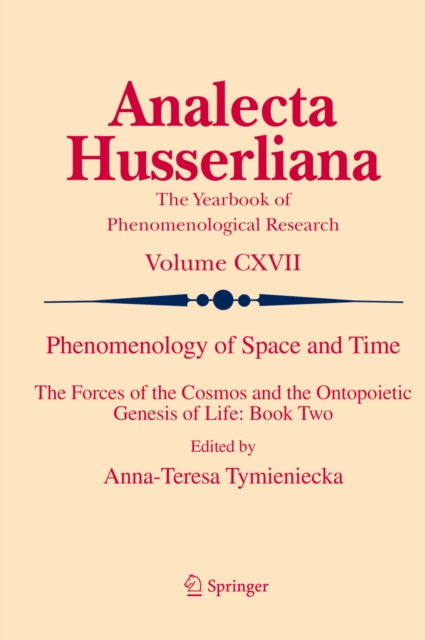
This work celebrates the investigative power of phenomenology to explore the phenomenological sense of space and time in conjunction with the phenomenology of intentionality, the invisible, the sacred, and the mystical.
Dive into a mind-bending exploration of the physics of black holesBlack holes, predicted by Albert Einstein's general theory of relativity more than a century ago, have long intrigued scientists and the public with their bizarre and fantastical properties.
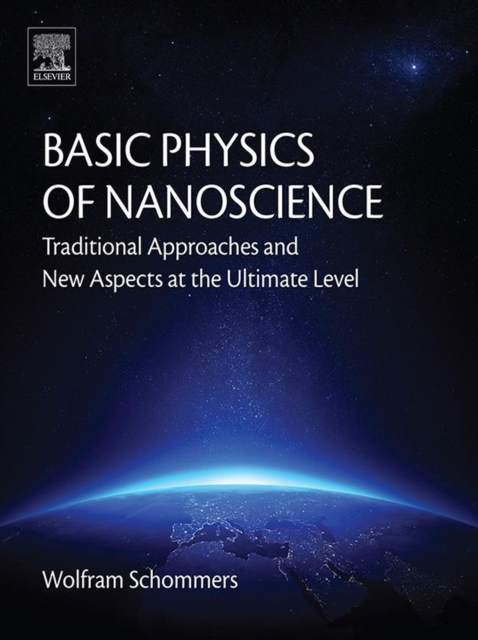
Basic Physics of Nanoscience: Traditional Approaches and New Aspects at the Ultimate Level deals with the description of properties at the Nano level and self-organizing quantum processes of Nano systems.
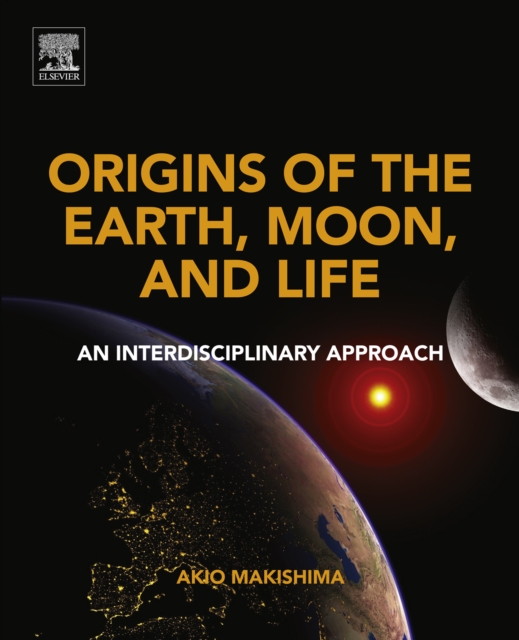
Origins of the Earth, Moon, and Life: An Interdisciplinary Approach presents state-of-the-art knowledge that is based on theories, experiments, observations, calculations, and analytical data from five astro-sciences, astronomy, astrobiology, astrogeology, astrophysics, and cosmochemistry.
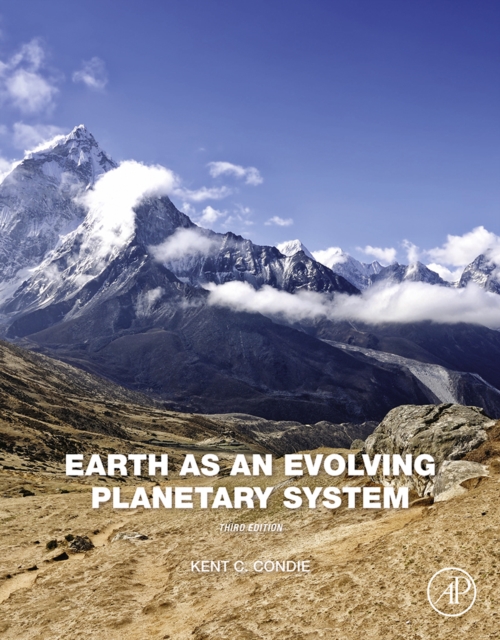
Earth as an Evolving Planetary System, Third Edition, examines the various subsystems that play a role in the evolution of the Earth, including subsystems in the crust, mantle, core, atmosphere, oceans, and life.