Tensors, Relativity, and Cosmology, Second Edition, combines relativity, astrophysics, and cosmology in a single volume, providing a simplified introduction to each subject that is followed by detailed mathematical derivations.
Experiments in Reduced Gravity: Sediment Settling on Mars is the first book to be published that reflects experiments conducted on Martian geomorphology in reduced gravity.
The Encyclopedia of the Solar System, Third Edition-winner of the 2015 PROSE Award in Cosmology & Astronomy from the Association of American Publishers-provides a framework for understanding the origin and evolution of the solar system, historical discoveries, and details about planetary bodies and how they interact-with an astounding breadth of content and breathtaking visual impact.
Gravitational waves were first predicted by Albert Einstein in 1916, a year after the development of his new theory of gravitation known as the general theory of relativity.
The Foundations of Celestial Reckoning gives the reader direct access to the foundational documents of the tradition of calculation created by astronomers of the early Chinese empire between the late second century BCE and the third century CE.
This is a second edition of a textbook that provides the first comprehensive, easy-to-read, and up-to-date account of the fascinating discipline of archaeoastronomy, in which the relationship between ancient constructions and the sky is studied in order to gain a better understanding of the ideas of the architects of the past and of their religious and symbolic worlds.
Earth as an Evolving Planetary System, Second Edition, explores key topics and questions relating to the evolution of the Earth's crust and mantle over the last four billion years.
This book provides a unique insight into the research and recent developments undertaken among the African Remote Sensing community in regard to the environment.
This book is a collection of lectures given in July 2007 at the Les Houches Summer School on "e;String Theory and the Real World: From particle physics to astrophysics.
This work is addressed to advanced undergraduate and graduate students in astronomy, geology, chemistry, meteorology, and the planetary sciences as well as to researchers with pertinent areas of specialization who desire an introduction to the literature across the broad interdisciplinary range of this important topic.
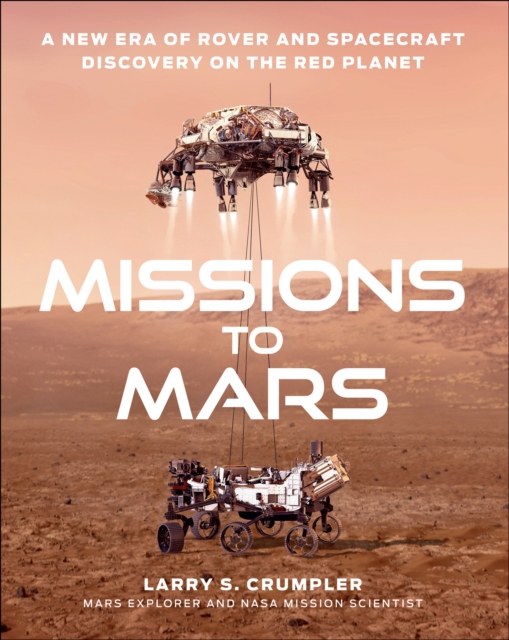
Missions to Mars is a vivid insider account of some of NASA's most vital and exciting missions to the Red Planet, illustrated with full-color photographs.
Powerful solar explosions, such as flares and coronal mass ejections, greatly disturb the electromagnetic environment around the Earth and the atmosphere.
This revealing work examines an approach from ancient astronomy to what was then a particularly important question, namely that of understanding the relationship between the position in the ecliptic and the time it takes for a fixed-length of the ecliptic beginning at that point to rise above the eastern horizon.
This second edition includes updated chapters from the first edition as well as five additional new chapters (Light detection and ranging (LiDAR), CORONA historical de-classified products, Unmanned Aircraft Vehicles (UAVs), GNSS-reflectometry and GNSS applications to climate variability), shifting the main focus from monitoring and management to extreme hydro-climatic and food security challenges and exploiting big data.
This is a follow-on book to the introductory textbook "e;Physics of the Solar Corona"e; previously published in 2004 by the same author, which provided a systematic introduction and covered mostly scientific results from the pre-2000 era.
The COSPAR Colloquium on Solar-Terrestrial Magnetic Activity and Space Environment (STMASE) was held in the National Astronomy Observatories of Chinese Academy of Sciences (NAOC) in Beijing, China in September 10-12, 2001.
This book helps to bridge the knowledge gap that currently surrounds space technology and its method of exploration and highlights much-needed awareness and attention to an increase in Space Law and sustainable measures.
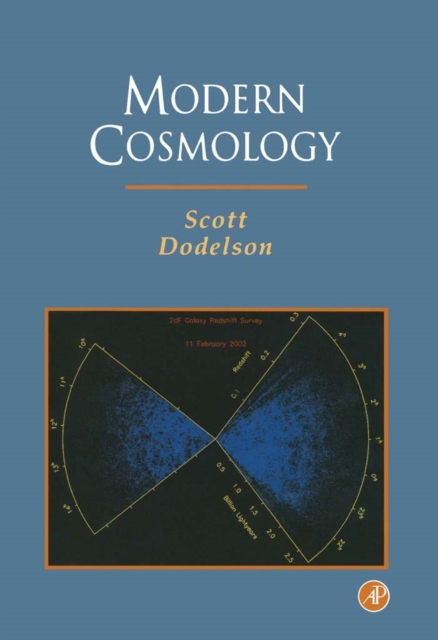
Modern Cosmology begins with an introduction to the smooth, homogeneous universe described by a Friedman-Robertson-Walker metric, including careful treatments of dark energy, big bang nucleosynthesis, recombination, and dark matter.
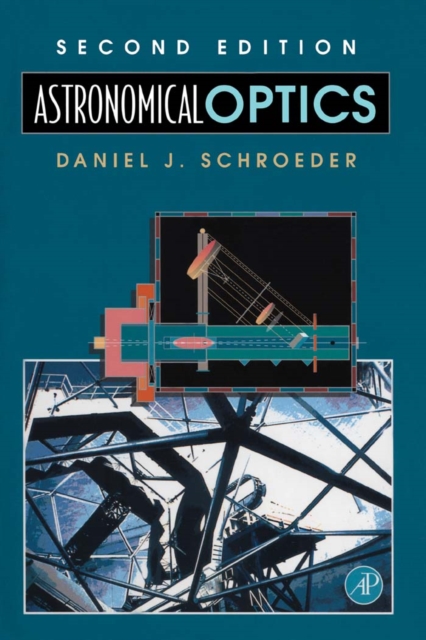
This book provides a unified treatment of the characteristics of telescopes of all types, both those whose performance is set by geometrical aberrations and the effect of the atmosphere, and those diffraction-limited telescopes designed for observations from above the atmosphere.
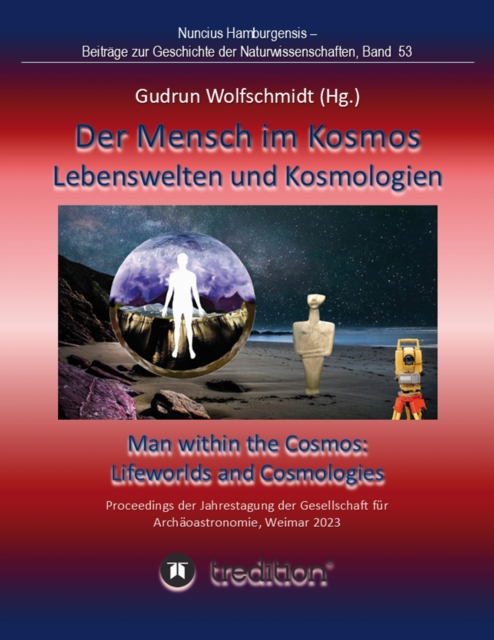
Das Buch „Der Mensch im Kosmos – Lebenswelten und Kosmologien“ (Man within the Cosmos – Lifeworlds and Cosmologies) präsentiert die Vorträge der Tagung der Gesellschaft für Archäoastronomie in Weimar 2023 in 17 Kapiteln – Kulturgeschichte der Astronomie von der Steinzeit bis zur Goethezeit.
Unidentified phenomena in space, in the Earth's atmosphere, and in waters are too important to leave their exploration to the military and scientific laypersons.
Connects the philosophy of the I Ching with key recent advances in cosmology, such as the Big Bang theory, Roger Penrose's cyclic conformal cosmology, and his and Stuart Hameroff's cosmic quantum brain dynamics Explains the Taoist cosmology of Heaven-Humanity Oneness in the context of Teilhard de Chardins evolutionism, Thomas Berrys cosmogenetic trinity, and Brian Swimmes 12 cosmological powers Examines the holographic unity of Heaven, Earth, and Humankind at microcosmic, mesocosmic, and macrocosmic scalesIs the universe inert and empty, or is it in some way responsive to consciousness?
This book is an enhanced and expanded English edition of the treatise "e;Fondamenti matematici e analisi numerica della dinamica di un Universo isotropo,"e; published by the Accademia delle Scienze di Torino in volume no.
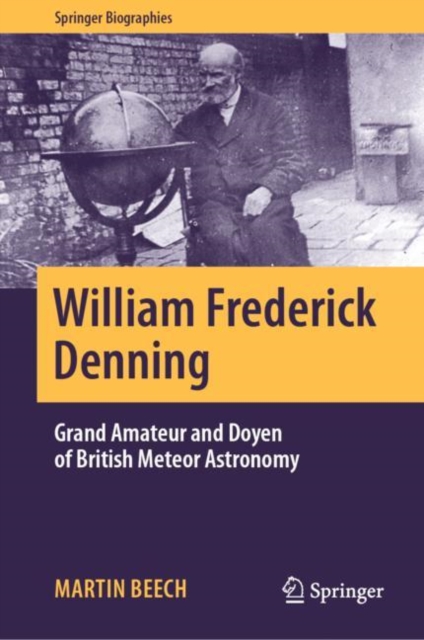
This book provides a detailed biographical account of the industrious late nineteenth-century astronomer William Frederick Denning who, in later life, rose to be a celebrated public figure and a highly respected amateur astronomer.