Most things you ';know' about science and religion are myths or half-truths that grew up in the last years of the nineteenth century and remain widespread today.
This book explains that diffusion, osmosis, dissolution, evaporation, and heat loss all preferentially affect small bodies due to their high surface/volume ratios.
Following the approach of Lev Landau and Evgenii Lifshitz, this book introduces the theory of special and general relativity with the Lagrangian formalism and the principle of least action.
The book introduces readers to the concept of weightlessness and microgravity, and presents several examples of microgravity research in fluid physics, the material sciences and human physiology.
This book provides systematic descriptions of design methods, typical techniques, and validation methods for lunar soft landers, covering their environmental design, system design, sub-system design, assembly, testing and ground test validation based on the Chang'e-3 mission.
This book discusses key theoretical aspects concerning the formation of the solar wind: the most essential building block in the heliosphere, in which planets orbit.
This book focuses on understanding the stellar populations of massive star clusters and aims to investigate the origin, evolution and properties of binary systems, their collision products, as well as the general characteristics (e.
This thesis develops and establishes several methods to determine the detailed geometric architecture of transiting exoplanetary systems (planets orbiting around, and periodically passing in front of, stars other than the sun) using high-precision photometric data collected by the Kepler space telescope.
This book explains that diffusion, osmosis, dissolution, evaporation, and heat loss all preferentially affect small bodies due to their high surface/volume ratios.
This volume presents cutting-edge research on one of modern cosmology's most intriguing challenges: the observed dipolar anisotropies that appear to conflict with the standard ΛCDM cosmological model.
This book provides a comprehensive review of the methodologies and searches for dark matter (DM) annihilation signals using very-high-energy gamma rays (VHE, E > 100 GeV), utilizing data from current Imaging Atmospheric Cherenkov Telescopes (IACTs) in the pre-Cherenkov Telescope Array (CTA) era.
This book provides a comprehensive review of the methodologies and searches for dark matter (DM) annihilation signals using very-high-energy gamma rays (VHE, E > 100 GeV), utilizing data from current Imaging Atmospheric Cherenkov Telescopes (IACTs) in the pre-Cherenkov Telescope Array (CTA) era.
This thesis sheds valuable new light on the second-order cosmological perturbation theory, extensively discussing it in the context of cosmic microwave background (CMB) fluctuations.
This thesis describes one of the most precise experimental tests of Lorentz symmetry in electrodynamics by light-speed anisotropy measurement with an asymmetric optical ring cavity.
This book describes the status quo of space science in China, details the scientific questions to be addressed by the Chinese space science community in 2016-2030, and proposes key strategic goals, space science programs and missions, the roadmap and implementation approaches.
Line intensity mapping (LIM) is an observational technique that probes the large-scale structure of the Universe by collecting light from a wide field of the sky.
This book presents recent advances in the area of Radioscience, Equatorial Atmospheric Science and Environment from the international symposium for equatorial atmosphere of the celebration of the Equatorial Atmosphere Radar (EAR) 20th Anniversary, conducted by Indonesian National Institute of Aeronautics and Space (LAPAN) and Kyoto University, in 2021.
This book presents the proceedings of the International Conference on Aerospace System Science and Engineering (ICASSE 2019), held in Toronto, Canada, on July 30-August 1, 2019, and jointly organized by the University of Toronto Institute for Aerospace Studies (UTIAS) and the Shanghai Jiao Tong University School of Aeronautics and Astronautics.
This book discusses the study of astronomy in different cultures, applied historical astronomy and history of multi-wavelength astronomy, and the genesis of recent research.
This book characterizes the kinematic and chemical structures of disk-forming regions around low-mass protostellar sources and their interplay based on Atacama Large Millimeter/submillimeter Array (ALMA) observations.
The volume of data being collected in solar astronomy has exponentially increased over the past decade and we will be entering the age of petabyte solar data.
This book presents the cold side of the Universe illustrated by the rest-frame, far-infrared emission with Atacama Large Millimeter/submillimeter Array (ALMA).
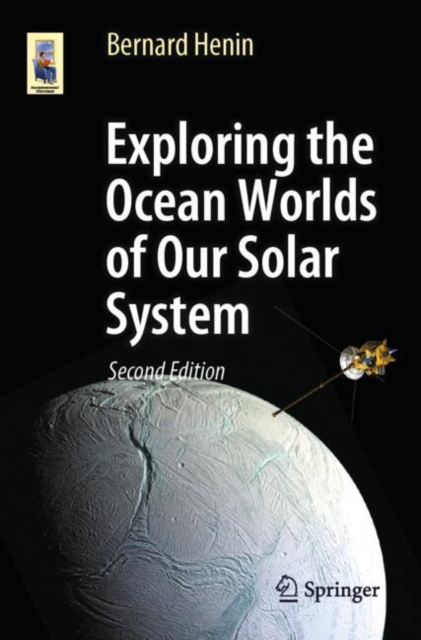
In the past 25 years, planetary science has undergone a revolution with the discovery of vast oceans of liquid water within the icy moons of our Solar System.
This book provides a mathematical and numerical analysis of many problems which lead to paradoxes in contemporary cosmology, in particular, the existence of dark matter and dark energy.
In the past 25 years, planetary science has undergone a revolution with the discovery of vast oceans of liquid water within the icy moons of our Solar System.
This book highlights latest research advance in the field of Radioscience, Equatorial Atmospheric Science and Environment as part of the International Symposium for Equatorial Atmosphere celebrating the 21st Anniversary of the Equatorial Atmosphere Radar (EAR) , organized by Research Center for Climate and Atmosphere (PRIMA) of National Research and Innovation Agency (BRIN).
This book provides a mathematical and numerical analysis of many problems which lead to paradoxes in contemporary cosmology, in particular, the existence of dark matter and dark energy.
This book highlights latest research advance in the field of Radioscience, Equatorial Atmospheric Science and Environment as part of the International Symposium for Equatorial Atmosphere celebrating the 21st Anniversary of the Equatorial Atmosphere Radar (EAR) , organized by Research Center for Climate and Atmosphere (PRIMA) of National Research and Innovation Agency (BRIN).
This textbook serves to teach readers about the origins of life, the probabilistic process of self-assembly underpinning all living systems, from a biophysics perspective.
This book presents high-quality contributions in the subject area of Aerospace System Science and Engineering, including topics such as: Trans-space vehicle systems design and integration, Air vehicle systems, Space vehicle systems, Near-space vehicle systems, Opto-electronic system, Aerospace robotics and unmanned system, Aerospace robotics and unmanned system, Communication, navigation and surveillance, Dynamics and control, Intelligent sensing and Information fusion, Aerodynamics and aircraft design, Aerospace propulsion, Avionics system, Air traffic management, Earth observation, Deep space exploration, Bionic micro-aircraft/spacecraft.