Cluster was one of the two missions - the other being the Solar and Heliospheric Observatory (SOHO) - constituting the Solar Terrestrial Science Programme (STSP), the first `cornerstone' of ESA's Horizon 2000 Programme.
IAU Colloquium 165, Dynamics and Astrometry of Natural and Artificial Celestial Bodies, was held in Poznan, Poland, in July 1996, bringing together over 200 scientists from 27 countries who discussed their work in 179 oral and poster presentations.
It is now a well established tradition that every four years, at the end of winter, a group of "e;celestial mechanicians"e; from all over the world gather at the "e;Alpen- gasthof Peter Rosegger"e; in the Styrian Alps (Ramsau, Austria).
The past year has produced some of the most exciting results in the history of astronomy, particularly in the area of planets outside our solar system.
In June of 1996, at the idyllic seaside resort of Guaruja, Brazil, a renowned group of researchers in space and astrophysical plasmas met to provide a forum on Advanced Topics on Astrophysical and Space Plasmas at a school consisting of some 60 students and teachers, mainly from Brazil and Argentina, but also from all the other parts of the globe.
The Workshop "e;Optical Detectors for Astronomy"e; was held during October 8-10, 1996 at the headquarters of the European Southern Observatory in Garching, Germany.
Herbig-Haro objects were discovered 50 years ago, and during this half century they have developed from being mysterious small nebulae to be- coming an important phenomenon in star formation.
A detailed study of the science, engineering and applications of terahertz technology, based on room-temperature solid-state devices, which are seen as the key technology for wider applications in this frequency range.
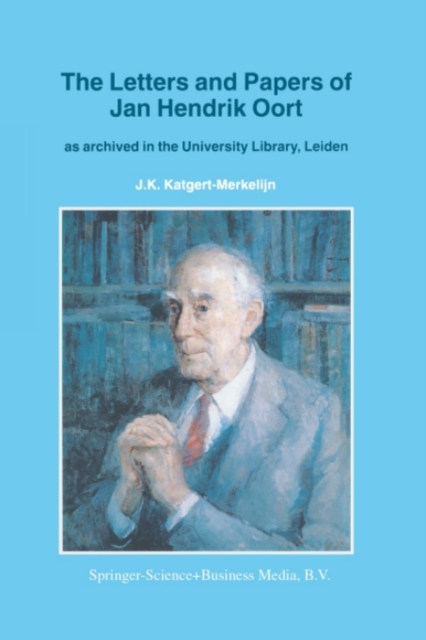
The astronomer Jan Hendrik Oort (1900-1992) left behind an extensive collection of notes and correspondence, both on his research and on matters that concerned him in a variety of official functions.
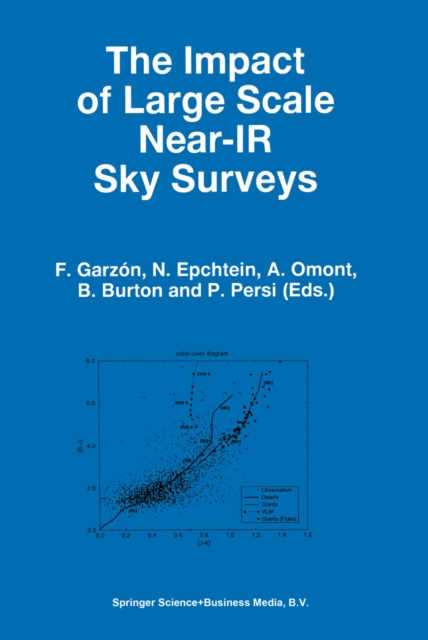
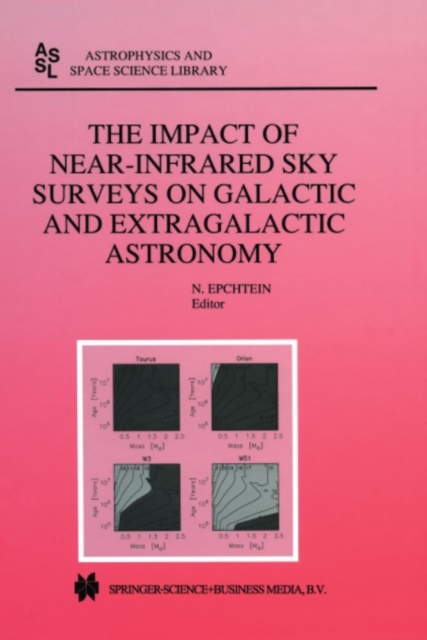
After a year's successful operation, the European DENIS project is now a scientific reality and its close cousin 2MASS (USA) is about to come into operation.
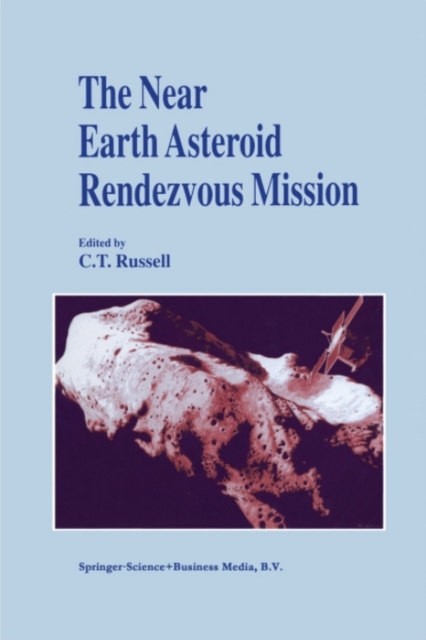
Even before the present Administrator of NASA, Daniel Goldin, made the phrase 'better, faster, cheaper' the slogan of at least the Office of Space Science, that same office under the Associate Administrator of Lennard Fisk and its Division of Solar System Exploration under the direction of Wes Huntress had begun a series of planetary spacecraft whose developmental cost, phase CID in the parlance of the trade, was to be held to under $150M.
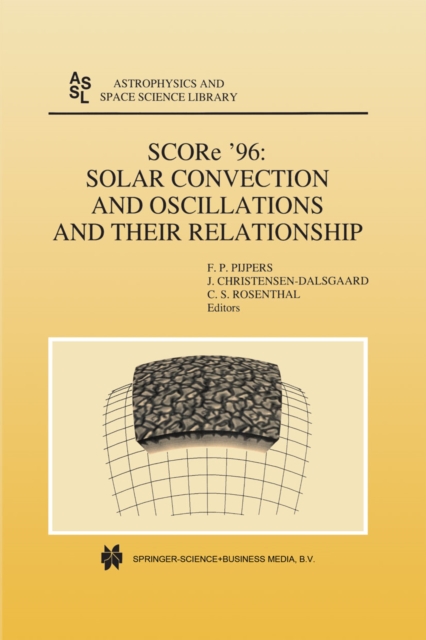
This volume contains the reviews and poster papers presented at the workshop Solar Convection and Oscillations and their Relationship: SCORe '96, held in Arhus, Denmark, May 27 - 31, 1996.
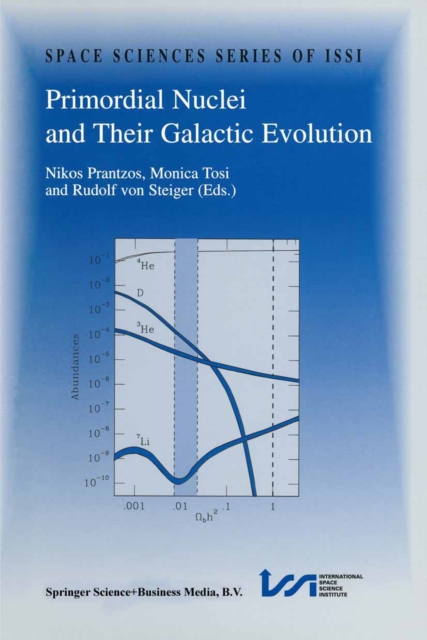
The present volume, the fourth one in the "e;Space Sciences Series of ISSI"e; (Inter- national Space Science Institute), contains the proceedings of a workshop on "e;Pri- mordial Nuclei and Their Galactic Evolution"e;, which was held at ISSI in Bern on 6-10 May 1997.
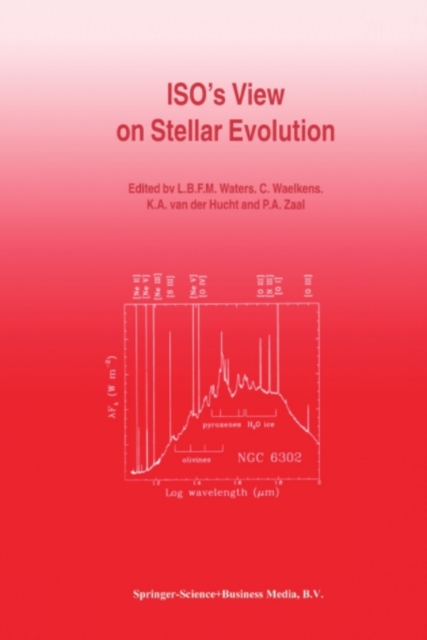
The successful launch on November 17, 1995 of ESA's Infrared Space Observatory (ISO) by means of an Ariane 4 carrier, has set in motion a true revolution in quantitative infrared astronomy.
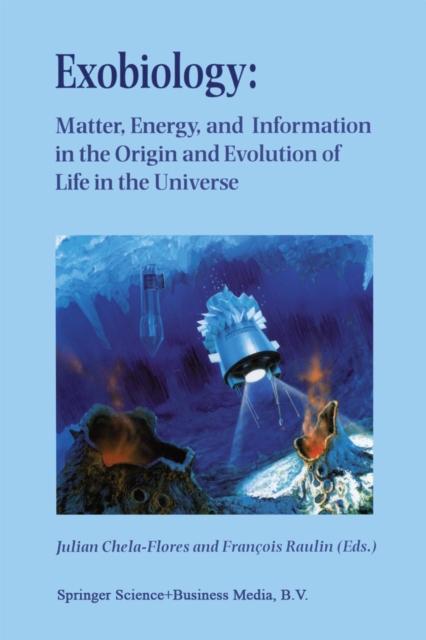
Leading researchers in the area of the origin, evolution and distribution of life in the universe contributed to Exobiology: Matter, Energy, and Information in the Origin and Evolution of Life in the Universe.
Thirty years after the pioneering enterprise of Neugebauer and collabo- rators, the astronomical sky is surveyed anew in the near infrared range with a gain in sensitivity greater than 4 orders of magnitude.
The discovery of chemical elements in celestial bodies and the first estimates of the chemical composition of the solar atmosphere were early results of Astrophysics - the subdiscipline of Astronomy that was originally concerned with the general laws of radiation and with spectroscopy.
These are the proceedings of international conference on Numerical As- trophysics 1998 (NAP98), held at National Olympic Memorial Youth Cen- ter, in Tokyo, Japan in the period of March 10 - 13, 1998, and hosted by the National Astronomical Observatory, Japan (NAOJ).
Since 1967, the main scientific events of the General Assemblies of the International Astronomical Union have been published in the separate series, Highlights of Astronomy.
NASA's Advanced Composition Explorer (ACE) was launched on August 25, 1997, carrying six high-resolution spectrometers that measure the abundances of the elements, isotopes, and ionic charge states of energetic nuclei in space.
In May 1976, when one of us was temporarily associated with Stras- bourg Observatory for lecturing on distance determination methods (Heck 1978), Pierre Lacroute - then in his last year as Director there - mod- estly requested comments on a project he had been cherishing for quite a few years, and which he had been presenting to visitors and colleagues: an astrometric satellite.
In the early years of the twentieth century, Victor Hess of Germany flew instruments in balloons and so discovered in 1912 that an extra-~errestial radiation of unknown origin is incident on the earth with an almost constant intensity at all times.
Most papers in this book were presented at the SOHO-9 Workshop 'Helioseismic Diagnostics of Solar Convection and Activity', held on 12-15 July 1999 at Stanford University, California, U.
th The 4 ESO CCO Workshop, Optical Detectors for Astronomy, was held during September 13-16, 1999 at its usual location, the headquarters of the European Southern Observatory in Garching, Germany.
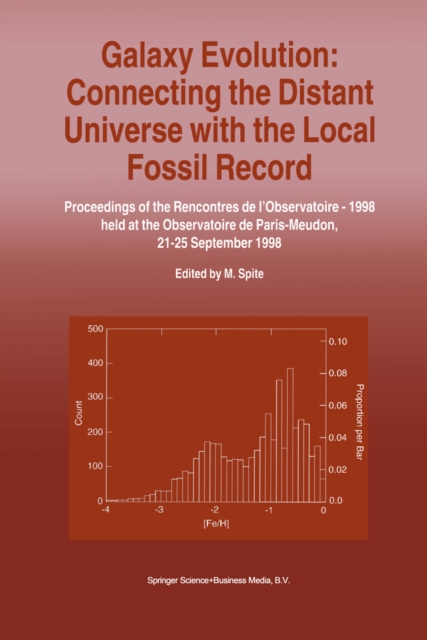
This book contains the Proceedings of the first 'Rencontres de l'Observatoire' which was held at the Meudon campus of the Paris Observatory on September 21-25, 1998.
In May 1998 a hundred renowned scientists from 20 different countries met at the Max-Planck-Institut fur Aeronomie to communicate their latest results and ideas in astrophysical and space plasma, as a follow-up to previous similar meetings which were held in Varenna, Abastumai, Potsdam, Toki and Guaruja.