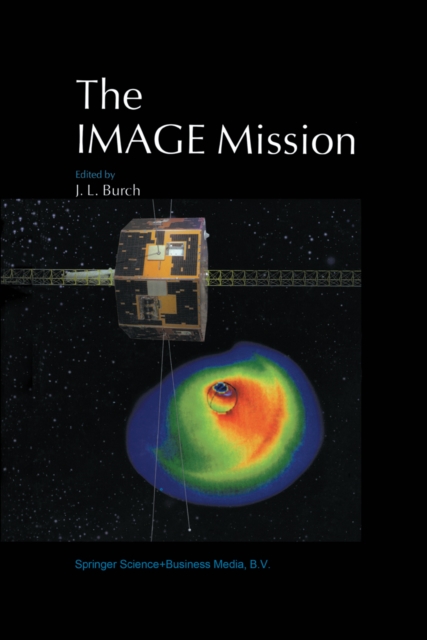
IMAGE (Imager for Magnetopause-to-Aurora Global Exploration) is the first NASA MIDEX mission and the first mission dedicated to imaging the Earth's magnetosphere.
The present sixth volume of ISSI Space Sciences Series is the outcome of the most ambitious study project of ISSI hitherto, that on 'Source and Loss Processes of Magnetospheric Plasma'.
The "e;Non-Sleeping Universe"e; was a conference conceived to commemorate the opening of the new building of the Centro de Astroffsica da U niversidade do Porto (CAUP).
It is with great joy that we present a collection of essays written in honour of Jayant Vishnu Narlikar, who completed 60 years of age on July 19, 1998, by his friends and colleagues, including several of his for- mer students.
For almost three decades since Mariner 2 flew by the planet in December 1962, Venus has been the subject of intense investigation by both the Soviet and American space programs.
The Galactic cosmic rays have far-reaching effects on the interstellar medium, and they are, in turn, profoundly affected by the particles and fields in space.
This book reports the Proceedings of the NATO Advanced Research Workshop on "e;An- gular Momentum Evolution of Young Stars"e; held from 17 to 21 September 1990 at Noto, Italy.
This book represents the proceedings from the NATO sponsored Advanced Research Workshop entitled "e;Observational Tests of Inflation"e; held at the University of Durham, England on the 10th-14th December, 1990.
When I became President of International Astronomical Union Commission 44 for the triennial period 1985-1988, several members of the Organizing Committee and I agreed that it would be a good idea for our Commission to host a conference on observatories in space in view of their increasingly important role in astronomi cal research.
A few years ago, a motivation for organizing one more IAU Symposium on star for- mation in Grenoble, was the anticipated completion of the IRAM interferometer on the Plateau de Bures, close to Grenoble.
From the beginning of Space Astronomy, the Extreme Ultraviolet band of the spectrum (roughly defined as the decade in energy from 90-900 A) was deemed to be the `unobservable ultraviolet'.
Minor bodies in the Solar System, though representing only a small fraction of the mass in the Solar System, may well play a fundamental role in terrestrial evolution.
The morphological scheme devised by Hubble and followers to classify galaxies has proven over many decades to be quite effective in directing our quest for the fundamental pa- rameters describing the extragalactic manifold.
More than two centuries have elapsed since the story of the interacting binary stars began with the rediscovery of the variability of Algol by John Goodricke and the interpretation he proposed for explaining the regular periodic brightness variations which he found.
Planetary nebulae are a keystone for the understanding of the evolution of stars, for deep insights into the physical processes prevailing in highly excited dilute nebulae, and for the chemical evolution in galaxies.
The original plans for a meeting to celebrate the second centenary of the As- tronomical Observatory of Palermo were for a celebration with a double character.
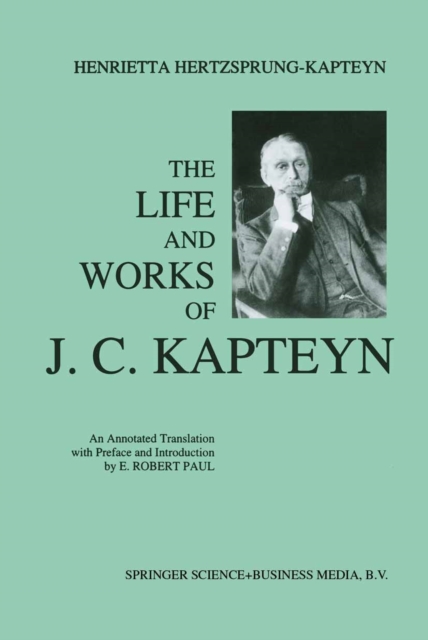
Among the most influential, world-renowned scientists during the early decades of the twentieth century was the Dutch astronomer Jacobus Cornelius Kapteyn (1851-1922).
Infrared Solar Physics contains the proceedings of the 154th Symposium of the International Astronomical Union held in Tucson, Arizona, March 2--5, 1992.