The book focuses on the current research of the relation between protein phosphorylation and meat quality, reviews the influence mechanism of protein phosphorylation on meat quality, and summarizes the improvement of meat quality by regulating protein phosphorylation.
Plants growing in the natural environment battle with a variety of biotic (pathogens infection) and abiotic (salinity, drought, heat and cold stresses etc.
Converting biomass to biofuels involves hydrolyzing cellulose to sugars using cost-intensive commercial enzymes - an expensive step that makes large-scale production economically non-viable.
Microbial biotechnology is an emerging field with applications in a broad range of sectors involving food security, human nutrition, plant protection and overall basic research in the agricultural sciences.
Surface bio-contamination has become a severe problem that contributes to outbreaks of community acquired and nosocomial infections through contiguous fomite transmission of diseases.
This book explores the latest developments in the field the acute phase protein (APP), C-reactive protein or CRP in different diseases, highlighting the structural and functional aspects of CRP in disease biology.
Sugarcane enjoys a prominent position among agro-industrial crops and is commercially grown in 115 tropical and subtropical countries around the world.
Microbial biosurfactant compounds are a group of structurally diverse molecules produced by microorganisms, and are mainly categorized according to their chemical structure.
This book offers a comprehensive guide to the identification, detection, characterization, classification and management of plant pathogens and other beneficial microbes in agriculture.
Genetic transformation is a key technology, in which genes are transferred from one organism to another in order to improve agronomic traits and ultimately help humans.
The use of fossil fuels results in rising CO2 and other greenhouse gas (GHG) emissions, causing global temperature rise and climate change that will negatively impact human health, the food supply, and eventually worsen hunger and misery.
Food security and the medicinal needs of billions of people around the world are pressing global issues, and the biodiversity and sustainable utilization of plants is of great significance in this context.
This book presents the latest research on plant phenolics, offering readers a detailed, yet comprehensive account of their role in sustainable agriculture.
This book gathers selected studies on the industrial applications of glycoside hydrolases (GHs), presenting an updated classification of these enzymes, and discussing their structure, mechanisms, and various approaches to improve their catalytic efficiency.
Genetic transformation is a key technology, in which genes are transferred from one organism to another in order to improve agronomic traits and ultimately help humans.
Our country's cultural legacy is one of the world's most diverse, drawing millions of visitors every year to our convents and monuments, and to our museums, libraries, concert halls and festivals.
To satisfy the food demands of the global population, advanced technology based research is needed, that can extract the information from the plant metabolism and microbial gene pool and use it for improving plant health and productivity.
Several nano-scale devices have emerged that are capable of analysing plant diseases, nutrient deficiencies and any other ailments that may affect food security in agro-ecosystems.
The first edition of this book, Genetic Mapping and Marker Assisted Selection: Basics, Practice and Benefits, was widely appreciated as the first of its kind on this topic and has been listed as a reference work in several agricultural universities' curricula.
Plants produce a vast number of bioactive compounds with different chemical scaffolds, which modulate a diverse range of molecular targets and are used as drugs for treating numerous diseases.
This book provides a single source of information on three major bioengineering areas: engineering at the cellular and molecular level; biomedical devices / instrument engineering; and data engineering.
This textbook offers a concise, yet comprehensive account of human nutrition, food and nutrition-related health problems, based on the curricula of top universities around the globe.
This book, now in an extensively revised second edition, describes the crucial role of zinc signaling in biological processes on a molecular and physiological basis.
Plants produce a vast number of bioactive compounds with different chemical scaffolds, which modulate a diverse range of molecular targets and are used as drugs for treating numerous diseases.
This book provides a comprehensive and systematic overview of the recent developments in cotton production and processing, including a number of genetic approaches, such as GM cotton for pest resistance, which have been hotly debated in recent decades.
The book provides an overview of bio-manufacturing techniques for the production, purification, characterization and modification of chito/chitin oligosaccharides and their monomers.
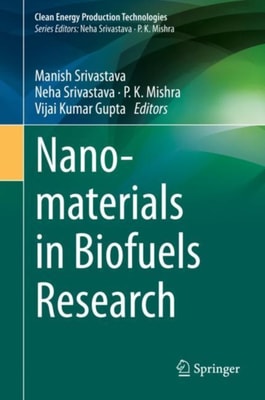
As renewable energy sources, biofuels have tremendous potential to replace fossil fuels in future energy scenarios, offering green alternative energy sources.