Since 1984 and 1988, when meetings were held on the topic of primary and secondary metabolism of plant cell cultures, there has been a clear shift of the focus of ongoing research.
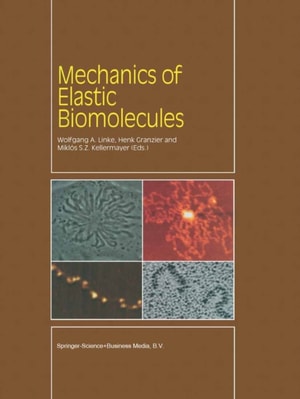
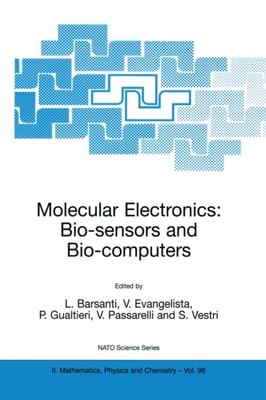
An extensive body of research is involved in pushing miniaturisation to its physical limit, encompassing the miniaturisation of electronic devices, the manipulation of single atoms by scanning tunnelling microscopy, bio-engineering, the chemical synthesis of complex molecules, microsensor technology, and information storage and retrieval.
In the preface to the first edition ofthis book, we expressed a conviction that there was a need for a short book that highlighted important advances in the new discipline of plant molecular biology.
We have sought in this book to present a series of portraits of the plant cell wall as it participates in various different aspects of the life of the plant cell.
The rapid advances made in the study of the synthesis, structure and function of biological macromole- cules in the last fifteen years have enabled scientists concerned with antimicrobial agents to achieve a considerable measure of understanding of how these substances inhibit cell growth and division.
The papers assembled in this volume are based on the symposium on "e;The Biochemistry of Gene Expression in Higher Organisms"e; which was held at the University of Sydney from May 14-19, 1972.
In recent years, the study of the plant cell cycle has become of major interest, not only to scientists working on cell division sensu strictu , but also to scientists dealing with plant hormones, development and environmental effects on growth.
It was at the end of the 19th century that a Swiss biologist, Karl Nageli first proposed the existence of hereditary organelles that carried information from parent to offspring.
Chromosome Painting is the most modern and novel technique for directly identifying several gene sequences simultaneously in the chromosome, with the aid of specific probes in molecular hybridization.
As biomaterials are used in medical devices, meeting needs in such diverse surgical disciplines as ophthalmology, cardiology, neuromuscular surgery, orthopaedics, dentistry, etc.
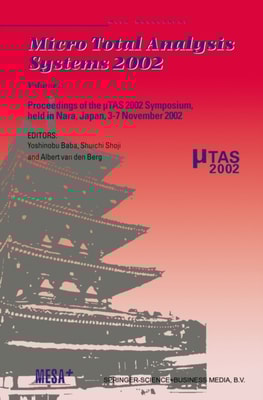
The Sixth International Conference on Miniaturized Chemical and Biochemical Analysis Systems, known as /JTAS2002, will be fully dedicated to the latest scientific and technological developments in the field of miniaturized devices and systems for realizing not only chemical and biochemical analysis but also synthesis.
In the years since the publication of Susumu Ohno's 1970 landmark book Evolution by gene duplication tremendous advances have been made in molecular biology and especially in genomics.
Although interest in evolutionary novelties can be that these different mechanisms cooperate in the mak- traced back to the time of Darwin, the appreciation ing of new genes.
In September 2002, a NATO-ASI was held in Cetraro (CS), Italy on the theme of "e;Metal-Ligand Interactions in Molecular-, Nano-, Micro-, and Macro-systems in Complex Environments"e;.
Encephalopathy and Nitrogen Metabolism in Liver Failure contains research reports and state-of-the-art reviews that were presented at the 11th International Symposium on Hepatic Encephalopathy and Nitrogen Metabolism in relation to liver disease, that was held in Amsterdam, The Netherlands from 30 May to 1 June, 2002.
Fresh insights into the pathogenic mechanisms by which hyperglycemia induces tissue and organ injurt are the basis for rapidly evolving promising therapies in diabetes.
The Sixth International Conference on Miniaturized Chemical and Biochemical Analysis Systems, known as IlTAS2002, will be fully dedicated to the latest scientific and technological developments in the field of miniaturized devices and systems for realizing not only chemical and biochemical analysis but also synthesis.
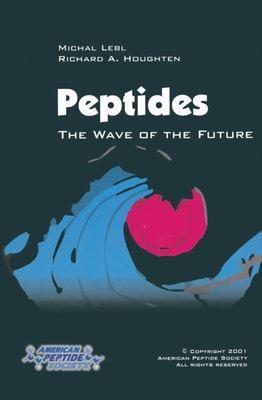
This volume contains the proceedings of the Second International Peptide Symposium and the Seventeenth American Peptide Symposium, held on 9-14 June, 2001, at the Town and Country Resort in San Diego, California.
This volume provides an overview of the current state of plant genomics using a number of different approaches at a time when we celebrate the completion of the Arabidopsis genome sequence and begin the transition from structural to functional studies of this and other plant genomes.
Polymers are essential to biology because they can have enough stable degrees of freedom to store the molecular code of heredity and to express the sequences needed to manufacture new molecules.
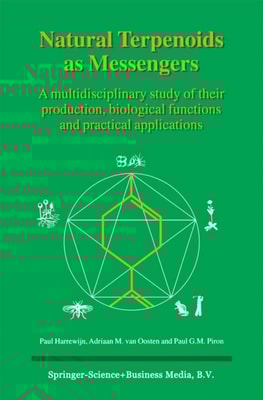
In contrast to books on specific bioactive compounds, this book deals with the role of mevalonic acid metabolites (isoprenoids and their derived structures) in metabolism, development, and functions of organisms, which, though diverse, show various levels of communication.
In the past few years it has become apparent that Fourier Trans- form infrared spectroscopy is developing into an excellent technique for solving some of the very difficult problems encountered in analytical chemistry.
This volume contains the proceedings of the NATO-Advanced Study Institute on the "e;Spectroscopy of Biological Molecules"e;, which took place on July 4-15, 1983 in Acquafredda di Maratea, Italy.
The student of biological science in his final years as an undergraduate and his first years as a graduate is expected to gain some familiarity with current research at the frontiers of his discipline.
The student of biological science in his final years as an undergraduate and his first years as a graduate is expected to gain some familiarity with current research at the frontiers of his discipline.
It is presently well recognized that total concentrations of trace elements in any environmental compartment supply insufficient information to understand important phenomena.
Since the discovery of technetium (in 1937, by Perrier and Segre), technetium-99 and technetium-99m have become most familiar in the specialised literature, the behaviour of the former being of concern regarding its health impact, the latter having been used intensively in medical tests for many years.