Advances in Lipid Research reviews advances in lipid research and covers topics ranging from lipid histochemistry and control of plasma and liver triglyceride kinetics by carbohydrate metabolism and insulin.
Selected Methods in Enzymology: Contemporary Enzyme Kinetics and Mechanism provides an introduction to enzyme kinetics and mechanism at an intermediate level.
Pharmaceutical Monographs, Volume 4: Polysaccharides Peptides and Proteins provides information pertinent to a wide variety of naturally-occurring macromolecules that are either peptide, protein, or polysaccharide in nature, which are important as medicinal and pharmaceutical agents.
Physical Techniques in Biological Research Volume VI: Electrophysiological Methods presents the analytical methods and experimental techniques in electrophysiological research.
Membrane Proteins contains the proceedings of the 11th Meeting of the Federation of European Biochemical Societies, held in Copenhagen, Denmark in 1977.
A Laboratory Manual of Analytical Methods of Protein Chemistry, Volume 4 provides information pertinent to the fundamental aspects of protein chemistry.
Lipid Analysis: Isolation, Separation, Identification, and Structural Analysis of Lipids focuses on the methods, principles, and approaches involved in the isolation, identification, separation, and structural analysis of lipids.
Essentials of ABO-Rh Grouping and Compatibility Testing: Theoretical Aspects and Practical Application focuses on overall safety in blood transfusion, including accurate ABO and Rh-D grouping of both patient and donor.
Plant Proteins is a compendium of papers discussing, in general, plant proteins as materials for human foods, and in particular, the properties, biosynthesis, deposition of reserves in seeds, undesirable factors, production, and nutritional aspects of plant proteins in the food industry.
Histochemistry: An Explanatory Outline of Histochemistry and Biophysical Staining describes the histochemical staining of cells and tissues as a major tool applied in biological and medical investigations, both in basic research and in practical applications such as clinical diagnosis.
Comprehensive Biochemistry, Volume 17: Carbohydrate Metabolism focuses on the processes, reactions, and transformations involved in the metabolism of carbohydrates, including glycosaminoglycans, enzymes, oxidation, and glycolysis.
Protides of the Biological Fluids contains the proceedings of the XXIVth Colloquium on Protides of the Biological Fluids held in Brugge, Belgium in 1976.
Vapour-Liquid Equilibrium Data at Normal Pressures presents the direct experimental data of a set of selected systems and correlates the data with the aid of equations expressing the dependence of the activity coefficients or separation functions on the composition of the liquid phase.
Protides of the Biological Fluids contains the proceedings of the 23rd Colloquium on "e;Protides of the Biological Fluids"e; held in Brugge, Belgium in 1975.
Protides of the Biological Fluids reviews trends in research concerning protides of the biological fluids, with emphasis on tumor-associated antigens (TAAs), lectins, and separation methods such as electrophoresis and isoelectric focusing.
Protides of the Biological Fluids: Twentieth Volume is a collection of studies about three selected topics from the general field of protein chemistry.
Advances in the Biosciences 9 is a collection of presented papers on the International Conference on Prostaglandins, held in Vienna, Austria on September 25 to 28, 1972.
Albumin: Structure, Biosynthesis, Function is a collection of papers from the 11th meeting of the Federation of European Biochemical Societies in Copenhagen in 1977.
The Biochemistry of Parasites documents the proceedings of the Satellite Conference of the 13th Meeting of the Federation of European Biochemical Societies (FEBS) held in Jerusalem, August 1980.
Protides of the Biological Fluids: Proceedings of the 25th Colloquium, Brugge, 1977 focuses on the structure, metabolism, transformations, and reactions of protides of biological fluids.
Pesticide Chemistry: Human Welfare and the Environment, Volume 3: Mode of Action, Metabolism and Toxicology covers the proceeding of the Fifth International Congress of Pesticide Chemistry.
Wenner-Gren Center International Symposium Series, Volume 13: The Possibilities of Charting Modern Life presents the proceedings of the symposium on Anthropological Research on the Present, held in Stockholm, Sweden, on March 7-11, 1967.
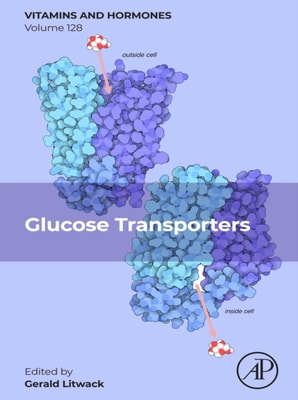
Glucose Transporters, Volume 128 in the Vitamins and Hormones series, highlights new advances in the field, with this new volume presenting interesting chapters on a variety of timely topics, including Glucose transporters and their energy homeostasis function in various organs, Molecular basis for inhibiting glucose transporters by exofacial inhibitors, Self-assembly of the insulin-responsive vesicles creates a signaling platform for the insulin action on glucose uptake, The role of lipid soluble vitamins on glucose transporter, Transport of dehydroascorbic acid by glucose transporters GLUTs, Glut-1 Inhibition in Breast Cancer Cells, Small-molecule inhibitors of glucose transporters, and more.
The Release of Catecholamines from Adrenergic Neurons focuses on the processes involved in determining the release of catecholamines from neurons, noting the influence of alcohols, analgesics, and acids in the release.
Developed from the efforts of a multiyear, international project examining how persistent, bioaccumulative, and toxic (PBT) chemicals are evaluated and managed, Persistent, Bioaccumulative, and Toxic (PBT) Chemicals: Technical Aspects, Policies, and Practices focuses on improving the processes that govern PBTs.
Ion -Selective Electrodes for Biological Systems provides a user-friendly and practical guide to the manufacture and use of ion-selective electrodes for a wide variety of experimental systems used in biology.
Describing the essential steps in the development of biocatalytic processes from concept to completion, this carefully integrated text combines the fundamentals of biocatalysis with technological experience and in-depth commercial case studies.
This volume gives up-to-date information on plasma lipid transport, the various categories of plasma lipid disorders and the relationship between plasma lipids, lipoproteins, and atherosclerotic disease.
Despite the fact that the majority of research animals are rodents, the trainers at the Research Animal Resources Center at the University of Wisconsin-Madison found training material on the proper handling of mice and rats in biomedical research to be limited.