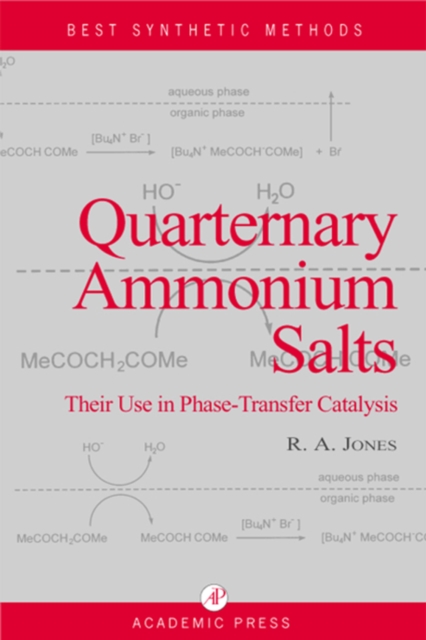
This text provides experimental methods for a wide range of organic reactions, systematically arranged according to reaction type, and describes the advantages and limitations of the procedures.
This volume covers such quantum leaps in the field of biochemistry as the coding properties of DNA and the central dogma, manipulating DNA, extranuclear DNA, protein synthesis and the ribosome, and cell cycles.
The design and production of novel peptides and proteins occupy pivotal positions in science and technology and will continue to do so in the 21st century.
Piperonyl Butoxide contains 20 chapters contributed by world experts in the field on the properties, uses, plant metabolism, and mammalian and environmental toxicology of piperonyl butoxide.
Humans face the challenge of producing enough food to meet the demands imposed by economic, biological and agricultural factors: rising population; rising income; and an expectation of higher quality food and a more diverse diet; decreasing amount of land available for food production; lowering environmental impact of agricultural practices and preserving biodiversity.
Photoperiodism is the response to the length of the day that enables living organisms to adapt to seasonal changes in their environment as well as latitudinal variation.
The turn of the millennium from the twentieth to the twenty-first century provides an occasion to review our understanding of a biological process, biological nitrogen fixation, that is of prime importance for the continued survival of mankind.
This unique sourcebook serves as a comprehensive reference, bridging the well-established chemistry of nitric oxide and the new and exciting role of nitric oxide as an effector and signaling molecule in numerous biological systems.
Rapid molecular identification and typing of micro-organisms is extremely important in efforts to monitor the geographical spread of virulent, epidemic or antibiotic-resistant pathogens.
In a single volume, Monosaccharide Sugars critically summarizes the applied and potentially useful strategies for the synthesis and degradation of monosaccharides by chain-elongation, degradation, and epimerization.
Monoclonal Antibodies now have applications in virtually all areas of biology and medicine, and much of the world's biotechnology industry has its foundations in the exploitation of this technology.
This second edition of Membrane Protein Purification and Crystallization, A Practical Guide is written for bench scientists working in the fields of biochemistry, biology, and proteomic research.
The chapters in this book thoroughly cover the structure, regulation, and function of matrix metalloproteinases, and provide information on the latest strategies to inhibit enzyme activity.
Loomis's Essentials of Toxicology is an introductory text on the science of harmful biologic effects associated with exposures to chemicals of all types.
Living cells are constantly sensing environmental changes, and their abilities to sense these changes and adapt to them are essential for their survival.
Food biotechnologists are expected to satisfy many requirements related to health benefits, sensory properties and possible long term effects associated with the consumption of food produced via modern biotechnology.
The contributors to this text, who are all biochemists who worked during the 1950s and 60s, describe what appears to them to be the conceptually significant developments in biochemistry since the mid 1950s and how these were achieved.
The disturbance of soils, like other phenomena of environmental pollution, encountered in so many areas all over the world, has become a subject of extensive concern and has led to a vast amount of literature in the field of enzymology, too.
From small beginnings in the early 1970s, the study of complement regulatory proteins has grown in the last decade to the point where it dominates the complement field.
This book is a "e;world first"e;, since the furfural industry has been traditionally secretive to the point of appearing shrouded in clouds of mystery.
The first of its kind, this volume presents the latest research findings on the chaperonins, the best studied family of a class of proteins known as molecular chaperones.
The Carbohydrate Bioengineering Meeting held in Elsinore, Denmark, April 23-26, 1995, gathered 230 scientists, mostly from Europe, with interest in carbohydrate analysis and structure; carbohydrates in medicine and glycopathology; structure, function, application, and protein engineering of carbohydrate active enzymes; oligo- and polysaccharides of industrial interest; and production of carbohydrate containing new materials.
Plants possess the ability to biosynthesize a large variety of steroids, but it was not until 1979 that a hormonal function was demonstrated in plants.
The objectives of this Second Edition of Biotechnology: A Laboratory Course remain unchanged: to create a text that consists of a series of laboratory exercises that integrate molecular biology with protein biochemistry techniques while providing a continuum of experiments.
The account in this inaugural volume of the series covers the period 1900 to 1960, but also outlines the principal developments in earlier centuries from which biochemistry emerged.
Drug Monitoring and Clinical Chemistry, the 5th volume in the Handbook of Analytical Separations series, gives an overview about methods to analyse drugs in biological fluids.
This new edition of Bioenergetics presents a clear and up-to-date explanation of the chemiosmotic theory and covers mitochondria, bacteria, and chloroplasts.
The study of parasitic organisms at the molecular level has yielded fascinating new insights of great medical, social, and economical importance, and has pointed the way for the treatment and prevention of the diseases they cause.
Bioanalytical Separations is volume 4 of the multi-volume series, Handbook of Analytical Separations, providing reviews of analytical separation methods and techniques used for the determination of analytes across a whole range of applications.