This edited book is focused on antioxidant compounds and their biosynthesis, up-regulation, mechanism of action for selective bioactivity, targeted role and the advancement of their bioactive potential during plant-microbe interaction and other stress conditions.
Not only is the quantity of life science data expanding, but new types of biological data continue to be introduced as a result of technological development and a growing understanding of biological systems.
The critically acclaimed laboratory standard for more than forty years, Methods in Enzymology is one of the most highly respected publications in the field of biochemistry.
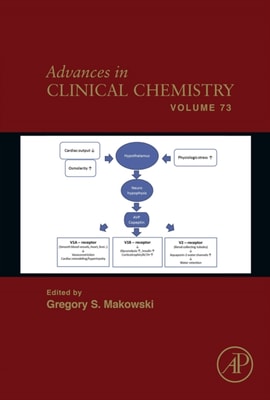
Advances in Clinical Chemistry, Volume 73, the latest installment in this internationally acclaimed series, contains chapters authored by world-renowned clinical laboratory scientists, physicians, and research scientists.
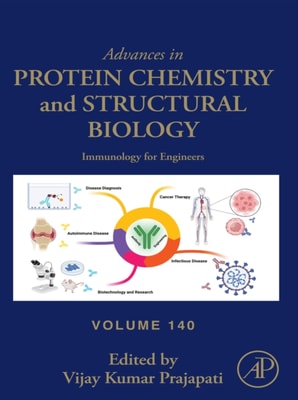
Immunology for Engineers, Volume 140 consists of chapters from stalwarts of the field, covering topics such as antibody engineering, adjuvant requirement and its methodology for assessment, and the need to develop immunotherapy, etc.
Building upon the previous volumes, The Chemical Biology of Sulfur, The Chemical Biology of Phosphorus, and The Chemical Biology of Nitrogen, this book examines the organic chemistry of life, The Chemical Biology of Carbon.
These new volumes of Methods in Enzymology (554 and 555) on Hydrogen Sulfide Signaling continue the legacy established by previous volumes on another gasotransmitter, nitric oxide (Methods in Enzymology volumes 359, 396, 440, and 441), with quality chapters authored by leaders in the field of hydrogen sulfide research.
Sustainable Recovery and Reutilization of Cereal Processing By-Products addresses topics associated with the sustainable management of cereal manufacturing.
Volume 63 in the internationally acclaimed Advances in Clinical Chemistry contains chapters authored by world renowned clinical laboratory scientists, physicians and research scientists.
The Enzymes, Volume 47, highlights new advances in the field, with this new volume presenting interesting chapters on The Multipurpose Family of Oxidases, Vanillyl alcohol oxidase, Choline oxidases, Aryl alcohol oxidase, D- and L-amino acid oxidases, Sugar oxidases, Phenolic Compounds hydroxylases, Baeyer-Villiger Monooxygenases, Flavin-dependent halogenases, Flavin-dependent dehalogenases, Styrene Monooxygenases, Bacterial luciferases, Cellobiose Dehydrogenases, Prenylated flavoenzymes, Ene-reductases, Flavoenzymes in Biocatalysis.
The effort to understand and combat infectious diseases has, during the centuries, produced many key advances in science and medicineincluding the development of vaccines, drugs, and other treatments.
When, in late 2011, it became public knowledge that two research groups had submitted for publication manuscripts that reported on their work on mammalian transmissibility of a lethal H5N1 avian influenza strain, the information caused an international debate about the appropriateness and communication of the researchers' work, the risks associated with the work, partial or complete censorship of scientific publications, and dual-use research of concern in general.
The same technologies that fuel scientific advances also pose potential risksthat the knowledge, tools, and techniques gained through legitimate biotechnology research could be misused to create biological weapons or for bioterrorism.
Spurred on by new discoveries and rapid technological advances, the capacity for life science research is expanding across the globeand with it comes concerns about the unintended impacts of research on the physical and biological environment, human well-being, or the deliberate misuse of knowledge, tools, and techniques to cause harm.
Whether or not the United States has safe and effective medical countermeasuressuch as vaccines, drugs, and diagnostic toolsavailable for use during a disaster can mean the difference between life and death for many Americans.
The National Institute of Allergy and Infectious Diseases (NIAID) gives the highest priority to developing countermeasures against bioterrorism agents that are highly infective when dispersed in aerosol form.
In many countries, colleges and universities are where the majority of innovative research is done; in all cases, they are where future scientists receive both their initial training and their initial introduction to the norms of scientific conduct regardless of their eventual career paths.
Early detection is essential to the control of emerging, reemerging, and novel infectious diseases, whether naturally occurring or intentionally introduced.
Hormones, Fourth Edition provides a report on the field of human hormones viewed in light of our current understanding of cellular and subcellular architecture, along with the molecular details of their modes of action.
The same technologies that fuel scientific advances also pose potential risksthat the knowledge, tools, and techniques gained through legitimate biotechnology research could be misused to create biological weapons or for bioterrorism.
During public health emergencies such as pandemic influenza outbreaks or terrorist attacks, effective vaccines, drugs, diagnostics, and other medical countermeasures are essential to protecting national security and the public's well-being.
The anthrax attacks in fall 2001 spurred an extensive and costly decontamination effort where many decisions had to be made about which sites required cleanup, what method to use, how to determine the effectiveness of the cleanup, and how "e;clean"e; the building had to be for reoccupation.
Microbial Xylanolytic Enzymes describes the enzyme structure and its interaction with plant cell walls, the properties and production of different enzymes and their applications, and the knowledge gathered on the hydrolysis mechanism of hemicellulose.
The anthrax attacks in fall 2001 spurred an extensive and costly decontamination effort where many decisions had to be made about which sites required cleanup, what method to use, how to determine the effectiveness of the cleanup, and how "e;clean"e; the building had to be for reoccupation.
The effort to understand and combat infectious diseases has, during the centuries, produced many key advances in science and medicineincluding the development of vaccines, drugs, and other treatments.
The National Institute of Allergy and Infectious Diseases (NIAID) gives the highest priority to developing countermeasures against bioterrorism agents that are highly infective when dispersed in aerosol form.
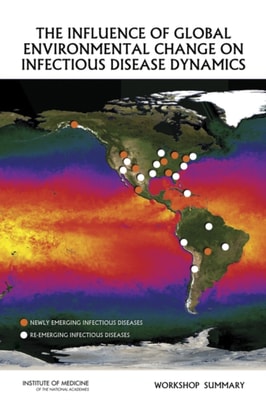
Vector-borne infectious diseases, such as malaria, dengue fever, yellow fever, and plague, cause a significant fraction of the global infectious disease burden; indeed, nearly half of the world's population is infected with at least one type of vector-borne pathogen (CIESIN, 2007; WHO, 2004a).
Vector-borne infectious diseases, such as malaria, dengue fever, yellow fever, and plague, cause a significant fraction of the global infectious disease burden; indeed, nearly half of the world's population is infected with at least one type of vector-borne pathogen (CIESIN, 2007; WHO, 2004a).
Cell Signaling provides undergraduate and graduate students with the conceptual tools needed to make sense of the dizzying array of pathways that cells use to detect, process, and respond to signals from the environment.
Ethers and crown ethers are important structural parts of many man-made or natural organic materials with medicinal, agrochemical or technological attributes.
Covering a wide range of popular alternative medicine and health issues, User' are written by leading experts and science writers and are designed to answer the consumer's basic questions about disease, conventional and alternative therapies, and individual dietary supplements.