Each day we are exposed to a myriad of natural and human-made chemicals in our food, drinking water, air, soil, at home or at the workplace-pesticide residues, food additives, drugs, household products-but how can we gauge the human health risk posed by these chemicals?
One of the fundamental principles of green chemistry is to design chemical products that minimize adverse consequences to human health and the environment.
One of the fundamental principles of green chemistry is to design chemical products that minimize adverse consequences to human health and the environment.
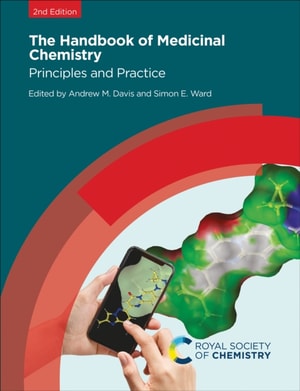
Completely revised and updated, the 2nd edition of The Handbook of Medicinal Chemistry draws together contributions from authoritative practitioners to provide a comprehensive overview of the field as well as insight into the latest trends and research.
Basic Biotechniques for Bioprocess and Bioentrepreneurship deals with the entire field of industrial biotechnology, starting from the basic laboratory techniques to scale-up, process development, demonstration, and finally its commercialization.
Completely revised and updated, the 2nd edition of The Handbook of Medicinal Chemistry draws together contributions from authoritative practitioners to provide a comprehensive overview of the field as well as insight into the latest trends and research.
The rapid expansion of the area of free radical biology in the last 25 years has occurred within a framework of assumptions and preconceived notions that has at times directed the course of this movement.
The marvelous microbes that made life on Earth possible and support our very existenceFor almost four billion years, microbes had the primordial oceans all to themselves.
Environmental issues such as ozone layer depletion, overpopulation, biodiversity loss, global warming, natural resource depletion, and so on affect every organism on the planet somehow.
Targeted Protein Degradation, Volume 680 in the Methods in Enzymology series, highlights new advances in the field with this new volume presenting interesting chapters on a variety of timely topics, with each.
This detailed volume serves as a collection of methods for single-cell protein analysis, created by combining different protocols, taking advantage of new emerging technologies, and improving upon conventional methods to guide researchers aiming to perform protein analysis in single cells.
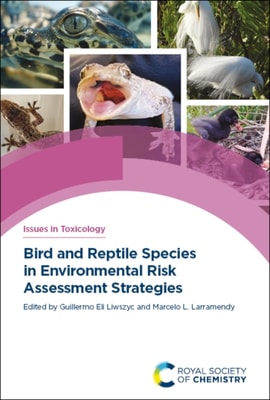
With the expansion of human settlements and the environmental changes brought on by human activity and pollutants, toxicology and risk assessment of bird and reptile species is becoming increasingly of interest to toxicologists involved in environmental research.
With the expansion of human settlements and the environmental changes brought on by human activity and pollutants, toxicology and risk assessment of bird and reptile species is becoming increasingly of interest to toxicologists involved in environmental research.
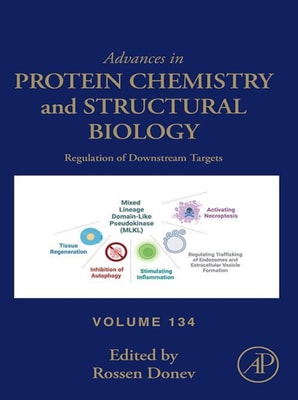
Regulation of Downstream Targets, Volume 134 in the Advances in Protein Chemistry and Structural Biology series, presents interesting chapters on topics such as Transcriptional regulatory mechanisms and signaling networks in Viral Infections, Identification of potential key genes associated with pathogenesis and prognosis of endometrial cancer based on Integrated Bioinformatics Approaches, Differential regulation of genes in stage IB pancreatic cancer associated with increased risk of metastasis, AMPK-related LKB1-downstream targets, A compilation of bioinformatic approaches to identify novel downstream targets for the detection and prophylaxis of cancer, Protein phosphatases and their targets: Critical determinants of signaling pathway in plants, and more.
A title in the Emerging Issues in Analytical Chemistry series, Designer Drugs: Chemistry, Analysis, Regulation, Toxicology, Epidemiology & Legislation of New Psychoactive Substances presents both an overview and a guide to techniques for designer drug analysis.
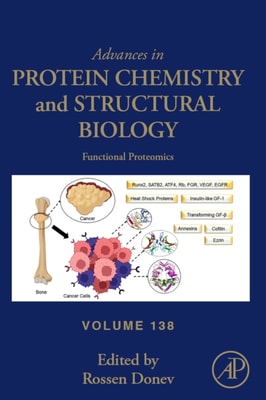
Advances in Protein Chemistry and Structural Biology, Volume 138 covers reviews of methodology and research in all aspects of protein chemistry, including purification/expression, proteomics, modeling and structural determination and design.
Advances in Microbial Physiology, Volume 82 in this serial that highlights new advances in the field, presents interesting chapters on a variety of topics, including Protein secretion via the Type I secretion system, Purine utilization by enterobacteria, Microbiology of Algae, Growth of enteric bacteria in the intestine on C4DCs: Governance of C4DC transporters in metabolic adaptation and genetic control, Biological functions of bacterial lysophospholipids, and much more.
This concise text on biologically active substances of the food, pharmaceutical and agricultural industries presents data on natural compounds of vegetable and animal origin.
Why Elephants Cry is a fascinating frolic through the literature and evidence surrounding the use of unusual behavior of animals to measure and predict the environment.
Why Elephants Cry is a fascinating frolic through the literature and evidence surrounding the use of unusual behavior of animals to measure and predict the environment.
This new book discusses the physiological factors that contribute to metabolic syndrome within the human body and spotlights the beneficial effects on the body of nutraceuticals and functional ingredients, botanicals and natural dietary supplements, structurally numerous antioxidants, B-vitamins, and diverse amino acids and vital nutrients.
This new book discusses the physiological factors that contribute to metabolic syndrome within the human body and spotlights the beneficial effects on the body of nutraceuticals and functional ingredients, botanicals and natural dietary supplements, structurally numerous antioxidants, B-vitamins, and diverse amino acids and vital nutrients.
Profiles of Drug Substances, Excipients, and Related Methodology, Volume 48 encompasses review articles and database compilations that fall within one or more of the following five broad categories: Physical Profiles of Drug Substances and Excipients; Analytical Profiles of Drug Substances and Excipients; ADME Profiles of Drug Substances and Excipients; Methodology Related to the Characterization of Drug Substances and Excipients; Methods of Chemical Synthesis.
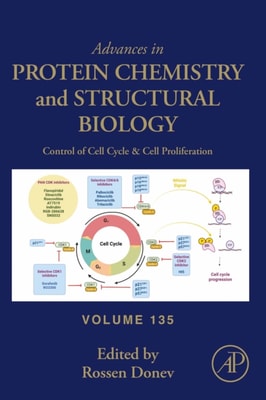
Control of Cell Cycle and Cell Proliferation, Volume 135 in the Advances in Protein Chemistry and Structural Biology series, presents chapters on a variety topics, including Exploiting pivotal mechanisms behind the senescence-like cell cycle arrest, Viral infection on through Cell Cycle Regulation, Analyzing drug resistant mutation in CDK4 gene and identification of potential inhibitors through structure based virtual screening approach, Controlling cell proliferation by targeting CDK6 using drug repurposing approach, The role of the nucleolus in regulating cell cycle, Chromatin regulators in DNA replication and genome stability maintenance during S-phase, Role of macrophage in cancer cell progression and targeted immunotherapies, and much more.
Highlighting cutting-edge research on human exposure to endocrine toxicants and the related harmful effects, this book focuses on the challenges of dealing with increasing pollution levels, increased use of synthetic chemicals, and environmental endocrine disruptors that endanger the human endocrine system and its hormones.
Highlighting cutting-edge research on human exposure to endocrine toxicants and the related harmful effects, this book focuses on the challenges of dealing with increasing pollution levels, increased use of synthetic chemicals, and environmental endocrine disruptors that endanger the human endocrine system and its hormones.
Food ingredients are important molecules of the most diverse chemical classes responsible for conferring nutrition, stability, color, flavor, rheological and sensorial characteristics, in addition to several other important uses in the food industry.
Applications of NMR Spectroscopy, Volume 3 presents the latest developments in the field of NMR spectroscopy, including the analysis of the structure-property relationship of polyphenols, breast cancer diagnosis, drug discovery and formulation, protein confirmation analysis using Fluorine NMR, and enaminone studies.
This is the companion volume to Daniel Klionsky's Autophagy: Lower Eukaryotes, which features the basic methods in autophagy covering yeasts and alternative fungi (aspergillus, podospora, magnaporthe).
The critically acclaimed laboratory standard for more than forty years, Methods in Enzymology is one of the most highly respected publications in the field of biochemistry.
The critically acclaimed laboratory standard for more than forty years, Methods in Enzymology is one of the most highly respected publications in the field of biochemistry.
In this second of two new volumes covering mitochondria, methods developed to assess the number and function of nuclear-encoded proteins in the mitochondrion are presented.