Systems biology is a critical emerging field that quantifies and annotates the complexity of biological systems in order to construct algorithmic models to predict outcomes from component input.
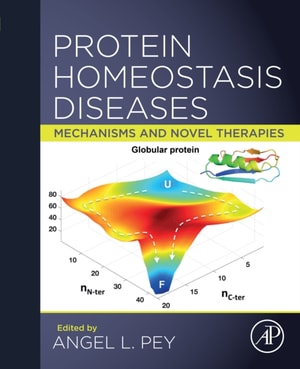
Protein Homeostasis Diseases: Mechanisms and Novel Therapies offers an interdisciplinary examination of the fundamental aspects, biochemistry and molecular biology of protein homeostasis disease, including the use of natural and pharmacological small molecules to treat common and rare protein homeostasis disorders.
Far more than a comprehensive treatise on initial-rate and fast-reaction kinetics, this one-of-a-kind desk reference places enzyme science in the fuller context of the organic, inorganic, and physical chemical processes occurring within enzyme active sites.
Inflammatory Disorders - Part B, Volume 120 explores inflammation in the immune system and how the body's own cells or tissues may cause abnormal inflammation, thus resulting in chronic pain, redness, swelling, stiffness, and damage to normal tissues.
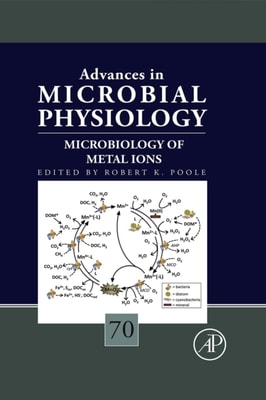
Advances in Microbial Physiology, Volume 70 continues the long tradition of topical, important, cutting-edge reviews in microbiology with this new volume covering a variety of topics, including Bacterial Hemoprotein Sensors of NO: H-NOX and NosP, Manganese in Marine Microbiology, Nutritional Immunity and Fungal Pathogenesis: The Struggle for Micronutrients at the Host-Pathogen Interface, Metal-Based Combinations that Target Protein Synthesis by Fungi, Transition Metal Homeostasis in Streptococcus Pyogenes and Streptococcus Pneumoniae, Copper and Antibiotics: Discovery, Modes of Action, and Opportunities for Medicinal Applications, Metal Resistance and Its Association with Antibiotic Resistance, and The Role of Intermetal Competition and Mis-Metalation in Metal Toxicity.
Environmental toxicology is generally held to be the study of the potential of constituents of outdoor environments to impact either human health or the biological structure of the ecosystems involved.
Biochemical Ecotoxicology: Principles and Methods presents practical approaches to biochemical ecotoxicology experiments for environmental protection and conservation.
Since its inception in 1945, this serial has provided critical articles written by research specialists that integrate industrial, analytical, and technological aspects of biochemistry, organic chemistry, and instrumentation methodology in the study of carbohydrates.
Enzymatic Plastic Degradation, Volume 648 in the Methods in Enzymology series, continues the legacy of this premier serial with chapters authored by leaders in the field.
Cancer Therapy and Diagnosis, Part B, Volume 44 in The Enzymes series highlights new advances in the field, with this new volume presenting interesting chapters on Mesoporous silica nanoparticle synthesis, Periodic mesoporous organosilica, Nanovalves and other nanomachine-equipped nanoparticles and controlled release, Two-photon light control and photodynamic therapy, Biodegradable PMO nanoparticles, Cationic mesoporous silica and protein delivery, Drug loading, stimuli-responsive delivery and cancer treatment, Animal models and cancer therapy, siRNA delivery and TWIST shutdown for ovarian cancer treatment, and TBC (mesoporous silica nanoparticles and cancer therapy or biodistribution of MSN).
In this 3 volume collection focusing on glycomics, readers will appreciate how such discoveries were made and how such methods can be applied for readers' own research efforts- Each chapter has been designed so that enough scientific background will be given in each chapter for further development of methods by readers themselves- Useful for all levels of scientists starting from the last years of colleges, graduate students, postdoctoral fellows to professors and to all levels of scientists in research institutes including industry
Although the origin and the basic meaning of the terms "e;planar lipid bilayers"e; and "e;liposome"e; have not changed during the years, the present advances in the scientific, technological, biomedical and consumer product fields are remarkable.
Current Topics in Membranes is targeted towards scientists and researchers in biochemistry and molecular and cellular biology, providing the necessary membrane research to assist them in discovering the current state of a particular field and in learning where that field is heading.
Methods for Analysis of Carbohydrate Metabolism in Photosynthetic Organisms: Plants, Green Algae and Cyanobacteria examines both general and detailed aspects of carbohydrate metabolism in photosynthetic organisms, along with the four main oligosaccharides and each enzymatic reaction that gives birth to them.
Membrane Proteins - Production and Function Characterization a volume of Methods in Enzymology, encompasses chapters from the leading experts in the area of membrane protein biology.
The rapid growth of interest and research activity in ion channels is indicative of their fundamental importance in the maintenance of the living state.
Metabolic Analysis Using Stable Isotopes, the newest volume in Methods in Enzymology continues the legacy of this premier serial with quality chapters authored by leaders in the field.
Understanding how digestive organs develop, their physiology and structure is important for determining new therapies to combat diseases of the digestive organs.
Neutron Crystallography in Structural Biology, Volume 634, the latest volume in the Methods in Enzymology series, continues the legacy of this premier serial with quality chapters authored by leaders in the field.
Isotope Labeling of Biomolecules - Labeling Methods, the latest volume of the Methods in Enzymology series contains comprehensive information on stable isotope labeling methods and applications for biomolecules.
Thiol Redox Transitions in Cell Signaling, Part A, along with its companion (volume 475), presents methods and protocols dealing with thiol oxidation-reduction reactions and their implications as they relate to cell signaling.
An Introduction to Biological Membranes: From Bilayers to Rafts covers many aspects of membrane structure/function that bridges membrane biophysics and cell biology.
Oxidative Stress: Eustress and Distress presents current knowledge on oxidative stress within the framework of redox biology and translational medicine.
Advances in Planar Lipid Bilayers and Liposomes volumes cover a broad range of topics, including main arrangements of the reconstituted system, namely planar lipid bilayers as well as spherical liposomes.
Current Topics in Membranes is targeted toward scientists and researchers in biochemistry and molecular and cellular biology, providing the necessary membrane research to assist them in discovering the current state of a particular field and in learning where that field is heading.
The Evolution of Molecular Biology: The Search for the Secrets of Life provides the historical knowledge behind techniques founded in molecular biology, also presenting an appreciation of how, and by whom, these discoveries were made.
Advances in Immunology, a long-established and highly respected publication, presents current developments as well as comprehensive reviews in immunology.
Existence Theory for Generalized Newtonian Fluids provides a rigorous mathematical treatment of the existence of weak solutions to generalized Navier-Stokes equations modeling Non-Newtonian fluid flows.
Published continuously since 1944, Advances in Protein Chemistry and Structural Biology has been a continuous, essential resource for protein chemists.
Neuroepigenetics and Mental Illness, Volume 158, the latest release in the Progress in Molecular Biology and Translational Science series, seeks to provide the most topical, informative, and exciting monographs available on a wide variety of research topics related to prions, viruses, bacteria and eukaryotes.
Chick Chorioallantoic Membrane Model and Precision Cancer Therapy, Volume 46 in The Enzymes series, highlights new advances in the field, with this new volume presenting interesting chapters on the history of CAM model development, an overview of various CAM-based cancer models, the chick embryo chorioallantoic membrane as an in vivo experimental model to study multiple myelomak, bioluminescent CAM models for screening drugs against pancreatic cancer, X-ray sensitizer screen, patient derived tumor model for esophageal cancer, renal cancer and metastasis, nanoparticle characterization and tumor targeting, and patient derived tumor model for human nasopharyngeal carcinoma.
The eighteenth annual volume of Progress in Heterocyclic Chemistry, covers the literature published during 2005 on most of the important heterocyclic ring systems.
Molecular Biology of Neurodegenerative Diseases: Visions for the Future, Volume 168 in the Progress in Molecular Biology and Translational Science series, provides the most topical, informative and exciting monographs available on a wide variety of research topics.
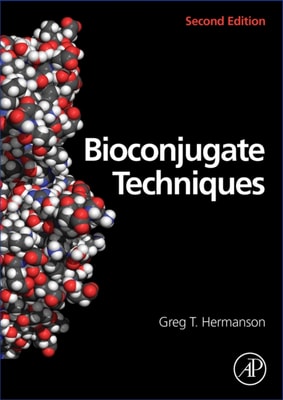
Bioconjugate Techniques, 2nd Edition, is the essential guide to the modification and cross linking of biomolecules for use in research, diagnostics, and therapeutics.
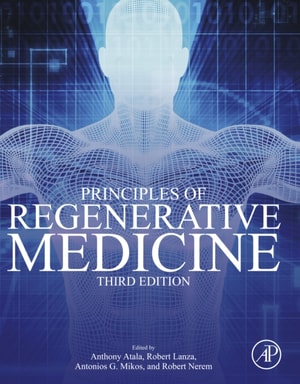
Principles of Regenerative Medicine, Third Edition, details the technologies and advances applied in recent years to strategies for healing and generating tissue.