MicroRNAs constitute a particularly important class of small RNAs given their abundance, broad phylogenetic conservation and strong regulatory effects, with plant miRNAs uniquely divulging their ancient evolutionary origins and their strong post-transcriptional regulatory effects.
This title offers 62 chapters divided among three volumes covering the latest topics dealing with Doubled Haploid (DH) technology, as well as methods to produce DHs in different species through different in vivo and in vitro approaches.
This detailed new edition combines a wide selection of experimental methods for plant cold acclimation, deacclimation, and cold memory, ranging from the whole plant level of ecology and breeding to molecular profiling and the detailed analysis of specific proteins, with many levels of investigated complexity in between.
Ecophysiology of Vascular Halophytes provides a useful update to existing literature describing the ecophysiological responses of vascular halophytes to environmental stresses present in saline habitats.
Ecophysiology of Vascular Halophytes provides a useful update to existing literature describing the ecophysiological responses of vascular halophytes to environmental stresses present in saline habitats.
Hydrogen peroxide (H2O2) is recognized as a crucial signaling molecule that mediates physiological and biochemical processes in plants, regulating various development and stress responses.
This volume features new research about the philosophy of plant intelligence and plant cognition, one of the most intriguing and complex current debates at the intersection of biology, cognitive science and philosophy.
This detailed book presents recent methodologies for the task of inspecting the genomic world of plants, extracting valuable information, and presenting it in a readable way.
Written out of extensive research on vegetable grafting, this book contains current scientific and applied practical knowledge about its various aspects.
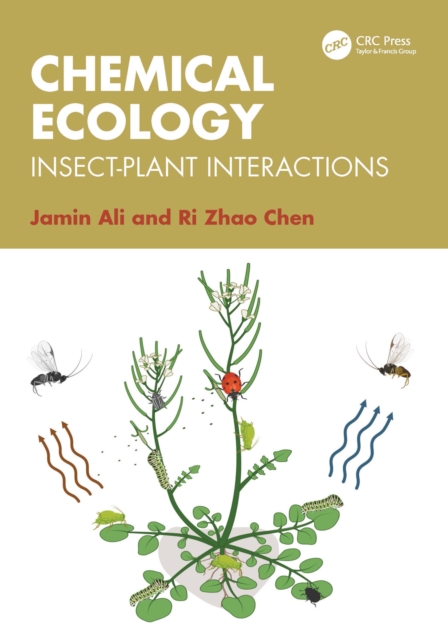
A CHOICE Recommended title 2025This textbook provides a comprehensive overview of the principles, methods and applications of chemical ecology, covering such topics as chemical signalling, predator-prey interactions, host plant selection and chemical defence.
In this book, plant biology is considered from the perspective of plants and their surrounding environment, including both biotic and abiotic interactions.
This book represents the first comprehensive compilation of deliberations on botany; genetic resources; genetic diversity analysis; classical genetics & traditional breeding; in vitro culture & genetic transformation; detailed information on molecular maps & mapping of economic genes and QTLs; whole genome sequencing of the nuclear genome and sequencing of chloroplast genome; and elucidation of functional genomics.
Nanobiotechnology Applications in Plant Protection: Volume 2 continues the important and timely discussion of nanotechnology applications in plant protection and pathology, filling a gap in the literature for nano applications in crop protection.
This book offers a comprehensive collection of papers on CRISPR/Cas genome editing in connection with agriculture, climate-smart crops, food security, translational research applications, bioinformatics analysis, practical applications in cereals, floriculture crops, engineering plants for abiotic stress resistance, the intellectual landscape, regulatory framework, and policy decisions.
This book provides a comprehensive overview of the patterns of biodiversity in various neotropical ecosystems, as well as a discussion on their historical biogeographies and underlying diversification processes.
This book discusses the various aspects, from production to marketing of turmeric and ginger, the world's two most important and invaluable medicinal spice crops.
This edited volume is based on the best papers accepted for presentation during the 1st Springer Conference of the Arabian Journal of Geosciences (CAJG-1), Tunisia 2018.
Seaweeds (macroalgae) represent the most striking living components in the Antarctic's near-shore ecosystems, especially across the West Antarctic Peninsula and adjacent islands.
This book examines the development of innovative modern methodologies towards augmenting conventional plant breeding, in individual crops, for the production of new crop varieties under the increasingly limiting environmental and cultivation factors to achieve sustainable agricultural production, enhanced food security, in addition to providing raw materials for innovative industrial products and pharmaceuticals.
This book provides a unique exploration of the inter-relationships between the science of plant environmental responses and the understanding and management of forest fires.
This book gathers the latest information on the organization of genomes in wild Solanum species and emphasizes how this information is yielding direct outcomes in the fields of molecular breeding, as well as a better understanding of both the patterns and processes of evolution.
This book presents comprehensive information on genetics, genomics and breeding in Brassica oleracea, an agriculturally important species that includes popular vegetable crops such as cabbage, cauliflower, broccoli, Brussels sprouts, kale, collard greens, savoy, kohlrabi, and gai lan.
This book summarizes the taxonomic details of selected fossil angiosperm pollen genera and species along with their affinity and occurrences in space and time.