Biology of Aging, Second Edition presents the biological principles that have led to a new understanding of the causes of aging and describes how these basic principles help one to understand the human experience of biological aging, longevity, and age-related disease.
Biology of Aging, Second Edition presents the biological principles that have led to a new understanding of the causes of aging and describes how these basic principles help one to understand the human experience of biological aging, longevity, and age-related disease.
Key features: High quality full color photographs and descriptive texts on the location and removal of the organs from the mouse Instructive methods and clear visuals for trimming and orienting the organs for paraffin histology to obtain the best possible sections for analysis Full color photomicrographs of the resulting section for each organ stained with hematoxylin and eosin demonstrating important features and landmarks for the histologist to ensure the optimal area for analysis is achieved All in one, easy to use guide organized by individual organs of the laboratory mouse Spiralbound for easy reference in the lab This "e;one-stop"e; guide offers an essential resource for any academic, research or development operation where mouse necropsy and/or histology are performed.
Key features: High quality full color photographs and descriptive texts on the location and removal of the organs from the mouse Instructive methods and clear visuals for trimming and orienting the organs for paraffin histology to obtain the best possible sections for analysis Full color photomicrographs of the resulting section for each organ stained with hematoxylin and eosin demonstrating important features and landmarks for the histologist to ensure the optimal area for analysis is achieved All in one, easy to use guide organized by individual organs of the laboratory mouse Spiralbound for easy reference in the lab This "e;one-stop"e; guide offers an essential resource for any academic, research or development operation where mouse necropsy and/or histology are performed.
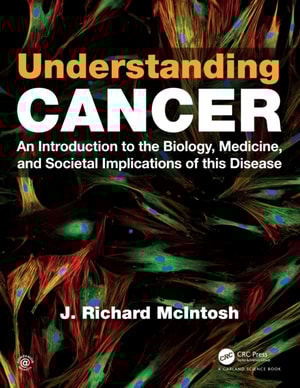
Understanding Cancer is a brand new undergraduate textbook for students without prior training in biology that integrates an introduction to cancer medicine with descriptions of the biological processes that go wrong to cause cancer's onset and progression.
Understanding Cancer is a brand new undergraduate textbook for students without prior training in biology that integrates an introduction to cancer medicine with descriptions of the biological processes that go wrong to cause cancer's onset and progression.
A Mole of Chemistry: An Historical and Conceptual Approach to Fundamental Ideas in Chemistry is intended for students in their undergraduate years who need to learn the basics of chemistry, including science and engineering as well as humanities.
A Mole of Chemistry: An Historical and Conceptual Approach to Fundamental Ideas in Chemistry is intended for students in their undergraduate years who need to learn the basics of chemistry, including science and engineering as well as humanities.
This book summarizes rapid progress and innovation in transplantation and regenerative medicine - the merger of reconstructive plastic surgery and transplantation - called Vascularized Composite Allotransplantation.
The book is a multi-authored book of 18 chapters comprising the state of the art work of all relevant topics on modern fish histology from 28 authors from ten countries.
This book summarizes rapid progress and innovation in transplantation and regenerative medicine - the merger of reconstructive plastic surgery and transplantation - called Vascularized Composite Allotransplantation.
The Geometric Induction of Bone Formation describes new biomimetic biomaterials that offer mechanistic osteogenic surfaces for the autonomous and spontaneous induction of bone formation without the addition of osteogenic soluble molecular signals of the transforming growth factor- supergene family.
The Geometric Induction of Bone Formation describes new biomimetic biomaterials that offer mechanistic osteogenic surfaces for the autonomous and spontaneous induction of bone formation without the addition of osteogenic soluble molecular signals of the transforming growth factor- supergene family.
In today's world, three great classes of non-infectious diseases - the metabolic syndromes (such as type 2 diabetes and atherosclerosis), the cancers, and the neurodegenerative disorders - have risen to the fore.
Success or failure of biomaterials, whether tissue engineered constructs, joint and dental implants, vascular grafts, or heart valves, depends on molecular-level events that determine subsequent responses of cells and tissues.
This volume brings together information on membrane organization and dynamics from a variety of spectroscopic, microscopic and simulation approaches, spanning a broad range of time scales.
The molecular mechanisms, which are responsible for the functional differences between the various types of neuronal synapses, have become one of the central themes of modern neurobiology.
Cell Therapy: cGMP Facilities and Manufacturing is the source for a complete discussion of facility design and operation with practical approaches to a variety of day-to-day activities, such as staff training and competency, cleaning procedures, and environmental monitoring.
It covers all aspects of DC generation, function, survival and antitumor activity in the tumor environment both in vivo and in experimental in vitro systems.
Although much is known with respect to blood cell formation and function, many new concepts in the areas of the regulation of hematopoietic stem cell commitment and the subsequent survival, proliferation, and differentiation of progenitors have been elucidated in the last five years.
Nearly a century of scientific research has revealed that mitochondrial dysfunction is one of the most common and consistent phenotypes of cancer cells.
Cyclin Dependent Kinase 5 provides a comprehensive and up-to-date collection of reviews on the discovery, signaling mechanisms and functions of Cdk5, as well as the potential implication of Cdk5 in the treatment of neurodegenerative diseases.
Most researchers agree that biological confocal microscopy was jump-started by the confocal design first published by White and Amos in 1985 in the Journal of Cell Biology.
Relaxin and Related Peptides discusses the established paradigms, the contradictions, and the most recent findings and future directions in the field of relaxin research.
The Golgi Apparatus: The First 100 Years traces the first 100 years of Golgi apparatus discovery from the first published accounts from Pavia, Italy in 1898 to the Centenary Celebration in Pavia, Italy in 1998 and into the decade beyond.
Microalgae have been largely cultured and commercialized as food and feed additives, and their potential as source of high-added value compounds is well known.
In Breast Cancer Chemosensitivity, a group of world leading experts review critical aspects of resistance to systemic therapy in breast cancer patients.
Eukaryotic Membranes and Cytoskeleton: Origins and Evolution discusses the evolutionary origin and diversification of eukaryotic endomembranes and cytoskeleton from a cell biological and comparative genomic perspective.