Genomics research on animals has generated huge databases and several new concepts and strategies, which are used to elucidate origin, evolution and phylogeny of species.
In a presentation to the Linnean Society of London in November 1831, the Scottish botanist Robert Brown (perhaps better known for his discovery of Brownian motion) mentioned almost as an afterthought that in orchid epidermal cells, a single "e;circular areola"e; could be seen, a "e;nucleus of the cell as perhaps it might be termed.
Recent advances in the study of nitric oxide (NO) biology, biochemistry, molecular biology and physiology in plants are presented in this book, providing an overview of current understanding of the NO actions involved in adaptive responses of plant fitness to environmental constraints.
It is our utmost pleasure to present a new book on tobacco BY-2 cells, Tobacco BY-2 Cells: From Cellular Dynamics to Omics, as the 58th volume in the book series Biotechnology in Agriculture and Forestry (BAF).
Cell biology is a scientific discipline that studies cells their physiological properties, their structure, the organelles they contain, interactions with their environment, their life cycle, division and death.
In the last decade, fluorescence microscopy has evolved from a classical "e;retrospective"e; microscopy approach into an advanced imaging technique that allows the observation of cellular activities in living cells with increased resolution and dimensions.
Mycology, the study of fungi, originated as a subdiscipline of botany and was a descriptive discipline, largely neglected as an experimental science until the early years of this century.
Biology of the Fungal Cell offers a select sampling of current knowledge and direction of fundamental research into the cellular structure, morphogenesis and development of fungi.
A general review of lipid bilayer structure and dynamics is given, including such current topics as the hydration of lipid bilayers, the superstructural behaviour of bilayers at different states of hydration and external conditions, the role and behaviour of lipid bilayers on fusion and rupture and the interaction of lipid bilayers with small organic molecules and additives and of protein lipid bilayer interactions.
Since the epochal discovery of the radical and highly toxic gas nitric oxide (NO) as a signaling molecule, two other no less toxic gases - carbon monoxide (CO) and hydrogen sulfide (H2S) - have been found to also be involved in a plethora of physiological and pathophysiological functions.
Endothelial cell biology has developed into a vibrant discipline and has become a critical instrument to study several disease processes on the cellular and molecular level.
Heavy metal accumulation in soil and water from natural sources or anthropogenic activities have produced severe environmental contamination in some parts of the world due to the persistence of metals in the environment by their accumulation throughout the food chain.
In the last decade, fluorescence microscopy has evolved from a classical "e;retrospective"e; microscopy approach into an advanced imaging technique that allows the observation of cellular activities in living cells with increased resolution and dimensions.
Plants are composed of 17 essential and at least 5 beneficial elements, and these must be taken up as metal or nutrient ions to allow for growth and cell division.
Recent years have witnessed striking advances in research on axons at a cellular level that substantially impact our current understanding of axonal biology.
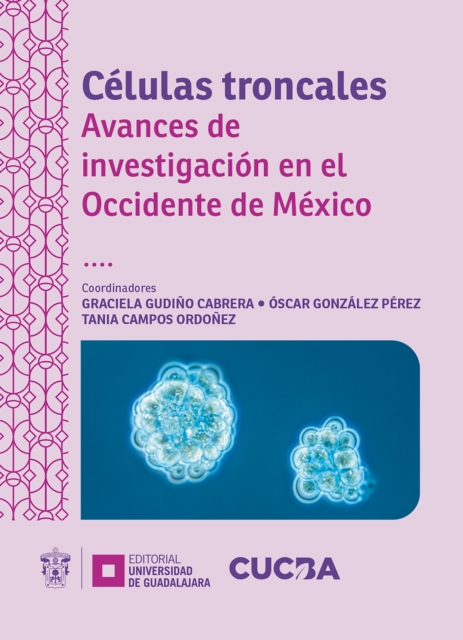
Este libro representa el esfuerzo colectivo del Centro Universitario de Ciencias Biológicas y Agropecuarias (CUCBA) para impulsar el avance y la difusión de las ciencias biológicas y biomédicas en el Occidente de México.
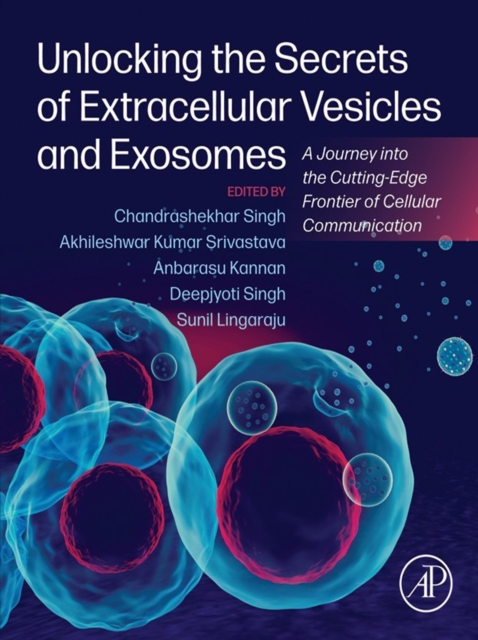
Unlocking the secrets of extracellular vesicles and exosomes: A journey into the cutting-edge frontier of cellular communication provides a comprehensive overview of the latest advances and research on extracellular vesicles (EVs) and exosomes.