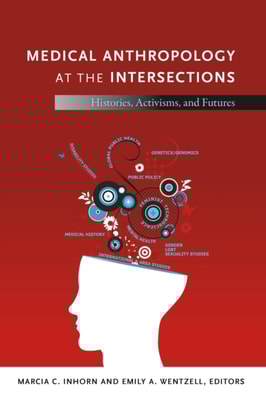
Western medicine-especially in contrast with non-Western traditions of medical practice-is widely thought of as a coherent and unified field in which beliefs, definitions, and judgments are shared.
In this important collection, prominent scholars who helped to establish medical anthropology as an area of study reflect on the field's past, present, and future.
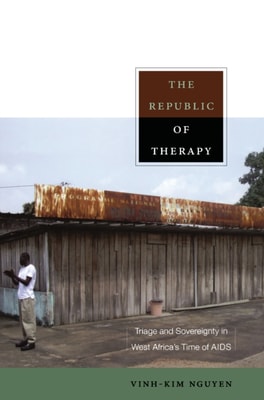
The Republic of Therapy tells the story of the global response to the HIV epidemic from the perspective of community organizers, activists, and people living with HIV in West Africa.
The Ontogeny of Information is a critical intervention into the ongoing and perpetually troubling nature-nurture debates surrounding human development.
In recent decades, Susan Oyama and her colleagues in the burgeoning field of developmental systems theory have rejected the determinism inherent in the nature/nurture debate, arguing that behavior cannot be reduced to distinct biological or environmental causes.
A comprehensive collection of the most important sources on the late historic Creek Indians and their environment In 1795 Benjamin Hawkins, a former US senator and advisor to George Washington, was appointed US Indian agent and superintendent of all the tribes south of the Ohio River.
Though more than 150,000 AIDS-related deaths have been reported worldwide and between 5 and 10 million people are now infected with its precursor, HIV-1, the deadly and relatively new AIDS virus is still a mystery.
This book and accompanying compact disc provide a rare excursion in the innovative ways a community of Haitian migrants to South Florida has maintained religious traditions and familial connections.
To the Western eye, there is something jarringly incongruous, even shocking, about the image of a six-year-old girl being held down by loving relatives so that her genitals can be cut.
Medical humanitarianismmedical and other health-related initiatives undertaken in conditions born of conflict, neglect, or disaster has a prominent and growing presence in international development, global health, and human security interventions.
Over the past several decades there has been an explosion of interest in genetics and genetic inheritance within both the research community and the mass media.
Choosing Unsafe Sex focuses on the ways in which condom refusal and beliefs regarding HIV testing reflect women's hopes for their relationships and their desires to preserve status and self-esteem.
Here is a thoroughly engaging history of one line of human science research and its consequences for the hapless, and often helpless, subject of study: the indigenous peoples of Tasmania.
The culmination of forty years of research, The Language of the Inuit maps the geographical distribution and linguistic differences between the Eskaleut and Inuit languages and dialects.
The culmination of forty years of research, The Language of the Inuit maps the geographical distribution and linguistic differences between the Eskaleut and Inuit languages and dialects.
Damas shows that while there were cases of government-directed relocation to centres, centralization was largely voluntary as the Inuit accepted the advantages of village living.
Chevalier shows how the attentions and inhibitions of affect and norm are best understood at the crossroads of several disciplines, including neuropsychology, semiotics, and philosophy.
Half-Brain Fables and Figs in Paradise starts the trilogy on the lateral plane and explores the tendency of each hemisphere to specialize but also to complement or supplement the other hemisphere.
Identifying himself as both an Indian and a Canadian but first and foremost a Sikh, Tara Singh has shuttled back and forth between Canada and India for most of his life, finding personal harmony while incorporating two very different countries and cultures into his life.