The epic story of human evolution, from our primate beginnings more than five million years ago to the agricultural eraOver the course of five million years, our primate ancestors evolved from a modest population of sub-Saharan apes into the globally dominant species Homo sapiens.
A provocative and timely case for how the science of genetics can help create a more just and equal societyIn recent years, scientists like Kathryn Paige Harden have shown that DNA makes us different, in our personalities and in our health-and in ways that matter for educational and economic success in our current society.
Key Themes in Qualitative Research is an attempt by three well-respected ethnographic researchers to present a balanced view of qualitative methodology and research.
With three hearts and blue blood, its gelatinous body unconstrained by jointed limbs or gravity, the octopus seems to be an alien, an inhabitant of another world.
Starting in the late nineteenth century, scholars and activists all over the world suddenly began to insist that understandings of sex be based on science.
The last three decades have witnessed a proliferation of nongovernmental organizations engaging in new campaigns to end the practice of female genital cutting across Africa.
"e;Mek Some Noise"e;, Timothy Rommen's ethnographic study of Trinidadian gospel music, engages the multiple musical styles circulating in the nation's Full Gospel community and illustrates the carefully negotiated and contested spaces that they occupy in relationship to questions of identity.
This highly accessible, engagingly written book exposes the underbelly of California's Silicon Valley, the most successful high-technology region in the world, in a vivid ethnographic study of Mexican immigrants employed in Silicon Valley's low-wage jobs.
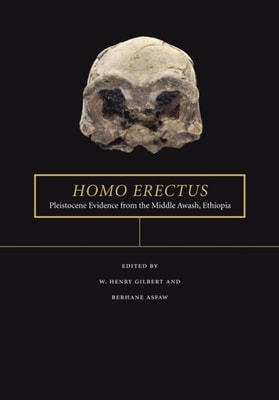
This volume, the first in a series devoted to the paleoanthropological resources of the Middle Awash Valley of Ethiopia, studies Homo erectus, a close relative of Homo sapiens.
This book is aimed at researchers and graduate students in neuroscience, evolutionary biology, and biological anthropology and to biomedical researchers studying sleep medicine.
This book is aimed at researchers and graduate students in neuroscience, evolutionary biology, and biological anthropology and to biomedical researchers studying sleep medicine.
A rapprochement between anthropological demography and human evolutionary ecology through recognition of common research topics incorporating cultural and biological motivation.