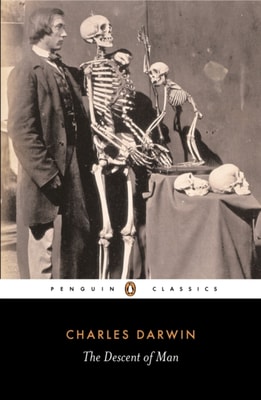
Applying his controversial theory of evolution to the origins of the human species, Charles Darwin's The Descent of Man was the culmination of his life's work.
*FROM THE NUMBER ONE BESTSELLING AUTHOR OF FRAZZLED*A three way encounter between a Monk, a neuroscientist and Ruby Wax sounds like the set up for a joke.
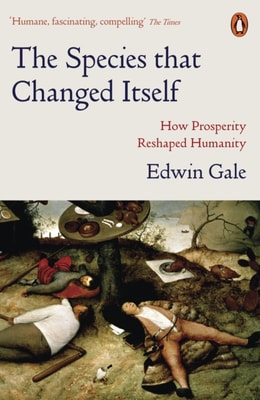
An inquisitive, expansive and fascinating exploration of humans as creatures of our own makingOther species adapt to their environments; we alone create ours.
One of the world's most respected psychiatrists provides a much-needed new evolutionary framework for making sense of mental illnessWith his classic book Why We Get Sick, Randolph Nesse established the field of evolutionary medicine.
* A TIMES BEST SCIENCE BOOK OF THE YEAR *From the prize-winning author of Adventures in the Anthropocene, the astonishing story of how culture enabled us to become the most successful species on Earth'A wondrous, visionary work' Tim Flannery, author of The Weather MakersHumans are a planet-altering force.
David Christian, creator of Big History ('My favourite course of all time' Bill Gates), brings us the epic story of the universe and our place in it, from 13.
'A clear and engaging explanation of one of the hottest fields in science' Steven Pinker'A hugely important book' Matt Ridley, The TimesOne of the world's top behavioural geneticists argues that we need a radical rethink about what makes us who we areThe blueprint for our individuality lies in the 1% of DNA that differs between people.
The book opens with a description of the smooth transition from Newtonian to Einsteinian behaviour from electrons as their energy is progressively increased, and this leads directly to the relativistic expressions for mass, momentum and energy of a particle.
"e;And, behold, I, even I, do bring a flood of waters upon the earth, to destroy all flesh, wherein is the breath of life, from under heaven; and every thing that is in the earth shall die.
We live in a sea of seething microbial predators, an infinity of invisible and invasive microorganisms capable of setting set up shop inside us and sending us to an early grave.
The first comprehensive synthesis on development and evolution: it applies to all aspects of development, at all levels of organization and in all organisms, taking advantage of modern findings on behavior, genetics, endocrinology, molecular biology, evolutionary theory and phylogenetics to show the connections between developmental mechanisms and evolutionary change.
A thorough yet concise account of cancer biology, this book emphasizes the cellular and molecular mechanisms involved in the transformation of normal into malignant cells, the invasiveness of cancer cells into host tissues, and the metastatic spread of cancer cells in the host organism.
Humanity's physical design flaws have long been apparent--we get hemorrhoids and impacted wisdom teeth, for instance--but do the imperfections extend down to the level of our genes?
This book looks back at the simpler versions of mental life in apes, Neanderthals, and our ancestors, back before our burst of creativity started 50,000 years ago.
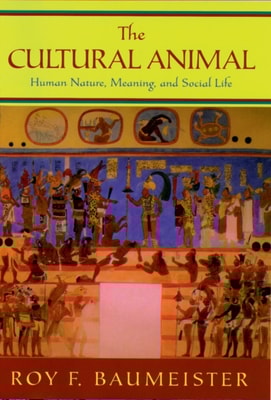
This book provides a coherent explanation of human nature, which is to say how people think, act, and feel, what they want, and how they interact with each other.
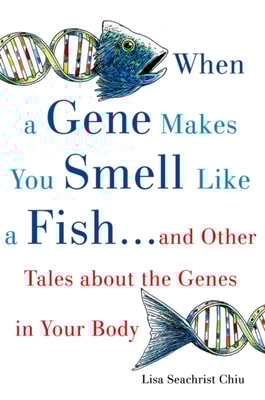
From the gene that causes people to age prematurely to the "e;bitter gene"e; that may spawn broccoli haters, this book explores a few of the more exotic locales on the human genome, highlighting some of the tragic and bizarre ways our bodies go wrong when genes fall prey to mutation and the curious ways in which genes have evolved for our survival.
The latest edition of Robert Arking's seminal text on the biology of aging takes on an extended title, since the field of gerontology has advanced to a point at which it is possible to separate the topic into two implicit subsets, longevity and aging.
The only textbook that fully supports the Physics part of the Oxford AQA International GCSE Combined Sciences specification (9204), for first teaching from September 2016.
The only textbook that fully supports the Biology part of the Oxford AQA International GCSE Combined Sciences specification (9204), for first teaching from September 2016.
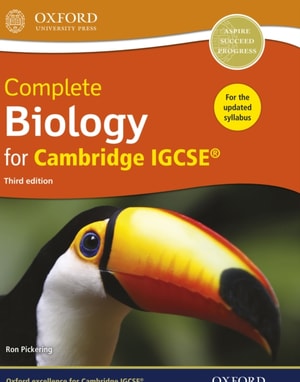
This engaging course incorporates crucial challenge material right from the start, enabling students to confidently leap into Cambridge IGCSE(R) Science study with a solid foundation in Biology.
Covering all GCSE specifications, this tried and tested series has been fully updated to match the (9-1) GCSE Biology specifications for first examination in 2018, as well as international specifications.
Covering all GCSE specifications, this tried and tested series has been fully updated to match the (9-1) GCSE Physics specifications for first examination in 2018, as well as international specifications.
Matched to the previous Cambridge syllabus, this stretching Student Book is trusted by teachers around the world to support advanced understanding and achievement at IGCSE.
Matched to the previous Cambridge syllabus, this stretching Student Book is trusted by teachers around the world to support advanced understanding and achievement at IGCSE.
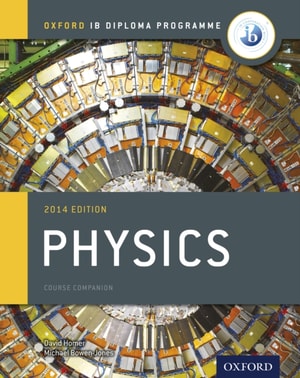
The only DP Physics resource developed with the IB to accurately match the new 2014 syllabus for both SL and HL, this completely revised edition gives you unrivalled support for the new concept-based approach to learning, the Nature of science.
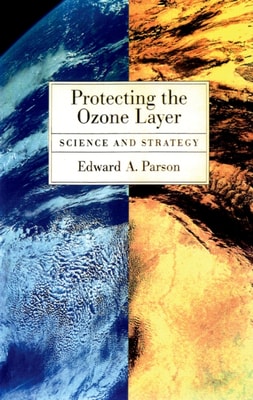
This book is the first comprehensive history of international efforts to protect the ozone layer, the greatest success yet achieved in managing human impacts on the global environment.