Computational biology is an interdisciplinary field that applies mathematical, statistical, and computer science methods to answer biological questions, and its importance has only increased with the introduction of high-throughput techniques such as automatic DNA sequencing, comprehensive expression analysis with microarrays, and proteome analysis with modern mass spectrometry.
The existence of genes for RNA molecules not coding for proteins (ncRNAs) has been recognized since the 1950's, but until recently, aside from the critically important ribosomal and transfer RNA genes, most focus has been on protein coding genes.
Over the past twenty years, the development of chromatin immunoprecipitation, or ChIP, assays has immensely enhanced the biological significance of the multifaceted DNA-binding proteins.
The post-genomic revolution is witnessing the generation of petabytes of data annually, with deep implications ranging across evolutionary theory, developmental biology, agriculture, and disease processes.
From basic performing of sequence alignment through a proficiency at understanding how most industry-standard alignment algorithms achieve their results, Multiple Sequence Alignment Methods describes numerous algorithms and their nuances in chapters written by the experts who developed these algorithms.
From the beginning of the OMICs biology era, science has been pursuing the reduction of the complex "e;genome-wide"e; assays in order to understand the essential biology that lies beneath it.
The new genetic revolution is fuelled by Deep Sequencing (or Next Generation Sequencing) apparatuses which, in essence, read billions of nucleotides per reaction.
Progress in functional proteomics has been limited for a long time, partially caused by limitations in assay sensitivity and sample capacity; however, protein microarrays have the ability to overcome these limitations so that a highly parallel analysis of hundreds of proteins in thousands of samples is attainable.
Unleashing the Potentials of Blockchain Technology for Healthcare Industries discusses blockchain and its adaptation in healthcare industries to provide a secured framework to safeguard healthcare data, both patient and hospital data.
This book facilitates both the theoretical background and applications of fuzzy, intuitionistic fuzzy and rough, fuzzy rough sets in the area of data science.
Computational Methods and Deep Learning for Ophthalmology presents readers with the concepts and methods needed to design and use advanced computer-aided diagnosis systems for ophthalmologic abnormalities in the human eye.
In diesem Buch werden dem Leser einführend zentrale Ansätze der Bioinformatik entsprechend dem Fluss der genetischen Information von der Sequenzanalyse vom Virusgenom und seinen Proteinen über die Strukturvorhersage hin zu komplexeren Analysen (Interaktionen mit dem Wirt, Immunsystem) vorgestellt.
This book shows that evolutionary game theory can unravel how mutual cooperation, trust, and credit in a group emerge in organizations and institutions.
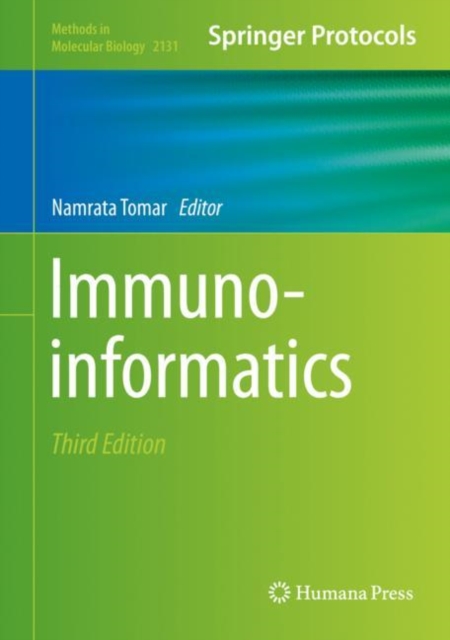
This book covers a wide range of diverse immunoinformatics research topics, involving tools and databases of potential epitope prediction, HLA gene analysis, MHC characterizing, in silico vaccine design, mathematical modeling of host-pathogen interactions, and network analysis of immune system data.
This book shows that evolutionary game theory can unravel how mutual cooperation, trust, and credit in a group emerge in organizations and institutions.
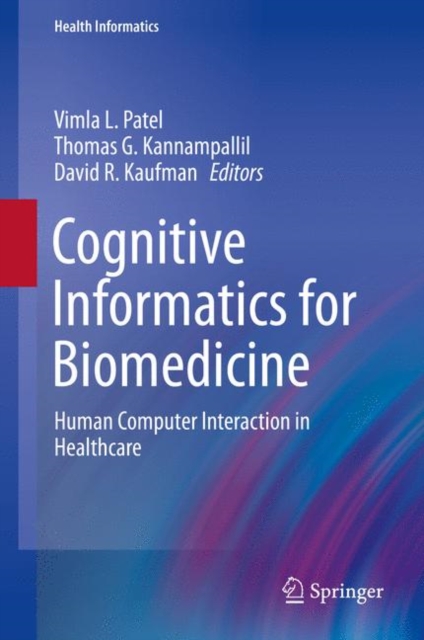
The book reports on the current state on HCI in biomedicine and health care, focusing on the role of human factors, patient safety well as methodological underpinnings of HCI theories and its application for biomedical informatics.
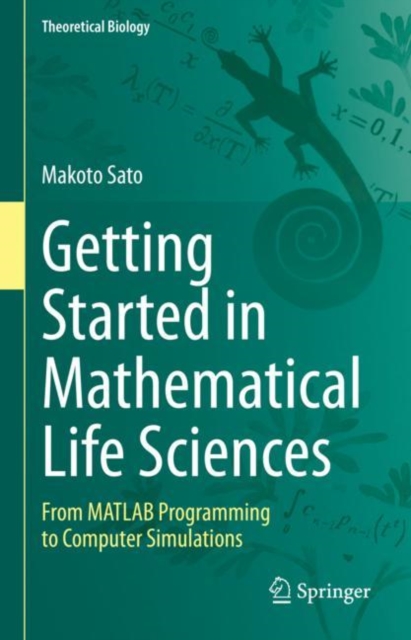
This book helps the reader make use of the mathematical models of biological phenomena starting from the basics of programming and computer simulation.
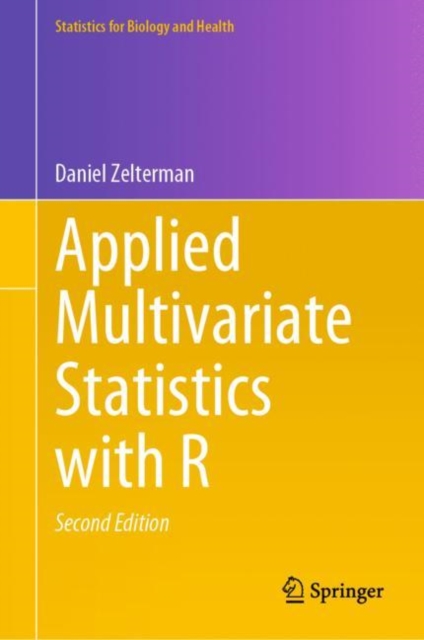
Now in its second edition, this book brings multivariate statistics to graduate-level practitioners, making these analytical methods accessible without lengthy mathematical derivations.
This contributed volume convenes selected, peer-reviewed works presented at the BIOMAT 2021 International Symposium, which was virtually held on November 1-5, 2021, with its organization staff based in Rio de Janeiro, Brazil.
The 2nd edition of this comprehensive book provides one of the most complete overviews of the aquatic beetles in the family Dytiscidae, also known as predaceous diving beetles.
This book aims to present the impact of Artificial Intelligence (AI) and Big Data in healthcare for medical decision making and data analysis in myriad fields including Radiology, Radiomics, Radiogenomics, Oncology, Pharmacology, COVID-19 prognosis, Cardiac imaging, Neuroradiology, Psychiatry and others.
This book presents a collection of selected papers presented at the 22nd FAI International Conference on Mathematical, Computational Intelligence and Engineering Approaches to Healthcare, Business and Tourism Analytics (FAI-ICMCIE 2020), held at American College, Madurai, India, from 20-22 December 2020.
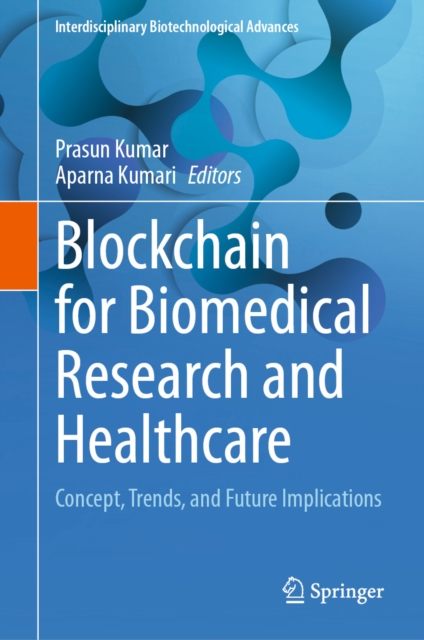
Blockchain is a new type of technology that combines and secures information exchange between different stakeholders such as medical practitioners, patients, healthcare providers, and other applicable parties.
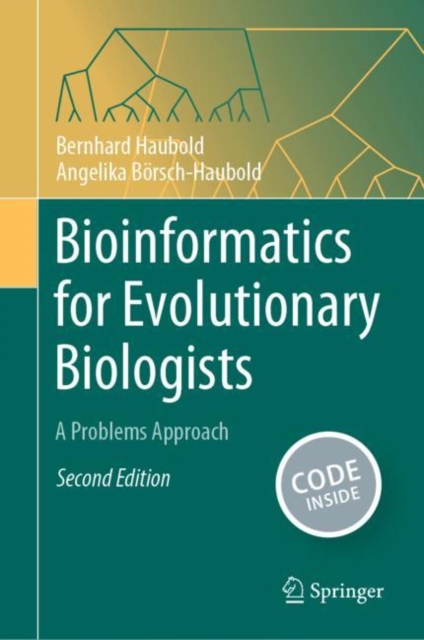
This self-contained textbook covers fundamental aspects of sequence analysis with special emphasis on evolutionary biology, including sequence alignment, exact matching, phylogeny reconstruction, and coalescent simulation.
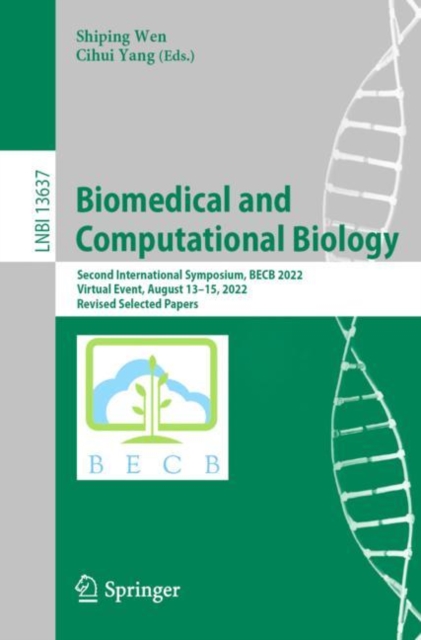
This book constitutes the revised selected proceedings of Second International Symposium on Biomedical and Computational Biology, BECB 2022, held as a virtual event in August 2022.
Cognitive Intelligence with Neutrosophic Statistics in Bioinformatics investigates and presents the many applications that have arisen in the last ten years using neutrosophic statistics in bioinformatics, medicine, agriculture and cognitive science.
This book offers a gripping introduction to the fastest growing field of biology with easy-to-follow examples and a well-prepared appendix for the reader to cook up and experience everything right away.
This book broadly covers the given spectrum of disciplines in Computational Life Sciences, transforming it into a strong helping hand for teachers, students, practitioners and researchers.
Mathematical Modeling, Simulations, and Artificial Intelligence for Emergent Pandemic Diseases: Lessons Learned from COVID-19 includes new research, models and simulations developed during the COVID-19 pandemic into how mathematical methods and practice can impact future response.
All About Bioinformatics: From Beginner to Expert provides readers with an overview of the fundamentals and advances in the _x001F_field of bioinformatics, as well as some future directions.
Mathematical Modeling for Epidemiology and Ecology provides readers with the mathematical tools needed to understand and use mathematical models and read advanced mathematical biology books.
Multi-Omics Technology in Human Health and Diseases: Genomics, Epigenomics, Transcriptomics, Proteomics, Metabolomics, Radiomics, Multi-omic provides a way forward in understanding complete disease etiology and prognosis.
Learn functional programming and build robust applications using the latest functional features in C++Key FeaturesLearn programming concepts such as loops, expressive code, and simple parallelizationUnderstand the working of Lambdas and Currying and write Pure functionsExplore event sourcing and other functional patterns to improve the efficiency of your applicationsBook DescriptionFunctional programming enables you to divide your software into smaller, reusable components that are easy to write, debug, and maintain.
A comprehensive guide to get started with Java and gain insights into major concepts such as object-oriented, functional, and reactive programmingKey FeaturesStrengthen your knowledge of important programming concepts and the latest features in JavaExplore core programming topics including GUI programming, concurrency, and error handlingLearn the idioms and best practices for writing high-quality Java codeBook DescriptionJava is one of the preferred languages among developers, used in everything right from smartphones, and game consoles to even supercomputers, and its new features simply add to the richness of the language.