This book includes a series of reviews on general aspects of biomarker use in the study of psychiatric and neurodegenerative diseases and the development of medications involved in their treatment.
Beginning with an introduction to kidney function, renal replacement therapies, and an overview of clinical problems associated with haemodialysis, this book explores the principles of the short-term baroreflex regulation of the cardiovascular system and the mechanisms of water and solute transport across the human body from a mathematical model perspective.
This volume - for pharmacologists, systems biologists, philosophers and historians of medicine - points to investigate new avenues in pharmacology research, by providing a full assessment of the premises underlying a radical shift in the pharmacology paradigm.
This book presents outstanding contributions in an exciting, new and multidisciplinary research area: the application of formal, automated reasoning techniques to analyse complex models in systems biology and systems medicine.
The interactions of DNA with force are central to manifold fields of inquiry, including the de novo design of DNA nanostructures, the use of DNA to probe the principles of biological self-assembly, and the operation of cellular nanomachines.
This two-volume set LNCS 11383 and 11384 constitutes revised selected papers from the 4th International MICCAI Brainlesion Workshop, BrainLes 2018, as well as the International Multimodal Brain Tumor Segmentation, BraTS, Ischemic Stroke Lesion Segmentation, ISLES, MR Brain Image Segmentation, MRBrainS18, Computational Precision Medicine, CPM, and Stroke Workshop on Imaging and Treatment Challenges, SWITCH, which were held jointly at the Medical Image Computing for Computer Assisted Intervention Conference, MICCAI, in Granada, Spain, in September 2018.
This book constitutes the refereed proceedings of the 10th International ICT Innovations Conference, ICT Innovations 2018, held in Ohrid, Macedonia, in September 2018.
This two-volume set LNCS 11383 and 11384 constitutes revised selected papers from the 4th International MICCAI Brainlesion Workshop, BrainLes 2018, as well as the International Multimodal Brain Tumor Segmentation, BraTS, Ischemic Stroke Lesion Segmentation, ISLES, MR Brain Image Segmentation, MRBrainS18, Computational Precision Medicine, CPM, and Stroke Workshop on Imaging and Treatment Challenges, SWITCH, which were held jointly at the Medical Image Computing for Computer Assisted Intervention Conference, MICCAI, in Granada, Spain, in September 2018.
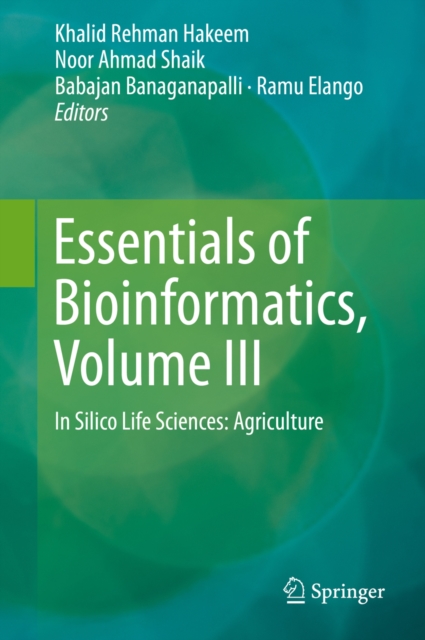
Bioinformatics is an integrative field of computer science, genetics, genomics, proteomics, and statistics, which has undoubtedly revolutionized the study of biology and medicine in past decades.
This volume gathers selected, peer-reviewed original contributions presented at the International Conference on Computational Vision and Bio-inspired Computing (ICCVBIC) conference which was held in Coimbatore, India, on November 29-30, 2018.
This book constitutes revised selected papers from the 13th International Conference on Data Integration in the Life Sciences, DILS 2018, held in Hannover, Germany, in November 2018.
Population genomics is a rapidly emerging field that has the potential to transform our understanding of how evolutionary forces shape genomic diversity among microbes.
This book offers a comprehensive overview of the microbiological fundamentals and biotechnological applications of methanotrophs: aerobic proteobacteria that can utilize methane as their sole carbon and energy source.
This book presents the proceedings of the 24th International Conference on Difference Equations and Applications, which was held at the Technical University in Dresden, Germany, in May 2018, under the auspices of the International Society of Difference Equations (ISDE).
This book constitutes the proceedings of the 16th International Conference on Comparative Genomics, RECOMB-CG 2018, held in Magog-Orford, QC, Canada, in October 2018.
This book reviews the advances and challenges of structure-based drug design in the preclinical drug discovery process, addressing various diseases, including malaria, tuberculosis and cancer.
The book presents nine mini-courses from a summer school, Dynamics of Biological Systems, held at the University of Alberta in 2016, as part of the prestigious seminar series: Seminaire de Mathematiques Superieures (SMS).
This book provides a comprehensive overview of the diagnosis and management of Non-alcoholic Fatty Liver Disease (NAFLD) and Non-Alcoholic Steatohepatis (NASH).
This book covers pattern recognition techniques applied to various areas of biomedicine, including disease diagnosis and prognosis, and several problems of classification, with a special focus on-but not limited to-pattern recognition modeling of biomedical signals and images.
This book describes new theories and applications of artificial neural networks, with a special focus on addressing problems in neuroscience, biology and biophysics and cognitive research.
The 3rd World Congress on Genetics, Geriatrics, and Neurodegenerative Disease Research (GeNeDis 2018), focuses on recent advances in genetics, geriatrics, and neurodegeneration, ranging from basic science to clinical and pharmaceutical developments.
This book provides a comprehensive description of sterols and their novel biological roles in mammalian signaling, the book covers their biosynthesis and structure, describes sterol receptor -mediated actions, their tissue distribution and their role in disease.
This book describes novel algorithms based on interval-valued fuzzy methods that are expected to improve classification and decision-making processes under incomplete or imprecise information.
This book provides readers with a detailed orientation to healthcare simulation research, aiming to provide descriptive and illustrative accounts of healthcare simulation research (HSR).
This book constitutes the refereed proceedings of the 11th Brazilian Symposium on Bioinformatics, BSB 2018, held in Rio de Janeiro, Brazil, in October/November 2018.
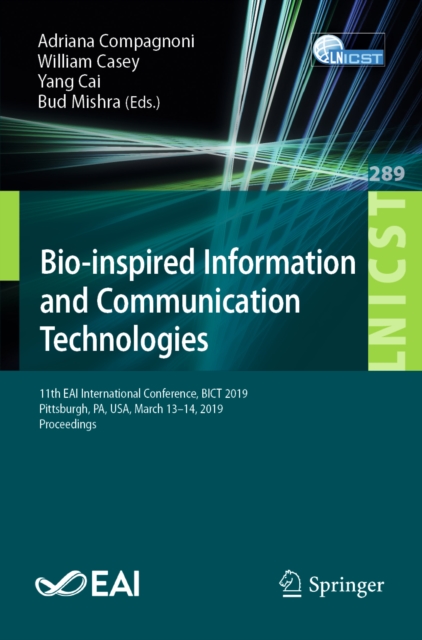
This book constitutes the refereed conference proceedings of the 11th International Conference on Bio-Inspired Information and Communications Technologies, held in Pittsburgh, PA, USA, in March 2019.
Bioinformatics is an integrative field of computer science, genetics, genomics, proteomics, and statistics, which has undoubtedly revolutionized the study of biology and medicine in past decades.
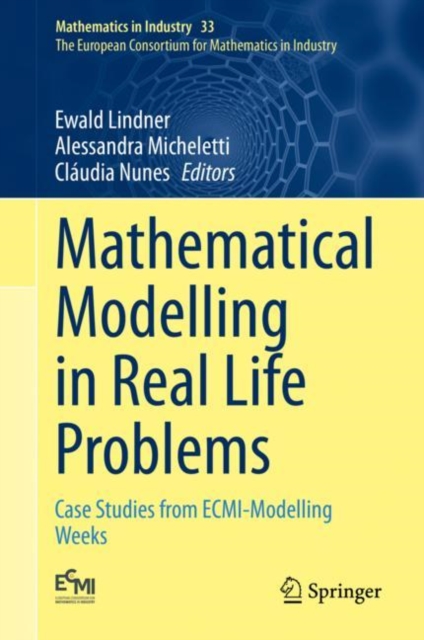
This book is intended to be a useful contribution for the modern teaching of applied mathematics, educating Industrial Mathematicians that will meet the growing demand for such experts.
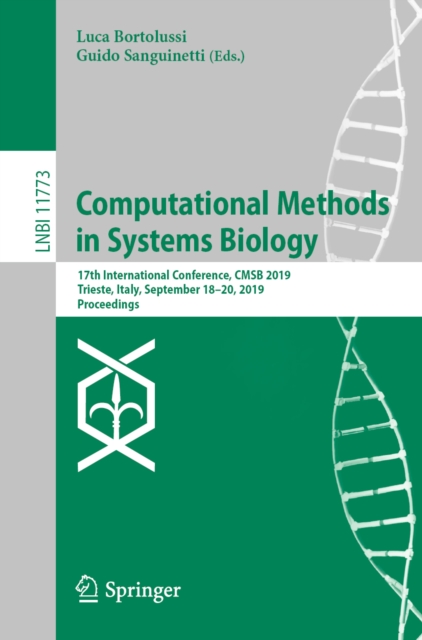
This book constitutes the refereed proceedings of the 17th International Conference on Computational Methods in Systems Biology, CMSB 2019, held in Trieste, Italy, in September 2019.
This book constitutes the thoroughly refereed post-conference proceedings of the 15th International Meeting on Computational Intelligence Methods for Bioinformatics and Biostatistics.
This book focuses on the spatio-temporal patterns generated by two classes of mathematical models (of hyperbolic and kinetic types) that have been increasingly used in the past several years to describe various biological and ecological communities.
This book constitutes the refereed proceedings of the 8th International Conference on Information Technology in Bio- and Medical Informatics, ITBAM 2017, held in Lyon, France, in August 2017.
This book gathers state-of-the-art research in computational engineering and bioengineering to facilitate knowledge exchange between various scientific communities.
This book introduces readers to the basic principles of bioinformatics and the practical application and utilization of computational tools, without assuming any prior background in programming or informatics.