With the detailed genomic information that is now becoming available, we have a plethora of data that allows researchers to address questions in a variety of areas.
Computational biology is an interdisciplinary field that applies mathematical, statistical, and computer science methods to answer biological questions, and its importance has only increased with the introduction of high-throughput techniques such as automatic DNA sequencing, comprehensive expression analysis with microarrays, and proteome analysis with modern mass spectrometry.
The post-genomic revolution is witnessing the generation of petabytes of data annually, with deep implications ranging across evolutionary theory, developmental biology, agriculture, and disease processes.
In Plant Metabolic Flux Analysis, expert researchers in the field provide detailed experimental procedures for each step of the flux quantification workflow.
The recent accumulation of information from genomes, including their sequences, has resultednotonlyinnewattemptstoansweroldquestionsandsolvelongstandingissues inbiology,butalsointheformulationofnovelhypothesesthatarisepreciselyfromthis wealth of data.
In past decades, the area of bioinformatics has proved to be both dynamic and vital, producing a wide spectrum of novel approaches and assuming an increasingly important role in modern bio-technological development.
Rapid advances in computer science, biology, chemistry, and other disciplines are enabling powerful new computational tools and models for toxicology and pharmacology.
Over the past years, the chem(o)informatics field has further evolved and new application areas have opened up, for example, in the broadly defined area of chemical biology.
As the use of high-throughput screening expands and creates more interest in the academic community, the need for detailed reference materials becomes ever more pressing.
In Post-Transcriptional Gene Regulation, renowned authors present current technical approaches to most aspects of post-transcriptional control and provide a useful and versatile laboratory bench resource.
Immunoinformatics: Predicting Immunogenicity In Silico is a primer for researchers interested in this emerging and exciting technology and provides examples in the major areas within the field of immunoinformatics.
Since each human is genetically distinctive, responding differently to disease-causing factors as well as drugs, the field pharmacogenomics arose to develop personalized medicine, or medicine that deals with the complexity of the human body.
This book facilitates both the theoretical background and applications of fuzzy, intuitionistic fuzzy and rough, fuzzy rough sets in the area of data science.
This volume focuses on the computational modeling of cell signaling networks and the application of these models and model-based analysis to systems and personalized medicine.
In diesem Buch werden dem Leser einführend zentrale Ansätze der Bioinformatik entsprechend dem Fluss der genetischen Information von der Sequenzanalyse vom Virusgenom und seinen Proteinen über die Strukturvorhersage hin zu komplexeren Analysen (Interaktionen mit dem Wirt, Immunsystem) vorgestellt.
This volume focuses on the computational modeling of cell signaling networks and the application of these models and model-based analysis to systems and personalized medicine.
This volume details methods that will aid in the selection of promoter sequences and vector components and methods for the assembly and testing of synthetic promoters with examples of their application.
This book covers a wide range of diverse immunoinformatics research topics, involving tools and databases of potential epitope prediction, HLA gene analysis, MHC characterizing, in silico vaccine design, mathematical modeling of host-pathogen interactions, and network analysis of immune system data.
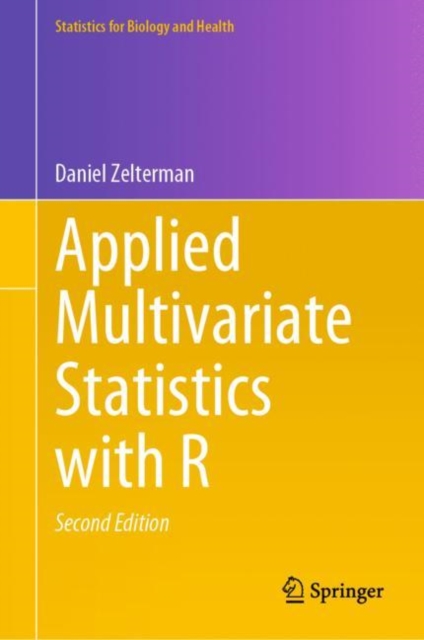
Now in its second edition, this book brings multivariate statistics to graduate-level practitioners, making these analytical methods accessible without lengthy mathematical derivations.
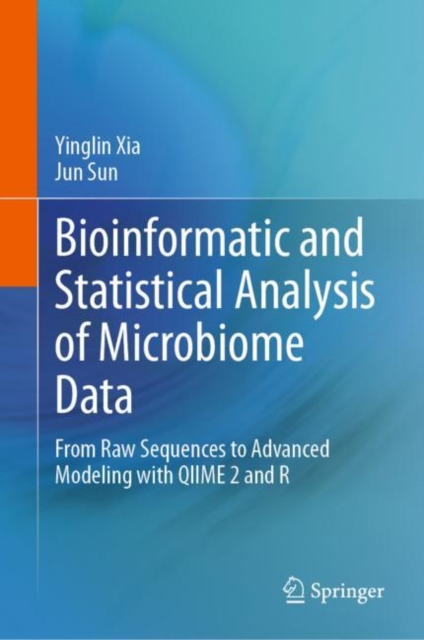
This unique book addresses the bioinformatic and statistical modelling and also the analysis of microbiome data using cutting-edge QIIME 2 and R software.
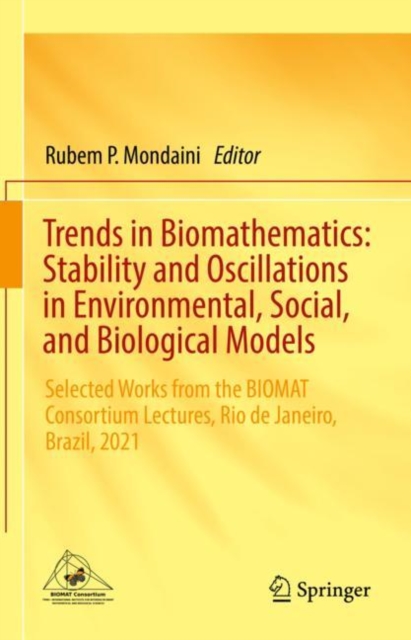
This contributed volume convenes selected, peer-reviewed works presented at the BIOMAT 2021 International Symposium, which was virtually held on November 1-5, 2021, with its organization staff based in Rio de Janeiro, Brazil.
This unique book addresses the bioinformatic and statistical modelling and also the analysis of microbiome data using cutting-edge QIIME 2 and R software.
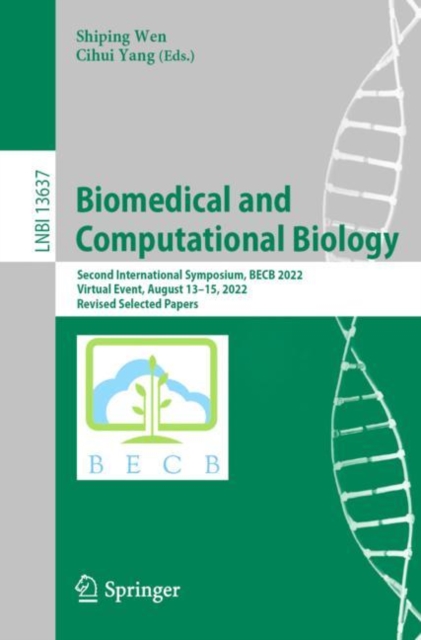
This book constitutes the revised selected proceedings of Second International Symposium on Biomedical and Computational Biology, BECB 2022, held as a virtual event in August 2022.
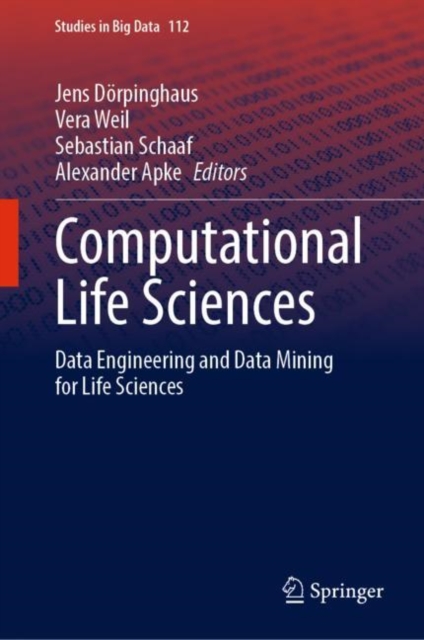
This book broadly covers the given spectrum of disciplines in Computational Life Sciences, transforming it into a strong helping hand for teachers, students, practitioners and researchers.
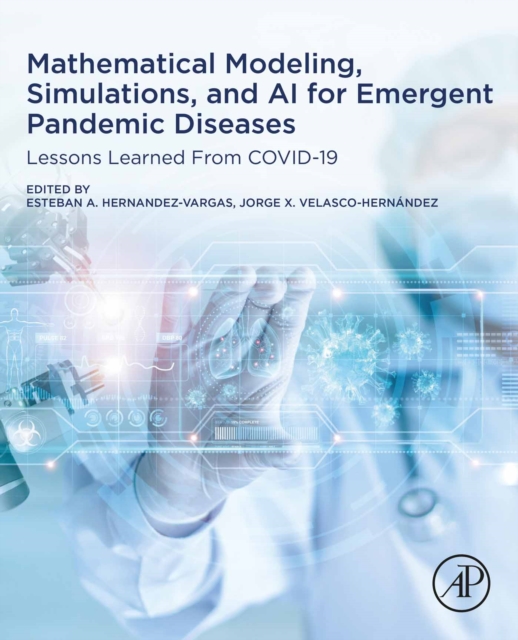
Mathematical Modeling, Simulations, and Artificial Intelligence for Emergent Pandemic Diseases: Lessons Learned from COVID-19 includes new research, models and simulations developed during the COVID-19 pandemic into how mathematical methods and practice can impact future response.
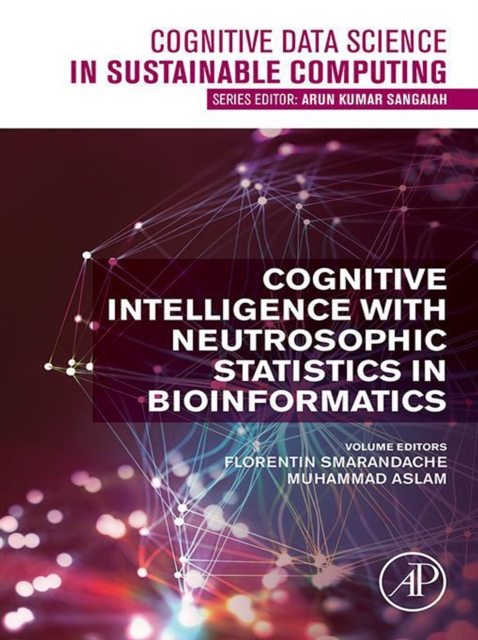
Cognitive Intelligence with Neutrosophic Statistics in Bioinformatics investigates and presents the many applications that have arisen in the last ten years using neutrosophic statistics in bioinformatics, medicine, agriculture and cognitive science.
This book contains the latest material in the subject, covering next generation sequencing (NGS) applications and meeting the requirements of a complete semester course.
This book contains the latest material in the subject, covering next generation sequencing (NGS) applications and meeting the requirements of a complete semester course.
This book aims to promote the interaction among the scientific community to discuss applications of CS/AI with an interdisciplinary character, exploring the interactions between sub-areas of CS/AI, bioinformatics, chemoinformatics, and systems biology.