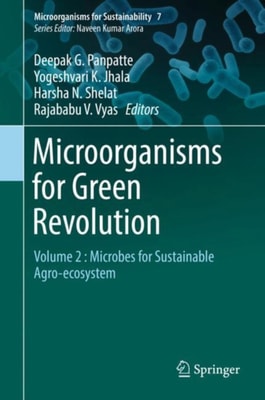
This book explores basic and applied aspects of microorganisms, which have a unique ability to cope with abiotic stresses such as drought, salinity and changing climate, as well as biodegrader microorganisms and their functional roles.
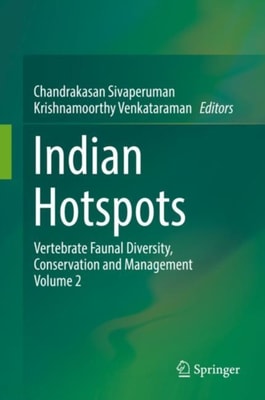
This book offers a comprehensive account of India's four biodiversity hotspots: the Himalaya, Indo-Burma, Western Ghats and Sri Lanka and Andaman and Nicobar Islands.
This book offers a comprehensive account of India's four biodiversity hotspots: the Himalaya, Indo-Burma, Western Ghats and Sri Lanka and Andaman and Nicobar Islands.
This book addresses basic and applied aspects of two nexus points of microorganisms in agro-ecosystems, namely their functional role as bio-fertilizers and bio-pesticides.
This book deals with not just complex linkages, interactions and exchanges that form the relationship between the economic activities, human society and the ecosystems, but also the influences and impacts that each causes on the other.
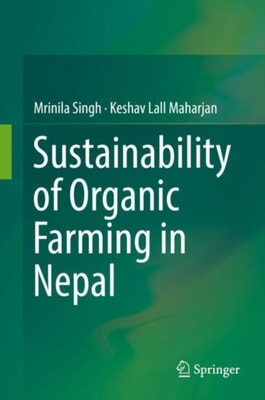
This book explores the sustainability aspect of organic and conventional farming systems, which is commonly categorized into three sub-aspects: social, environmental and economic.
This book presents state-of-the-art research on the many facets of the plant microbiome, including diversity, ecology, physiology and genomics, as well as molecular mechanisms of plant-microbe interactions.
This book addresses issues of monitoring populations of tigers, ungulate prey species and habitat occupancy, with relevance to similar assessments of large mammal species and general biodiversity.
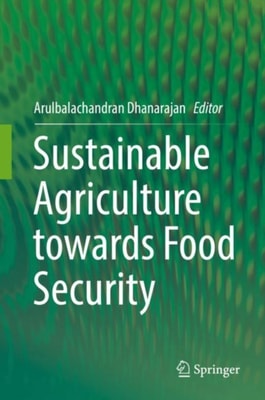
This book is a compilation of case studies from different countries and covers contemporary with future prospective for sustainable development of agriculture.
This book presents a compilation of the latest findings from reputed researchers around the globe, covering in detail climate change and its effects on sheep production.
This book provides a comprehensive overview of the wild relatives of crops and cultivated species found in India, covering their distribution, phylogenetic relationships with cultivated species, traits that are of economic and breeding value, and the perceived threats.
This book offers up-to-date information on different microbiomes, their community composition and interactive functions with the host, bringing together information from diverse research reports to provide an overview of the rapid developments in meta-omics technologies.
This book presents a compilation of the latest findings from reputed researchers around the globe, covering in detail climate change and its effects on sheep production.
This book provides state-of-the-art reviews, the latest research, prospects and challenges of the production of platform chemicals such as C6 sugars, 5-hydroxymethylfurfural, furfural, gamma-valerolactone, xylitol, 2,5-furandicarboxylic acid, levulinic acid, ethanol and others from sustainable biomass resources using processes that include heterogeneous catalysis, ionic liquids, hydrothermal/solvothermal, electrochemical and fermentation methods.
The globally escalating population necessitates production of more goods and services to fulfil the expanding demands of human beings which resulted in urbanization and industrialization.
This book showcases a compilation of case studies presented by scientists, teachers and academics and covers contemporary technologies for combating climate change, including sustainable agricultural management practices and conservation agriculture.
This book provides state-of-the-art reviews, current research on and the prospects of lignin production, biological, thermal and chemical conversion methods, and lignin technoeconomics.
Acarology - the study of mites and ticks, is a subdiscipline of Zoology, and is many times considered in the field of Entomology (the study of insects).
Arthropods are invertebrates that constitute over 90% of the animal kingdom, and their bio-ecology is closely linked with global functioning and survival.
Arthropods are invertebrates that constitute over 90% of the animal kingdom, and their bio-ecology is closely linked with global functioning and survival.
Global yields of legumes have been relatively stagnant for the last five decades, despite the adoption of conventional and molecular breeding approaches.
This work is a comprehensive information on the indigenous bioresources of North Eastern India with the scope of bioprospecting for discovery and commercialization of new sources and products and long-term ecological balance.
This book is a compendium of case studies illustrating how economic tools and techniques can be used to address a wide range of problems in the management and conservation of marine and coastal ecosystems in a developing country context.
En las ultimas cuatro decadas, las ciencias del mar han tenido un papel sobresaliente en la formacion e investigacion de la Universidad Nacional de Colombia.
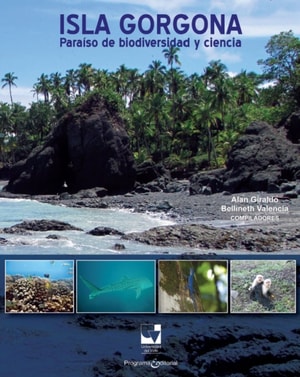
La isla Gorgona, en el Pacífico colombiano, es reconocida nacional e internacionalmente como un sitio único que alberga una amplia variedad de fauna y flora, enmarcada en un paisaje que conjuga el ambiente marino y terrestre de una manera particular.
Esta cartilla se convierte en una herramienta para la divulgacion de la biodiversidad de la flora y fauna asociada a un relicto de bosque seco tropical dentro de una matriz urbana ubicada en Santa Marta, Colombia, y presenta ilustraciones de las 50 especies mas representativas de este ecosistema.
Esta cartilla se convierte en una herramienta para la divulgacion de la biodiversidad de la flora y fauna asociada a un relicto de bosque seco tropical dentro de una matriz urbana ubicada en Santa Marta, Colombia, y presenta ilustraciones de las 50 especies mas representativas de este ecosistema.
Este libro es una guía para profesores universitarios y de educación media que enseñan historia ambiental por primera vez, para maestros experimentados que desean reforzar sus cursos, para aquellos que están capacitando a futuros maestros para preparar sus propios planes de estudio y para docentes que desean incorporar la historia ambiental en sus cursos de historia universal.
Conocer los efectos del calentamiento global sobre los diferentes tipos de organismos es útil para desarrollar relaciones causa-efecto y para identificar y predecir la gama óptima de hábitats y umbrales de estrés para diferentes tipos organismos que habitan distintos ecosistemas.