Complex Multicellularity & Vertebrate Emergence explores one of evolution's greatest transitions: the emergence of a developmental mode capable of building increasingly complex organisms.
Early Mammals & Placental ElaborationThe third couplet in Couplets in Evolutionary Time explores one of the great turning points in life's history: the emergence of the mammalian grade and its later refinement through placental development.
Origins & Symbiotic "e;Doubling"e; is the opening volume of Couplets in Evolutionary Time, a five-part exploration of life's major evolutionary transitions through a logarithmic framework.
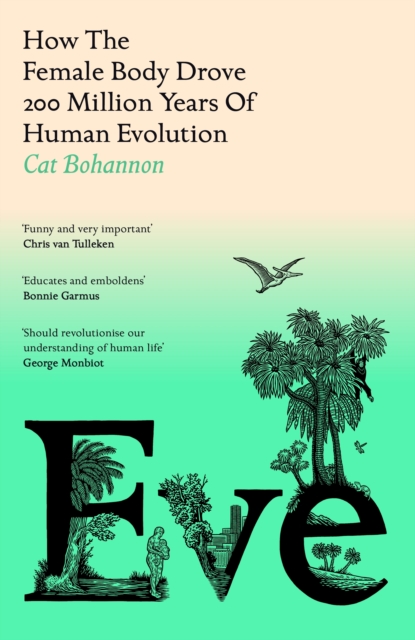
A NEW YORK TIMES BESTSELLERLONGLISTED FOR THE WOMEN'S PRIZE FOR NON-FICTION 2024SHORTLISTED FOR THE ROYAL SOCIETY TRIVEDI SCIENCE BOOK PRIZE 2024FOYLE'S NON-FICTION BOOK OF THE YEAR 2023LONGLISTED FOR BLACKWELL'S NON-FICTION BOOK OF THE YEAR 2023ONE OF THE GUARDIAN'S BEST IDEAS BOOKS OF 2023ONE OF THE TELEGRAPH'S FIFTY BEST BOOKS OF 2023ONE OF PROSPECT'S BOOKS OF THE YEAR 2023ONE OF DUA LIPA'S SERVICE95 RECOMMENDATIONS FOR '5 INSPIRING READS TO KICK START THE NEW YEAR'Funny and very important' Chris van Tulleken, bestseling author of Ultra-Processed People'Educates and emboldens' Bonnie Garmus, bestselling author of Lessons in Chemistry'Should revolutionise our understanding of human life' George Monbiot, bestselling author of Regenesis'A vast and revolutionary history of female evolution' Sunday TimesHow did wet nurses drive civilization?
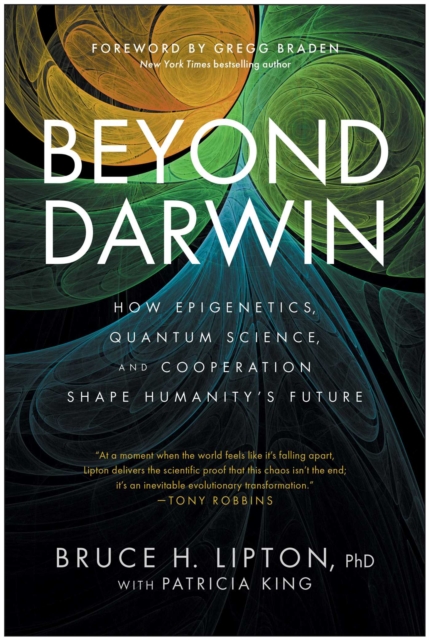
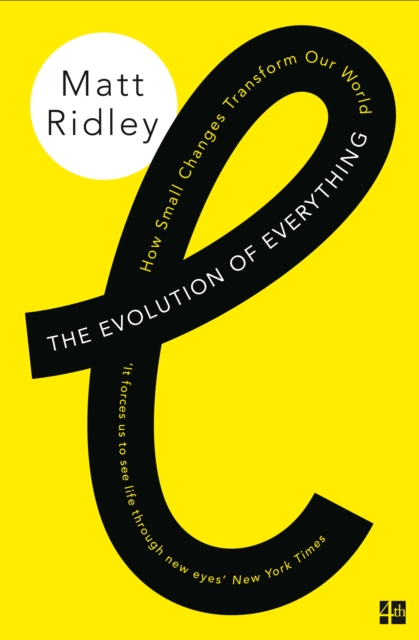
New York Times Bestseller From survival of the fittest to survival of the most conscious, discover a revolutionary scientific message of hope for humanity's future.
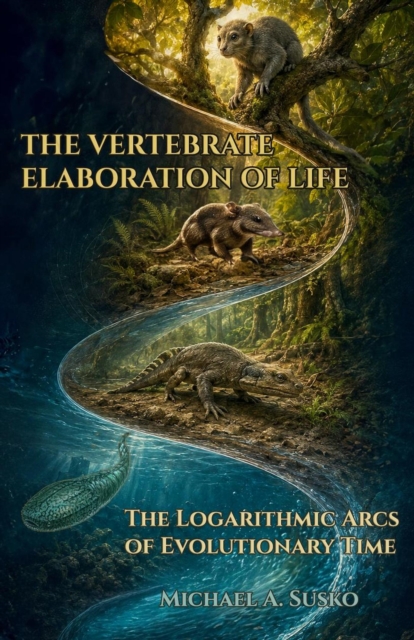
The Vertebrate Elaboration of Life explores one of evolution's greatest chapters through a new temporal framework based on logarithmic arcs of evolutionary time.
This book is a Weekend Pocketbook on Everything You Should Know About the Biodiversity Crisis, the quiet unraveling of the living world we depend on more than we realize.
«Estoy plenamente convencido de que las especies no son inmutables, sino que las que pertenecen a lo que se conoce como un mismo género son descendientes directas de alguna otra especie por lo común extinta, de igual modo que las variedades reconocidas de una especie cualquiera son descendientes de esa especie.
Este libro cuenta la gran aventura de los avatares y de las múltiples y sucesivas migraciones de los "homininos" (es decir, del hombre y todas las especies humanas extinguidas) desde que los primeros de ellos descendieron de los árboles y, muy poco a poco, empezaron a transitar en posición erecta sobre la tierra, hasta el Neolítico y el tiempo presente.
First published in 1859 and revised through six editions in response to two decades of scientific debate, On the Origin of Species laid out the theory of evolution by natural selection with a wealth of evidence drawn from geology, breeding, and comparative anatomy.
Como declara ya en el prólogo su autor, Giorgio Manzi, "Últimas noticias sobre la evolución humana" es un libro esencialmente divulgativo acerca de nuestra prehistoria, desde Lucy a los neanderthales, del misterioso "Homo naledi" a Ötzi o a los hallazgos de Atapuerca.
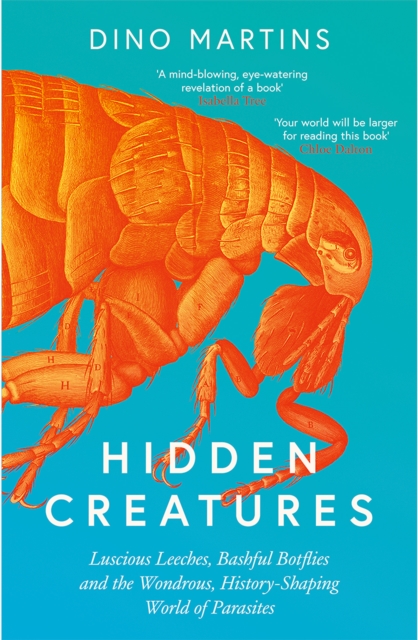
'Your world will be larger for reading this book' CHLOE DALTON author of Raising Hare'The most persistent feeling, and one that Martins conveys beautifully, is one of awe at the sheer diversity and inventiveness of the living world' GUARDIANWelcome to the hidden, squirming world of parasites - some of the most misunderstood, and most important, creatures with whom we share the Earth.
Launching a new series, Monographs in Behavior and Ecology, this work is an intensive study of five species of New World monkeys--all omnivores with a diet of fruit and small prey.
Since its discovery in I960, the hybridization of somatic cells has evolved from a biological curiosity into an analytical method that today underlies nearly all investigations of the genetic aspects of various biological phenomena.
Robin Dunbar uses economic models to explore the social behavior of the gelada baboon (Theropithecus gelada), a unique species, whose social system is one of the most complex among the primates.
The purpose of this book is to explain why red-winged blackbirds are polygynous and to describe the effects of this mating system on other aspects of the biology of the species.
An international group of distinguished scientists presents an up-to-date survey of quantitative problems at the forefront of modern evolutionary theory.
After his famous visit to the Galapagos Islands, Darwin speculated that "e;one might fancy that, from an original paucity of birds in this archipelago, one species had been taken and modified for different ends.