This textbook takes as a premise that, in order to make intelligent diagnosis and provide a rational treatment in disorders of the nervous system, it is necessary to develop the capacity to answer the basic questions of clinical neurology:(1) Where is the disease process located?
Diet-Brain Connections fills a void between the fields of nutrition, behavior and cellular and molecular neurosciences by providing an integrated collection of articles that critically dissect the link between what we eat and how the brain develops and functions in health and disease.
Pteridine and folate research has long been recognized as important for many biological processes, such as amino acid metabolism, nucleic acid synthesis, neurotransmitter synthesis, cancer, cardiovascular function, and growth and development of essentially all living organisms.
Since the appearance of the John O'Keefe and Lynn Nadel book in which they proposed that the hippocampus provides an abstract, internal representation of the animal's environment, considerable conceptual progress in the area of navigational information processing has been achieved.
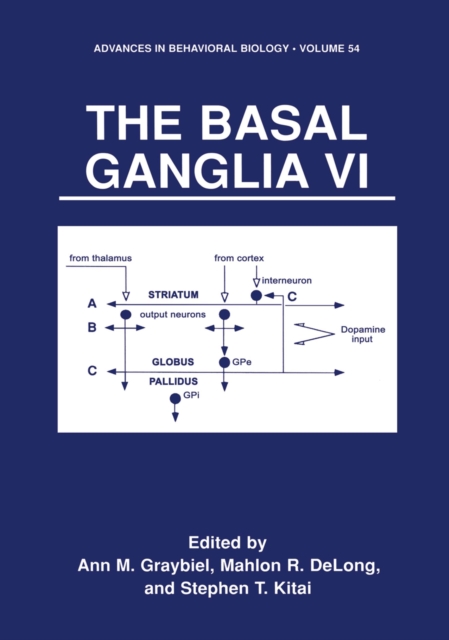
This volume is comprised of the majority of lecture presentations and a few select posters presented at the International Workshop, "e;Basal Ganglia and Thalamus in Health and Movement Disorders,"e; held in Moscow, Russia, on May 29-31, 2000.
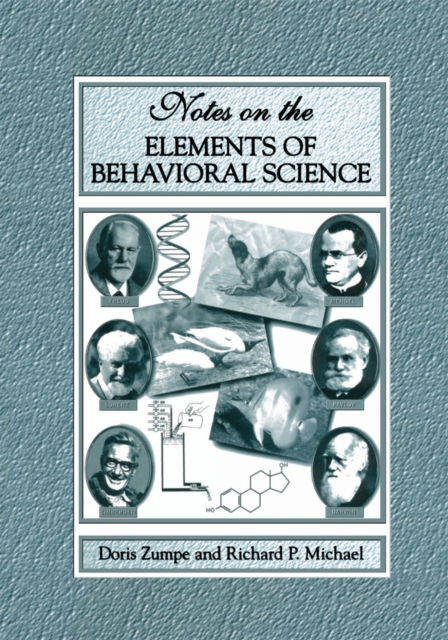
These notes are intended to help undergraduates who need to understand something of behavior both for its intrinsic interest and for their future careers in medicine, biology, psychology, anthropology, veterinary medicine, and nursing.
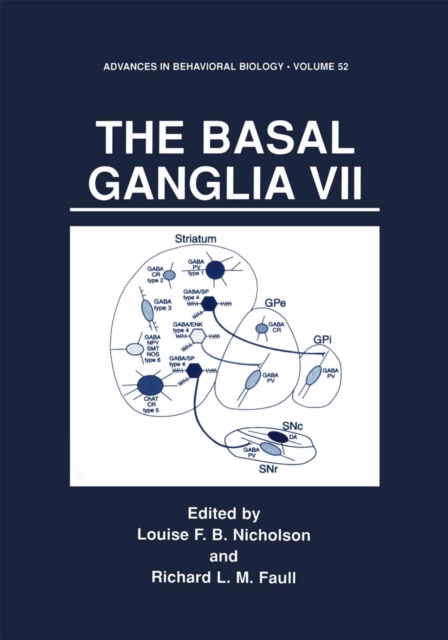
This volume, The Basal Ganglia VII, is derived from the proceedings ofthe Seventh Triennial Meeting of the International Basal Ganglia Society (IBAGS).
It is generally accepted that the recent progress in molecular and cellular biology would not have been possible without an understanding of the mechanisms and signaling pathways of communication inside the cell and between various cells of the animal organism.
Despite numerous studies devoted to the thalamus, its function as a whole and specifically the functional role of the individual thalamic nuclei, outside those regions that are involved in the processing of the sensory information, still remains in the realm of speculation.
The vasculature of the central nervous system (eNS) is characterized by the existence of the blood-brain barrier (BBB), which can be regarded as both an anatomical and physiological phenomenon.
As a dynamic, interdisciplinary field, behavior genetics and its evolution are being followed closely by scientists across the psychological and medical domains.
Detection of Change: Event-Related Potential and fMRI Findings presents the first systematic overview of how event-related brain potential (ERP), cognitive electroencephalography (EEG), and functional magnetic imaging (fMRI) measures reflect the mental events arising from changes in sensory stimulation.
Galen in the 2nd century AD could be considered one of the earliest researchers who attempted to bridge the gap between basic science and clinical medicine.
When conducting scientific research in any field, it is not sufficient to simply design thoughtful and informative experiments to explore ideas and hypotheses.
In a clear exposition this inspirational book shows the in situ three-dimensional morphology of cerebellar neurons, intracortical circuits and synaptic connections that underpin the functioning of cerebellar neurons in networks.
Given the very limited capacity of regeneration in the brain, protecting neurons that are on the brink of death is a major challenge for basic and clinical neuroscience, with implications for a broad spectrum of acute and chronic neurological and psychiatric diseases.
The topics in this volume explore the etiology, cellular mechanisms, epidemiology, genetics, models and potential therapeutic measures for the blinding diseases of retinitis pigmentosa and age-related macular degeneration.
The third edition of this monograph continues to have the goal of providing an overview of current thought about the spinal cord mechanisms that are responsible for sensory processing.
The third edition of this monograph continues to have the goal of providing an overview of current thought about the spinal cord mechanisms that are responsible for sensory processing.
Continual improvements in data collection and processing have had a huge impact on brain research, producing data sets that are often large and complicated.
This volume provides a highly integrated view of attention-related events, taking the reader from individual molecular interactions through the regulation of neuronal circuits to our higher order capacity for selective amplification of particular information.
The etiology of infantile spasms/West syndrome remains unknown; the pathophysiology is poorly understood and the optimal course of treatment is controversial.
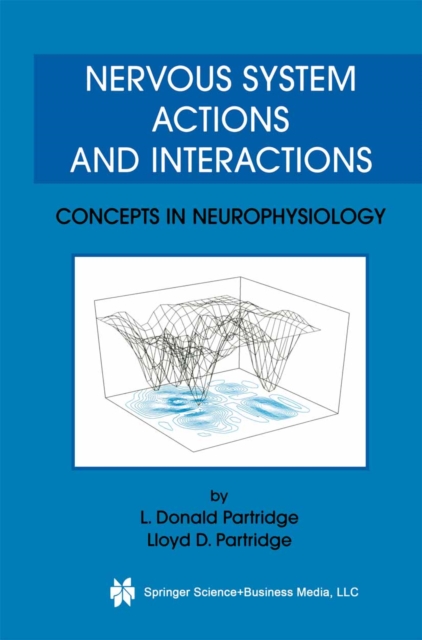
Nervous System Actions and Interactions: Concepts in Neurophysiology approaches the nervous system from a functional, rather than structural, point of view.
Two groups of animals, bats and odontocetes (toothed whales), have independently developed the ability to orient and detect prey by biosonar (echolocation).