This is an important text that synthesises diverse literatures and theories on infant development into a coherent framework that illuminates the essence of infancy for all those who have infants, study infants, teach about infancy, make policy with respect to infant welfare, and work medically or therapeutically with mothers and their infants.
Starting with research by Nobel laureate Roger Sperry into split-brain patients, this book sets out the evidence that there is a conscious mind in each hemisphere of the human brain.
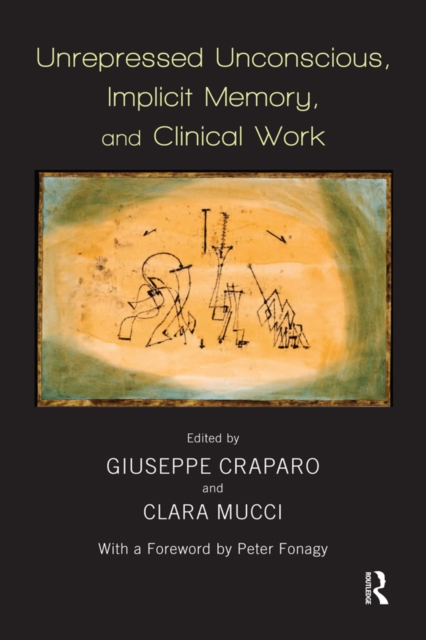
Unrepressed Unconscious, Implicit Memory, and Clinical Work analyses the psychological and neurobiological characteristics of what nowadays goes under the name of "e;unrepressed unconscious"e;, as opposed to Freud's earlier version of a kind of "e;repressed unconscious"e; encountered and described initially in his work with hysterical patients.
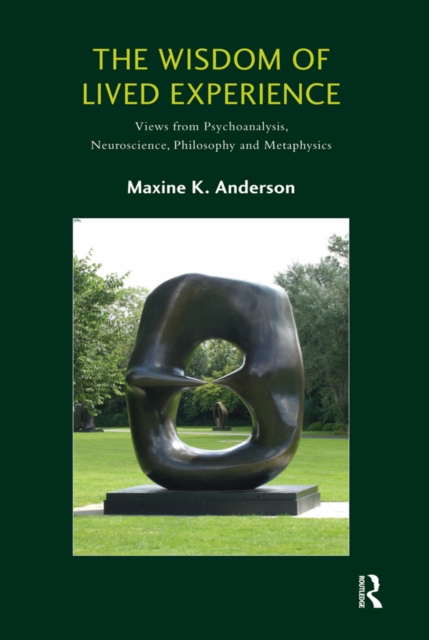
This book is an exploration of contemporary understanding from philosophy, neuroscience, psychoanalysis, and metaphysical studies, which seem to verify the value of the Epicurean sentiments in terms of the wisdom of lived experience.
This book is an attempt to add to the theoretical discussion regarding the nature of the intrapsychic and interpersonal transformational changes associated with the transition from adolescence to young adulthood.
Might it be possible that neuroscience, in particular interpersonal neurobiology, can illuminate the unique ways that group processes collaborate with and enhance the brain's natural developmental and repairing processes?
The God of the Left Hemisphere explores the remarkable connections between the activities and functions of the human brain that writer William Blake termed 'Urizen' and the powerful complex of rationalising and ordering processes which modern neuroscience identifies as 'left hemisphere' brain activity.
This book, concerned with psychoanalytic conceptualisations, helps to lay the foundation for a biologically and evolutionarily sensible model of human social behaviour and personality, and also helps to bridge the gap between psychoanalysis and neuroscience.
The EFPP (European Federation for Psychoanalytic Psychotherapy) promotes communication and discussion between psychotherapists across national boundaries in the child and adolescent, adult, family and group sections of the organisation, through its conferences and seminars on topics of interest in contemporary psychoanalytic psychotherapy.
Increased worldwide mobility and easy access to technology means that the use of technological mediation for treatment is being adopted rapidly and uncritically by psychoanalysts and psychoanalytic psychotherapists.
For many years psychotherapy and neuroscience have been estranged, existing on opposite ends of the spectrum concerned with the investigation of the mind.
The perennial interest in psychoanalysis shows no signs of abating and the longevity of psychoanalytic theory is seen in the varied extensions and elaborations of Freudian thinking in the fields of neuroscience and cognitive theory.
This book is for readers who are knowledgeable about the neurosciences and curious about brain mechanisms that produce normal and pathological social behaviour.
This book turns out to have a scientific relevance and value that will similarly interest many, not only those in the specialized field of neuroscience but very individual who has a brain and a mind and wonders about them.
In this book, the author criticises the isolationism of traditional psychoanalytic associations, compared to those of other branches of psychology, and their suspicion of neuroscience.
This book makes detailed correlations between psychological/psychoanalytic variables, on one hand, and neuroanatomical/neurophysiological considerations on the other.
The aim of Freudian Unconscious and Cognitive Neuroscience is to create a conception of the "e;Freudian things"e; around the unconscious that takes seriously both the clinical data gathered in the scope of psychoanalytic clinical practice during the past 110 years, and the empirical and theoretical achievements of cognitive neuroscience and evolutionary theory.
Since the 1990s many different scientific disciplines have intensified their interest in the so called 'mind-body-problem': psychoanalysis, philosophy, academic psychology, cognitive science and modern neuroscience.
The current neuroscientific research in the field of emotion studies highlights a paradigm of scientific research that must be categorized as functional science.
As a psychiatric trainee at Harvard in the early 1960s, Dr Allan Hobson was taught commitment to psychoanalytic theory that was already suspect and is now almost entirely obsolete.
As a discipline, psychoanalysis began at the interface of mind and brain and has always been about those most basic questions of biology and psychology: loving, hating, what brings us together as lovers, parents, and friends and what pulls us apart in conflict and hatred.
This is an important text that synthesises diverse literatures and theories on infant development into a coherent framework that illuminates the essence of infancy for all those who have infants, study infants, teach about infancy, make policy with respect to infant welfare, and work medically or therapeutically with mothers and their infants.
Starting with research by Nobel laureate Roger Sperry into split-brain patients, this book sets out the evidence that there is a conscious mind in each hemisphere of the human brain.